
OEM Parts vs. Aftermarket Parts: What the Difference Means for Your Car

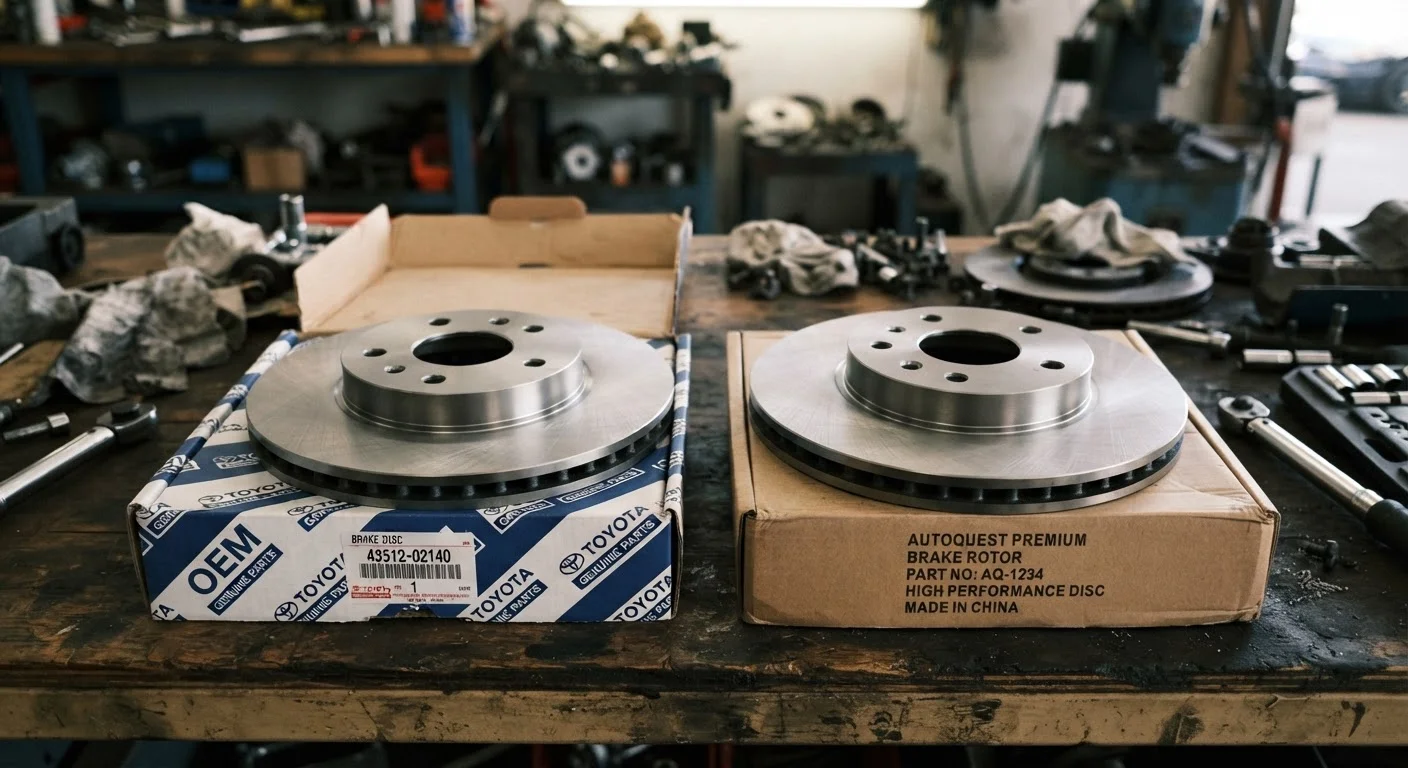
Photo: InsightsVault.com | Interesting Daily Reads editorial
Key Takeaways
- OEM parts are made to the exact specifications of your vehicle's original components; aftermarket parts are produced by third-party manufacturers.
- OEM parts typically cost 20-40% more than comparable aftermarket options, according to industry repair-cost data.
- Using aftermarket parts usually does not void a factory warranty under federal Magnuson-Moss Warranty Act protections, with some exceptions.
- Aftermarket quality varies widely - some parts meet or exceed OEM standards while others fall short.
- The right choice depends on your vehicle's age, your warranty status, and which specific component needs replacing.
What OEM and Aftermarket Actually Mean
OEM stands for Original Equipment Manufacturer. An OEM part is either made by your vehicle's manufacturer or produced by the same supplier that made the component installed on your car at the factory. When you buy an OEM part, you're getting a piece engineered to the exact tolerances, materials, and dimensions specified for your make and model.
Aftermarket parts are made by independent companies - not the vehicle manufacturer - and are designed to fit and function like the original. The aftermarket is enormous: thousands of suppliers produce everything from brake pads to oxygen sensors, ranging from budget-tier to performance-grade.
A common misconception is that aftermarket automatically means inferior. That's not accurate. Some aftermarket manufacturers produce parts that meet or exceed OEM specifications; others cut corners on materials to compete on price alone. The category is a spectrum, not a single quality level. For a broader look at when brand origin matters and when it doesn't, see our guide on generic vs. brand-name decisions.
The Real Cost Difference
OEM parts typically carry a price premium. Industry repair-cost data consistently shows OEM components running 20-40% higher than comparable aftermarket alternatives, though the gap varies significantly by part type and vehicle brand. A straightforward air filter might cost $12 aftermarket versus $22 OEM; a more complex part like a fuel pump could mean a $90 difference or more.
20-40%
Typical OEM price premium over aftermarket
Based on industry repair-cost benchmarking data comparing like-for-like component categories.
$306B+
U.S. automotive aftermarket annual revenue
The Auto Care Association estimates the U.S. aftermarket industry at over $300 billion, reflecting the scale and competition in this sector.
That premium reflects several things: the manufacturer's quality controls, the overhead of dealer distribution networks, and, frankly, the captive market dynamic that comes with branded packaging. Whether the premium is worth it depends on what you're replacing and why. For a full picture of how parts costs fit into overall ownership expenses, see our complete guide to car repair and ownership costs.
Side-by-Side: OEM vs. Aftermarket at a Glance
The table below summarizes the key differences across the criteria that matter most to most car owners.
| Criterion | OEM Parts | Aftermarket Parts |
|---|---|---|
| Manufacturer | Vehicle maker or authorized supplier | Independent third-party companies |
| Fit & compatibility | Guaranteed exact fit | Varies; most fit well, some do not |
| Typical cost | 20-40% higher on average | Lower; range varies by supplier |
| Quality consistency | Controlled by manufacturer spec | Wide range - budget to premium |
| Warranty impact | No risk to factory warranty | Generally protected under Magnuson-Moss Act |
| Availability | Dealer network; may be limited for older models | Widely available for most vehicles |
| Best for | Newer, warranted, or safety-critical repairs | Older vehicles, routine wear items, cost savings |
Warranty Implications: What the Law Actually Says
Many drivers assume that using aftermarket parts will void their factory warranty. In most cases, that concern is overstated. The federal Magnuson-Moss Warranty Act generally prohibits manufacturers from voiding a warranty solely because the owner used an aftermarket part - unless the manufacturer can demonstrate that the aftermarket part directly caused the failure in question.
Magnuson-Moss: The Key Protection to Know
That said, there are real exceptions. Certain high-tech systems - advanced driver-assistance sensors, emissions control modules, and transmission software in some modern vehicles - may be sensitive enough that manufacturers can plausibly argue an aftermarket part caused a related fault. When in doubt, check your warranty documentation or ask your dealer before replacing any component on a vehicle still under factory coverage. Where you get the work done also matters; see our breakdown of dealer vs. independent mechanic trade-offs for related context.
When OEM Is Worth the Extra Cost - and When It Isn't
The decision isn't one-size-fits-all. Here's a practical framework:
- Lean toward OEM when: your vehicle is under a factory or certified pre-owned warranty; the component is safety-critical (brakes, steering, airbag sensors); the part is electronically complex and requires manufacturer calibration; or you plan to sell the car soon and want documented factory-spec repairs.
- Lean toward aftermarket when: your vehicle is older and out of warranty; you're replacing routine wear items (filters, belts, wiper blades, spark plugs); the part is structurally simple with few failure modes; or cost is a significant constraint and you've verified the supplier's quality reputation.
Owners of high-mileage vehicles face this calculation constantly. If you're weighing whether continued maintenance on an older car makes financial sense at all, our comparison of older versus newer vehicle running costs offers useful context for that broader decision.
This article is for general informational purposes only and does not constitute professional mechanical or financial advice. Consult a qualified mechanic for guidance specific to your vehicle and situation.
The content provided on our blog site traverses numerous categories, offering readers valuable and practical information. Readers can use the editorial team’s research and data to gain more insights into their topics of interest. However, they are requested not to treat the articles as conclusive. The website team cannot be held responsible for differences in data or inaccuracies found across other platforms. Please also note that the site might also miss out on various schemes and offers available that the readers may find more beneficial than the ones we cover.