
The Real Cost of Skipping Routine Car Maintenance

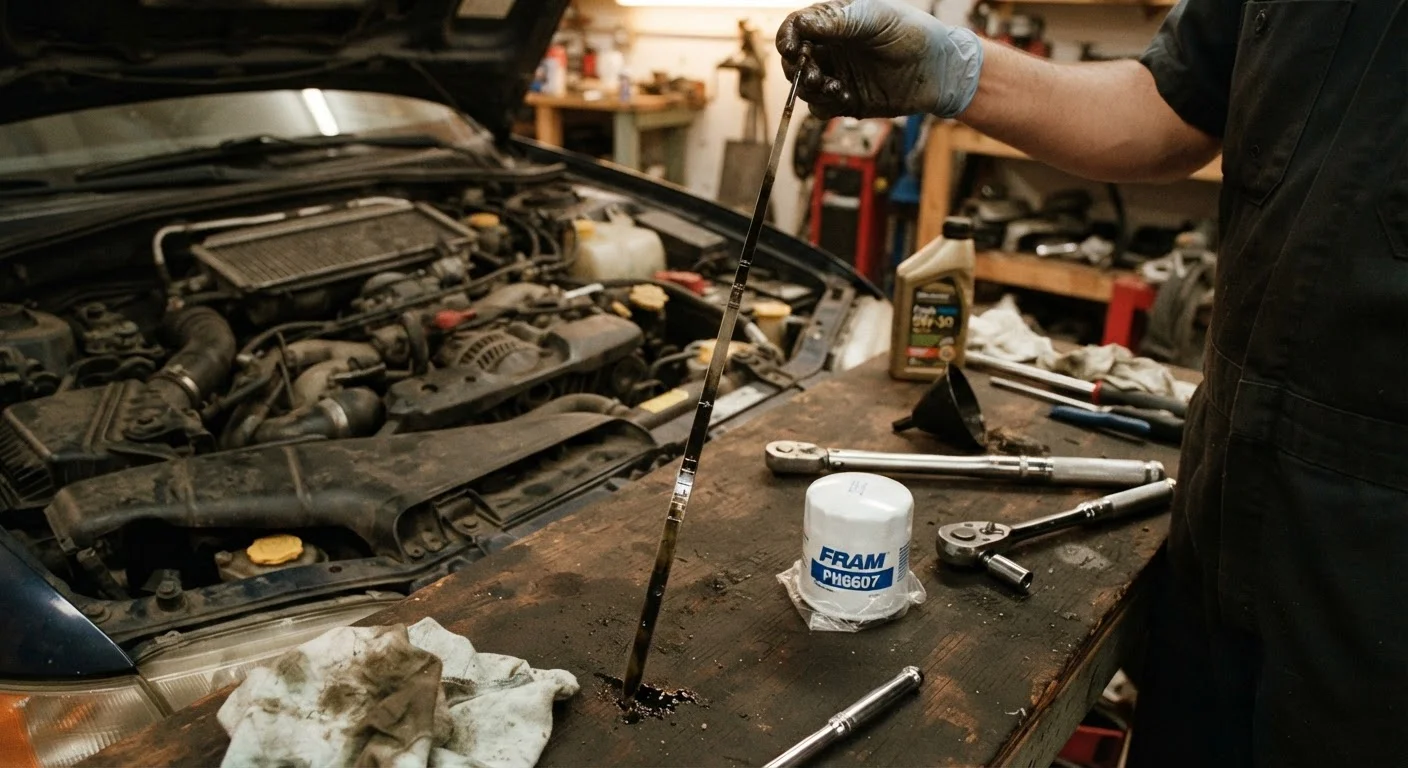
Photo: InsightsVault.com | Interesting Daily Reads editorial
Key Takeaways
- Skipping an oil change can lead to engine sludge and, ultimately, engine failure costing thousands of dollars.
- Ignored tyre rotations cause uneven tread wear, shortening tyre life and increasing blowout risk.
- Most routine maintenance tasks cost between $30 and $150; the repairs they prevent often cost 10-100 times more.
- Deferred maintenance also lowers your car's resale value and can void manufacturer warranty coverage.
- A documented service history is one of the simplest ways to protect both your car and your budget.
Why Routine Maintenance Exists in the First Place
Every car is a collection of components that wear down at predictable rates. Engine oil oxidizes and loses its ability to lubricate. Brake fluid absorbs moisture and becomes less effective under heat. Tyres wear unevenly unless rotated. Manufacturers set service intervals because engineers have measured exactly how long materials hold up under normal operating conditions.
When you follow those intervals, you're replacing cheap consumables before they cause expensive collateral damage. When you skip them, you're essentially gambling that the component will hold out longer than the engineers predicted - sometimes that bet pays off, but when it doesn't, the consequences are rarely cheap.
For a broader picture of where routine servicing fits into your overall car budget, see the Ownership Costs hub.
The Specific Costs of Common Skipped Services
It helps to look at concrete numbers. Here's how routine neglect typically escalates:
- Oil changes: A standard synthetic oil change runs roughly $50-$100. Skip it repeatedly and engine sludge builds up, leading to oil pump failure ($500-$1,500) or complete engine seizure ($3,000-$10,000+).
- Tyre rotations: A rotation costs around $20-$50. Without it, front tyres wear significantly faster than rear tyres on most vehicles, cutting tyre lifespan by 20-30% and increasing blowout risk. See how tyre costs add up for a fuller breakdown.
- Coolant flushes: Typically $100-$150. Neglected coolant becomes acidic and corrodes the radiator, water pump, and hoses - repairs that collectively can reach $1,000-$2,500.
- Timing belt replacement: Usually $400-$900 depending on the vehicle. A snapped timing belt can cause immediate, catastrophic engine damage totaling $2,000-$6,000 or more.
- Transmission fluid changes: Around $100-$200. Degraded fluid leads to transmission slippage and eventual failure - often a $1,500-$4,500 repair.
$792
Average annual car maintenance and repair cost per vehicle
According to AAA's annual Your Driving Costs study, US drivers spend an average of around $792 per year on routine maintenance and repairs for a typical sedan.
10-100x
Cost multiplier: repairs vs. the maintenance that prevents them
Industry repair data consistently shows that neglected maintenance leads to component failures costing many multiples of the original service price - oil changes vs. engine repairs being the clearest example.
20-30%
Tyre lifespan reduction from skipping rotations
Tyre industry guidance indicates that skipping regular rotations can reduce the usable life of front tyres on front-wheel-drive vehicles by an estimated 20-30%, requiring earlier replacement.
For a side-by-side view of what scheduled servicing costs versus reactive repairs, the scheduled servicing vs. reactive repairs comparison lays out the numbers clearly.
How Neglect Compounds Over Time
The most insidious aspect of deferred maintenance is that problems rarely announce themselves immediately. A car running on degraded oil still starts every morning - until it doesn't. By the time a dashboard warning light appears or a strange noise develops, secondary damage has often already occurred.
Mechanics frequently describe a pattern: a driver comes in for a repair that would have cost $80 six months ago but now requires $900 in work because the initial problem damaged surrounding components. This cascading effect is what makes deferred maintenance genuinely expensive rather than just theoretically risky.
Set a Simple Maintenance Reminder
Many of the habits that quietly accelerate this kind of wear are covered in the habits that quietly shorten your car's lifespan - worth reviewing alongside your maintenance schedule.
Resale Value and Warranty Implications
Skipped maintenance doesn't only affect mechanical reliability - it affects what your car is worth. When you go to sell or trade in a vehicle, buyers and dealers ask for service records. A car with documented, on-schedule maintenance consistently commands a higher price than an identical model with no records or obvious gaps.
There's also a warranty angle that many owners overlook. Manufacturer warranties are typically contingent on following the recommended maintenance schedule. If a covered part fails and you can't demonstrate that required services were performed, the manufacturer may deny the claim - leaving you responsible for a repair that should have been covered.
Keeping a complete maintenance record is one of the simplest and most underappreciated ways to protect both your car's mechanical health and its financial value.
A Practical Approach to Staying on Schedule
Staying current with maintenance doesn't require a large budget - it requires consistency. A few practical steps help:
- Read your owner's manual. The manufacturer's maintenance schedule is specific to your vehicle's engine, transmission, and operating conditions. It's more reliable than general rules of thumb.
- Use your car's reminder system. Most vehicles built in the last decade include a maintenance minder that tracks oil life and service intervals automatically.
- Keep receipts and records. Even informal records help. A simple folder of service receipts protects you at warranty time and at resale.
- Budget maintenance as a fixed cost. The full cost of car ownership includes maintenance. Treating it as a monthly budget line - even a rough one - removes the sticker shock when service is due.
Ultimately, the math consistently favors preventive care. The cost of staying on schedule is modest and predictable; the cost of ignoring it is large and unpredictable. That uncertainty alone is worth paying to avoid.
This article provides general information about vehicle maintenance costs and is not a substitute for advice from a qualified mechanic familiar with your specific vehicle.
Frequently Asked Questions
The content provided on our blog site traverses numerous categories, offering readers valuable and practical information. Readers can use the editorial team’s research and data to gain more insights into their topics of interest. However, they are requested not to treat the articles as conclusive. The website team cannot be held responsible for differences in data or inaccuracies found across other platforms. Please also note that the site might also miss out on various schemes and offers available that the readers may find more beneficial than the ones we cover.