
Frozen vs. Fresh Vegetables: What the Nutritional Evidence Actually Says

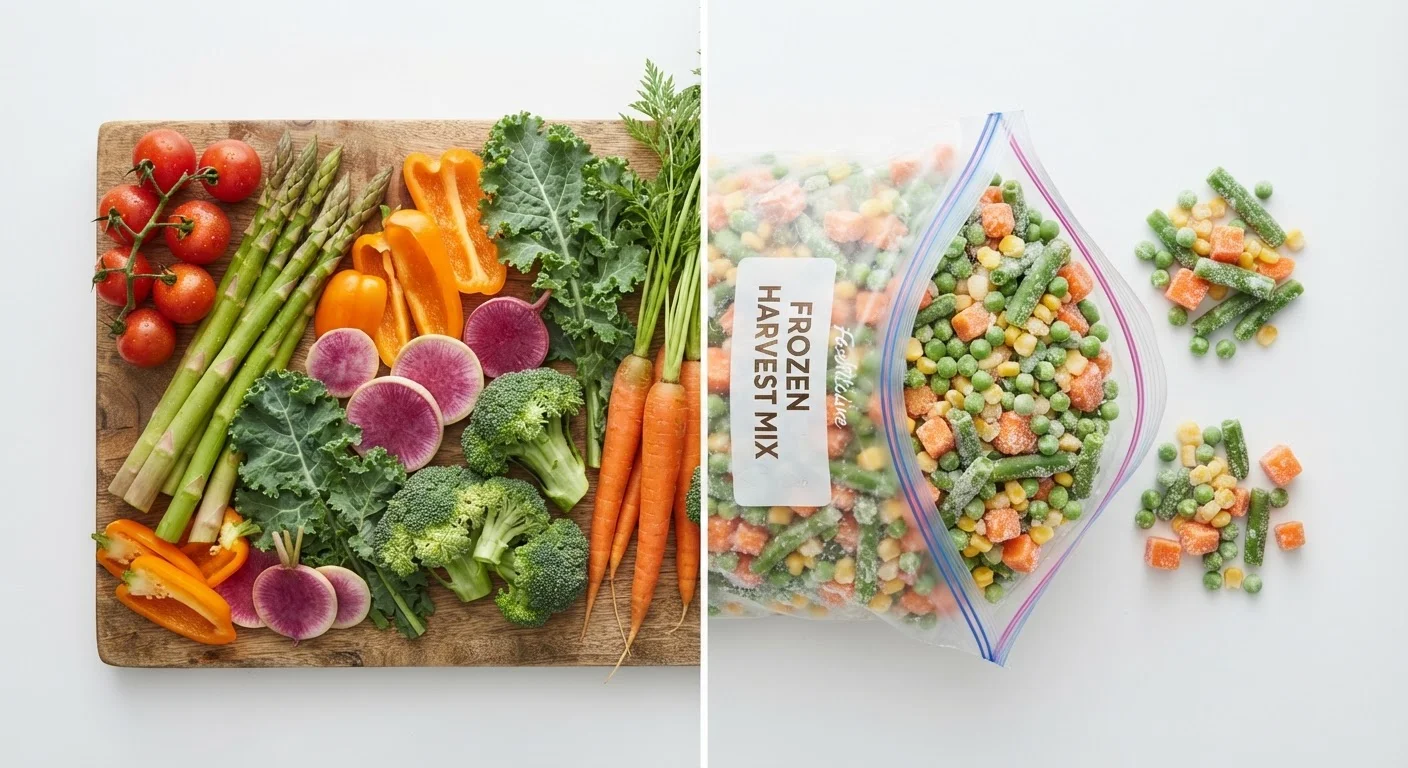
Photo: InsightsVault.com | Interesting Daily Reads editorial
Key Takeaways
- Frozen vegetables are often flash-frozen at peak ripeness, locking in nutrients at their highest concentration.
- Fresh produce can lose significant vitamins during transport, storage, and time on store shelves.
- Studies suggest frozen and fresh vegetables are nutritionally comparable - and frozen sometimes wins.
- Frozen vegetables typically cost less per serving and generate less household food waste.
- Both forms can support a healthy diet; the best choice depends on your meal plan and budget.
The Nutrient Retention Question
Most people assume fresh means better. That assumption is understandable, but it overlooks a critical detail: the word "fresh" on a grocery shelf can mean the vegetable was harvested days or even weeks ago, shipped across the country, stored in a warehouse, and then displayed under fluorescent lights. During that journey, heat-sensitive nutrients like vitamin C and folate begin to degrade.
Frozen vegetables, by contrast, are typically harvested at peak ripeness and flash-frozen within hours. This process pauses enzymatic activity that would otherwise break down nutrients. Research published in journals including the Journal of Food Composition and Analysis has found that the nutrient content of frozen vegetables is often comparable to, and in some cases higher than, their fresh counterparts - particularly when the fresh produce has traveled long distances or sat in storage.
This doesn't make fresh vegetables bad. It means the comparison is more nuanced than the label implies. As we explore in our piece on why affordable food isn't always poor nutrition, price and quality don't always move together the way shoppers expect.
| Criterion | Fresh Vegetables | Frozen Vegetables |
|---|---|---|
| Nutrient retention at purchase | Variable; depends on time since harvest | Generally high; locked in at harvest |
| Typical cost per serving | Moderate to high, seasonal variation | Generally lower, more stable year-round |
| Shelf life at home | Days (most varieties) | Months in the freezer |
| Food waste risk | Higher if not used quickly | Lower; use only what you need |
| Texture for raw dishes | Excellent | Poor to unacceptable |
| Seasonal availability | Limited by region and season | Available year-round consistently |
| Vitamin C retention | Can drop significantly with storage | Often comparable or higher |
What the Research Actually Shows
A widely cited set of studies from the University of California, Davis found that for many vegetables, frozen products retained equal or greater amounts of certain vitamins compared to fresh produce stored for several days. Vitamin C, riboflavin, and beta-carotene were specifically examined. The results consistently challenged the assumption that fresh is superior.
It's worth noting that cooking method matters significantly regardless of which form you start with. Boiling vegetables - fresh or frozen - in large volumes of water causes water-soluble vitamins like vitamin C and B vitamins to leach out. Steaming or microwaving with minimal water preserves far more nutrients in both cases. So your preparation approach can matter as much as whether you chose fresh or frozen.
~45%
Vitamin C lost in fresh spinach after storage
Research from the University of California, Davis found fresh spinach can lose nearly half its vitamin C after just a few days of refrigeration.
Up to 40%
US household fresh produce discarded
USDA and Natural Resources Defense Council estimates suggest American families discard a substantial share of the fresh produce they purchase.
~2-3x
Longer usable life of frozen vs. fresh
Most frozen vegetables remain safe and nutritionally stable for several months, compared to days for equivalent fresh items.
Fiber content, on the other hand, remains essentially stable in both forms. Minerals like iron, calcium, and magnesium are also relatively heat-stable and not significantly affected by the freezing process. For everyday nutritional goals - getting adequate fiber, vitamins, and minerals without overspending - both forms deliver.
Cost, Waste, and Practical Value
From a budget standpoint, frozen vegetables have a clear advantage in two areas: unit cost and shelf life. A bag of frozen spinach, broccoli, or peas typically costs less per serving than its fresh equivalent, and it won't go limp and unusable by Thursday. The USDA estimates that American households discard a significant portion of the fresh produce they buy - food waste that translates directly into wasted money.
Frozen vegetables can also give you access to produce that is out of season locally, without the nutritional penalty that comes with long-haul shipping of fresh equivalents. Out-of-season fresh asparagus imported from overseas has likely lost more nutrients en route than frozen asparagus processed near where it was grown.
For a fuller picture of how to evaluate what you're actually getting for your grocery dollar, see our comparison of cost per nutrient in whole vs. processed foods. The same logic applies here: nutritional value per dollar, not just sticker price, is the most useful metric.
A Note on Frozen Vegetables With Additives
When Fresh Has the Edge
None of this is an argument against fresh vegetables. Locally grown, recently harvested produce - particularly from farmers markets or community-supported agriculture programs - can genuinely outperform frozen in nutrient content because the gap between harvest and your plate is minimal. Fresh vegetables also win on texture for raw preparations: salads, crudités, and dishes where crispness matters don't translate well from frozen.
Certain vegetables also freeze less gracefully than others. Cucumbers, lettuce, and radishes become mushy and unpleasant after freezing. For these, fresh is the practical and sensible choice. Store-brand frozen options and store-brand fresh produce can both offer value, as explored in our look at store-brand versus name-brand food nutrition.
The practical takeaway: use fresh when you'll eat it soon and when texture matters. Rely on frozen for staple vegetables you use regularly, out-of-season produce, and when your schedule doesn't allow frequent shopping trips. Mixing both strategically is how many households get strong nutrition without overspending.
This article is for general informational and educational purposes only and does not constitute medical or dietary advice. Consult a qualified healthcare provider or registered dietitian for guidance specific to your health needs.
The content provided on our blog site traverses numerous categories, offering readers valuable and practical information. Readers can use the editorial team’s research and data to gain more insights into their topics of interest. However, they are requested not to treat the articles as conclusive. The website team cannot be held responsible for differences in data or inaccuracies found across other platforms. Please also note that the site might also miss out on various schemes and offers available that the readers may find more beneficial than the ones we cover.