
Why Cheap Food Isn't Always Poor Nutrition

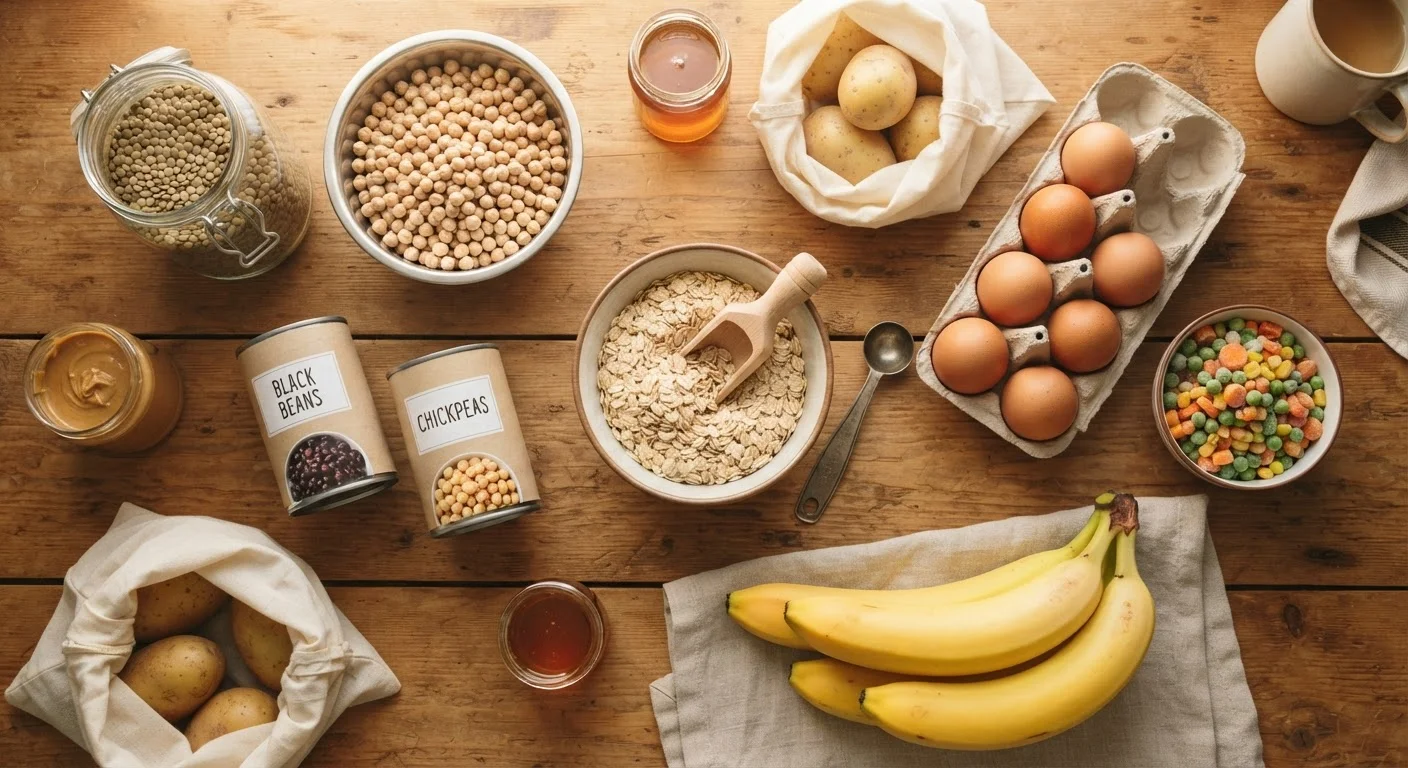
Photo: InsightsVault.com | Interesting Daily Reads editorial
Key Takeaways
- Price is a poor predictor of nutritional value - many cheap staples outperform expensive alternatives.
- Frozen vegetables often retain as many nutrients as fresh, and sometimes more.
- Dried legumes and canned beans deliver high protein and fiber at very low cost per serving.
- Store-brand and generic products are typically nutritionally identical to name-brand equivalents.
- Whole grains like oats and brown rice are budget staples that provide lasting energy and key micronutrients.
The Price-Quality Assumption in Food
Many shoppers instinctively assume that a higher price tag signals better nutrition. It's an understandable heuristic - in many consumer categories, cost tracks quality. But food nutrition doesn't follow that rule nearly as reliably as people expect.
The reality is that food pricing is shaped by branding, packaging, marketing, convenience, and supply chains - not primarily by nutrient density. A can of lentil soup may cost a fraction of a trendy protein bar, yet deliver comparable protein and significantly more fiber. Understanding this gap between perceived and actual value is the starting point for smarter, more affordable eating. For a broader foundation on this topic, see our guide to affordable nutrition fundamentals.
Myth
Frozen vegetables are nutritionally inferior to fresh ones.
Fact
Frozen vegetables are often nutritionally comparable to fresh, and in some cases retain more of certain vitamins.
Fresh produce begins losing some nutrients from the moment it's harvested. Frozen vegetables are typically blanched and frozen within hours of picking, locking in nutrients at or near peak levels. Research has found that frozen options can match or exceed fresh equivalents in vitamins like C and B-group vitamins, which degrade over time during transport and storage. For a detailed look at the evidence, see our article on frozen vs. fresh vegetables.
Myth
Generic and store-brand foods are lower quality than name brands.
Fact
Store-brand and generic products are nutritionally equivalent to name-brand versions in the vast majority of cases.
The nutritional profile of a food is determined by its ingredients, not its label. A can of store-brand chickpeas contains the same protein, fiber, and minerals as a name-brand can with the same ingredient list. The price difference typically reflects marketing spend, packaging design, and brand positioning - not any difference in the food itself. The FDA holds all equivalent products to the same labeling and safety standards regardless of brand.
Myth
Cheap protein sources like canned beans or eggs can't meet serious nutritional needs.
Fact
Eggs and legumes are among the most complete, nutrient-dense protein sources available - at a very low cost per serving.
Eggs contain all essential amino acids and are rich in choline, B vitamins, and healthy fats. Dried or canned legumes - lentils, black beans, chickpeas - provide substantial protein alongside fiber, iron, folate, and magnesium. A half-cup serving of cooked lentils delivers roughly 9 grams of protein. These foods compete favorably with much more expensive protein products on nearly every nutritional measure.
Myth
You need to buy organic to get meaningful nutritional value.
Fact
Conventional produce delivers comparable nutritional content to organic in most head-to-head studies.
While organic farming has environmental and pesticide-exposure arguments made on its behalf, the nutritional differences between organic and conventional produce are generally small and inconsistent across research. Major health organizations note that both types of produce contribute positively to a healthy diet. For budget-conscious shoppers, buying more conventional vegetables is almost always more nutritionally beneficial than buying fewer organic ones.
Myth
Canned foods lose so many nutrients they're hardly worth eating.
Fact
Canning preserves most macronutrients and many vitamins effectively, making canned foods a legitimately nutritious option.
The canning process does reduce some heat-sensitive vitamins - particularly vitamin C and certain B vitamins - but it largely preserves protein, fiber, minerals, and fat-soluble vitamins. Canned tomatoes, for example, are an excellent source of lycopene, a carotenoid that actually becomes more bioavailable after cooking. Rinsing canned beans reduces sodium content significantly without affecting their nutritional value. Canned goods also have long shelf lives, reducing food waste and overall grocery costs.
What the Evidence Actually Shows
Research consistently shows that some of the most nutrient-dense foods available are also the least expensive per serving. Eggs, oats, canned tomatoes, frozen spinach, dried chickpeas, and peanut butter all rank high in nutritional value relative to cost. When researchers calculate cost per gram of protein, or cost per unit of key vitamins and minerals, budget staples regularly outperform premium-positioned products.
~$0.25
Estimated cost per serving of cooked lentils
Based on typical U.S. retail pricing for dry lentils, which yield roughly 10-12 servings per pound.
9g
Protein per half-cup cooked lentils
Per USDA FoodData Central nutritional data for cooked lentils.
~$0.15
Average cost per egg in the U.S.
Based on USDA retail egg price tracking across standard large-grade cartons.
This doesn't mean every cheap food is nutritious - highly processed snack foods can be both cheap and low in useful nutrients. The point is that low price alone tells you very little. For a deeper look at how to compare foods on a nutritional-value basis, our article on cost-per-nutrient comparisons between whole and processed foods breaks down the numbers clearly.
If you want to identify specific staples worth prioritizing, nutrient-dense foods that cost less than you might expect is a practical starting point. And while budget eating has real advantages, it's worth knowing where trade-offs can appear - our look at when low-price choices backfire nutritionally covers that nuance honestly.
Don't Confuse "Cheap" with "Processed"
This article is for general informational and educational purposes only and is not a substitute for professional medical or dietary advice. Consult a qualified healthcare provider or registered dietitian for guidance specific to your health needs.
The content provided on our blog site traverses numerous categories, offering readers valuable and practical information. Readers can use the editorial team’s research and data to gain more insights into their topics of interest. However, they are requested not to treat the articles as conclusive. The website team cannot be held responsible for differences in data or inaccuracies found across other platforms. Please also note that the site might also miss out on various schemes and offers available that the readers may find more beneficial than the ones we cover.