
Whole Foods vs. Processed Foods: Understanding the Real Cost-Per-Nutrient Gap

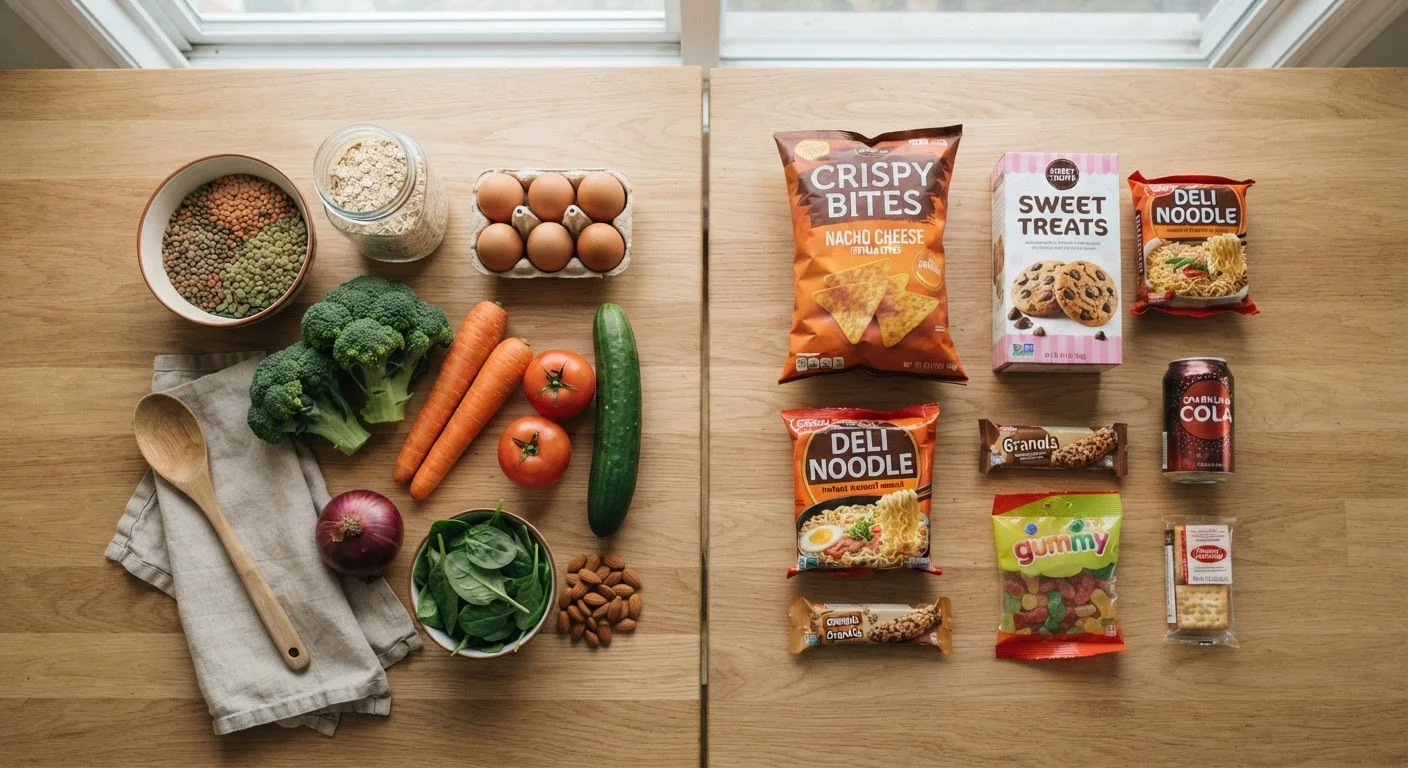
Photo: InsightsVault.com | Interesting Daily Reads editorial
Key Takeaways
- Cost-per-serving rarely reflects cost-per-nutrient - the two numbers can differ dramatically.
- Whole-food staples like dried legumes, oats, and frozen vegetables often deliver more nutrition per dollar than processed alternatives.
- Processed foods frequently carry a 'convenience premium' that adds cost without adding meaningful nutrients.
- Ultra-processed foods tend to be energy-dense but micronutrient-poor, skewing the real value calculation.
- A mixed approach - strategic whole-food staples plus selective processed items - suits most budget-conscious households.
- Always consult a qualified healthcare professional or registered dietitian before making significant dietary changes.
Why Sticker Price Is the Wrong Metric
Most grocery shoppers compare foods by pack price or cost per ounce. That's a reasonable starting point, but it leaves out the variable that actually determines whether you're getting value: nutrient density - the concentration of vitamins, minerals, fiber, and protein relative to calories and cost.
A $1.50 bag of dried lentils yields roughly 13 servings, each delivering around 9 grams of protein, 8 grams of fiber, and meaningful amounts of iron and folate. A $1.50 single-serve flavored instant noodle cup delivers calories and sodium, with little else. The shelf price looks identical. The nutritional return is not.
This is the core of the cost-per-nutrient gap - and understanding it changes how a budget-conscious shopper reads a grocery aisle. As we explore in Why Cheap Food Isn't Always Poor Nutrition, price and nutritional quality don't move in lockstep. Some inexpensive whole foods are genuinely excellent; some premium processed products are nutritionally thin.
| Criterion | Whole Foods | Processed Foods |
|---|---|---|
| Cost per serving (typical staples) | Often $0.10-$0.40 | Often $0.50-$2.00+ |
| Protein per dollar | High (legumes, eggs) | Low to moderate |
| Fiber content | Generally high | Often low |
| Micronutrient density | High | Low to moderate |
| Sodium and additives | Minimal | Often elevated |
| Shelf life | Variable (long for dried goods) | Long (by design) |
| Preparation time | Moderate to high | Low |
| Convenience premium built in | No | Yes |
Where Processed Foods Cost More Than You Think
Ultra-processed foods - a category defined by researchers at the University of São Paulo's NOVA classification system as products made with industrial ingredients rarely used in home cooking - dominate supermarket shelves. They're engineered for palatability and shelf life, not nutrient delivery.
The financial trade-off shows up clearly when you move beyond pack price. Breakfast cereals with added sugars, flavored yogurts, packaged snack bars, and frozen ready meals often carry what food economists sometimes call a convenience premium: the added cost of processing, packaging, branding, and distribution, without proportional increases in protein, fiber, or micronutrients.
~57%
Share of US calories from ultra-processed foods
Research published in BMJ Open estimated that ultra-processed foods account for roughly 57% of daily caloric intake among US adults.
~$1.50
Average cost difference per 2,000 calories
A Harvard School of Public Health analysis found healthier diets cost approximately $1.50 more per day than less healthy diets - a smaller gap than many assume.
Up to 3x
Higher fiber delivery in whole vs. ultra-processed
Comparative dietary studies consistently show that whole-food-based diets deliver substantially more dietary fiber per calorie than ultra-processed-food-heavy diets.
That said, not all processed foods are nutritionally equivalent. Minimally processed items - plain canned tomatoes, frozen edamame, canned salmon - retain strong nutrient profiles and offer genuine convenience. The problem is concentrated in the ultra-processed segment. For a deeper look at where budget shortcuts can actually undermine value, see The Hidden Cost of Eating Cheap.
The Whole-Food Staples That Anchor a Cost-Effective Diet
A handful of whole-food categories consistently perform well on cost-per-nutrient calculations. Dried legumes (lentils, chickpeas, black beans) provide protein and fiber at some of the lowest per-gram costs of any food group. Oats deliver complex carbohydrates, beta-glucan fiber, and B vitamins for cents per serving. Eggs remain one of the most complete single-ingredient protein sources available at accessible price points. Frozen vegetables - often dismissed as second-rate - frequently match or exceed fresh in key micronutrients, as covered in Frozen vs. Fresh Vegetables.
These staples share a structural advantage: they are sold close to their natural state, with minimal markup from processing, packaging, or marketing. Buying them in larger quantities compounds the savings further - a strategy explored in Bulk Buying for Better Nutrition.
The practical implication: building meals around these anchors, then supplementing with selectively chosen processed items, tends to outperform either extreme - an all-processed diet or a rigidly all-fresh approach that ignores frozen and canned whole-food options. For a broader list of high-value affordable options, Nutrient-Dense Foods That Cost Less Than You Might Expect is a useful companion read.
Store Brands Can Narrow the Gap Further
This article is for general informational and educational purposes only and is not a substitute for advice from a registered dietitian or qualified healthcare professional. Individual dietary needs vary; consult a professional before making significant changes to your diet.
The content provided on our blog site traverses numerous categories, offering readers valuable and practical information. Readers can use the editorial team’s research and data to gain more insights into their topics of interest. However, they are requested not to treat the articles as conclusive. The website team cannot be held responsible for differences in data or inaccuracies found across other platforms. Please also note that the site might also miss out on various schemes and offers available that the readers may find more beneficial than the ones we cover.