
Store-Brand vs. Name-Brand Food: A Nutritional and Value Comparison

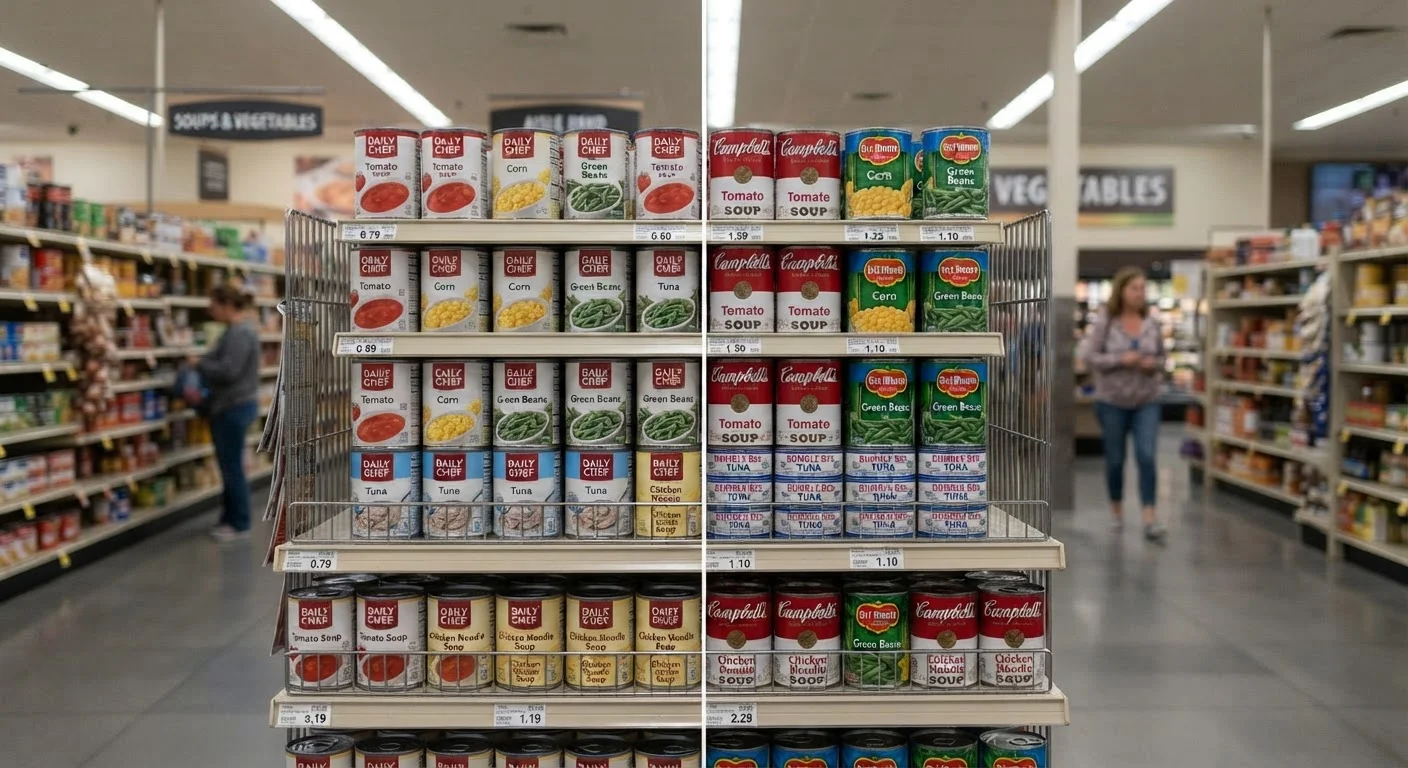
Photo: InsightsVault.com | Interesting Daily Reads editorial
Key Takeaways
- Store-brand and name-brand foods frequently share nearly identical ingredient lists and nutritional profiles.
- Savings on store-brand products can range from 20% to 40% compared to name-brand equivalents.
- Label reading - not packaging or price - is the most reliable way to compare nutritional value.
- Some product categories show more meaningful differences than others; context matters.
- Neither store-brand nor name-brand is universally superior - the smart approach is category-by-category comparison.
What Actually Separates Store-Brand from Name-Brand Food?
Walk down any grocery aisle and you'll find a name-brand product sitting next to a store-label version at a noticeably lower price. The packaging differs, the logo differs - but what about what's inside?
Store-brand products (also called private-label or own-brand) are manufactured to a retailer's specifications, often by the same contract manufacturers that produce name-brand goods. This means the actual food inside the packaging can be - though is not always - nearly identical. What you're primarily paying a premium for with name-brand products is marketing, distribution infrastructure, and brand equity.
The most reliable way to compare any two products isn't the price tag or the packaging design: it's the Nutrition Facts panel and the ingredient list, both of which are federally regulated and must appear on virtually all packaged foods sold in the US. If two products list the same ingredients in the same order with equivalent nutritional values per serving, they are functionally the same food - regardless of what's on the front of the box.
For a broader framework on comparing products that look different on the shelf, see our guide to comparing value across product formats.
Nutritional Comparison: Where the Differences Are Real vs. Minimal
Research and consumer-advocacy testing have consistently found that for many product categories - canned vegetables, dried beans, oats, frozen produce, milk, eggs, and basic condiments - store-brand and name-brand versions are nutritionally equivalent. The macronutrient and micronutrient profiles are nearly indistinguishable when you compare serving-for-serving using the label.
| Category | Store-Brand | Name-Brand | |
|---|---|---|---|
| Typical price difference | 20-40% less | Premium pricing | N/A |
| Canned vegetables (nutrition) | Equivalent | Equivalent | Negligible difference |
| Dry staples (rice, oats, pasta) | Equivalent | Equivalent | Negligible difference |
| Breakfast cereals (fortification) | Check label | Check label | Varies by product |
| Snack foods (taste/formulation) | May differ | Proprietary flavor | Personal preference |
| Ingredient list transparency | FDA regulated, same rules | FDA regulated, same rules | No advantage to either |
| Packaging and marketing | Minimal | Extensive | Irrelevant to nutrition |
Categories where meaningful differences can emerge include heavily processed snack foods, items with proprietary flavor systems (certain cereals, sauces), and products where ingredient sourcing affects final nutrition (some fortified foods where vitamin blends differ slightly). Even here, the difference is usually minor and unlikely to affect overall diet quality.
What matters far more for your overall nutritional intake is the type of food you're buying, not its brand. A store-brand can of kidney beans will almost always outperform a name-brand ultra-processed snack on every meaningful nutritional measure. For more on that distinction, see our comparison of whole foods versus processed foods by cost per nutrient.
How to Compare Any Two Products in 60 Seconds
This article provides general nutrition information for educational purposes and is not a substitute for personalized dietary advice from a registered dietitian or healthcare professional.
The Cost Gap: How Much Can You Actually Save?
The price difference between store-brand and name-brand food is substantial and consistent. According to data from the Food Marketing Institute and various consumer research organizations, shoppers can generally expect store-brand products to cost 20% to 40% less than their name-brand equivalents across most grocery categories.
20-40%
Typical store-brand price savings
Consumer research consistently finds store-brand groceries cost 20-40% less than name-brand equivalents across major categories.
~1 in 5
Shoppers who primarily buy store-brand
Private-label market share has grown steadily in the US, with many households reporting regular store-brand purchasing across most grocery categories.
For a family spending $800 per month on groceries, shifting even half of purchases to store-brand equivalents could potentially translate into meaningful annual savings - though actual results will vary depending on your store, location, and buying habits. This is general information, not a guarantee of any specific savings outcome.
The savings are most pronounced in staple categories: dairy, canned goods, frozen vegetables, dry pasta, rice, cooking oils, and basic condiments. These are also, not coincidentally, the categories where nutritional equivalence is most reliable. For a broader look at where generic products hold up well across categories beyond food, see our breakdown of generic vs. brand-name across product types.
A Practical Category-by-Category Approach
Rather than making a blanket switch or staying loyal to brands out of habit, the evidence supports a selective, label-driven approach. Here's how to think through common grocery categories:
- Canned and frozen vegetables: Strong candidates for store-brand. Nutritional content is highly regulated and typically equivalent. Research on frozen versus fresh vegetables shows freezing preserves nutrients well, regardless of brand.
- Dairy (milk, plain yogurt, butter): Heavily regulated for composition; store-brand versions reliably meet the same standards.
- Dry staples (rice, oats, pasta, dried beans): These are commodity foods. Store-brand versions are nutritionally and functionally identical in the vast majority of cases.
- Breakfast cereals: Compare labels carefully. Fortification levels (added vitamins and minerals) can vary, as can sugar content. Don't assume equivalence - read the panel.
- Snack foods and beverages: More variable. Proprietary flavor formulations mean taste differences are more common. Nutrition profiles also vary more widely. This is a category to evaluate case by case.
- Baby food and infant formula: Consult a pediatrician before switching products. These are specialized nutrition products and the stakes of individual variation are higher.
The same label-reading discipline that helps with human food choices applies across other household purchases too - for a parallel look at how this works with pet nutrition, see how to evaluate generic vs. name-brand pet food labels.
The content provided on our blog site traverses numerous categories, offering readers valuable and practical information. Readers can use the editorial team’s research and data to gain more insights into their topics of interest. However, they are requested not to treat the articles as conclusive. The website team cannot be held responsible for differences in data or inaccuracies found across other platforms. Please also note that the site might also miss out on various schemes and offers available that the readers may find more beneficial than the ones we cover.