
The Consumer's Guide to Comparing Value Across Different Product Formats

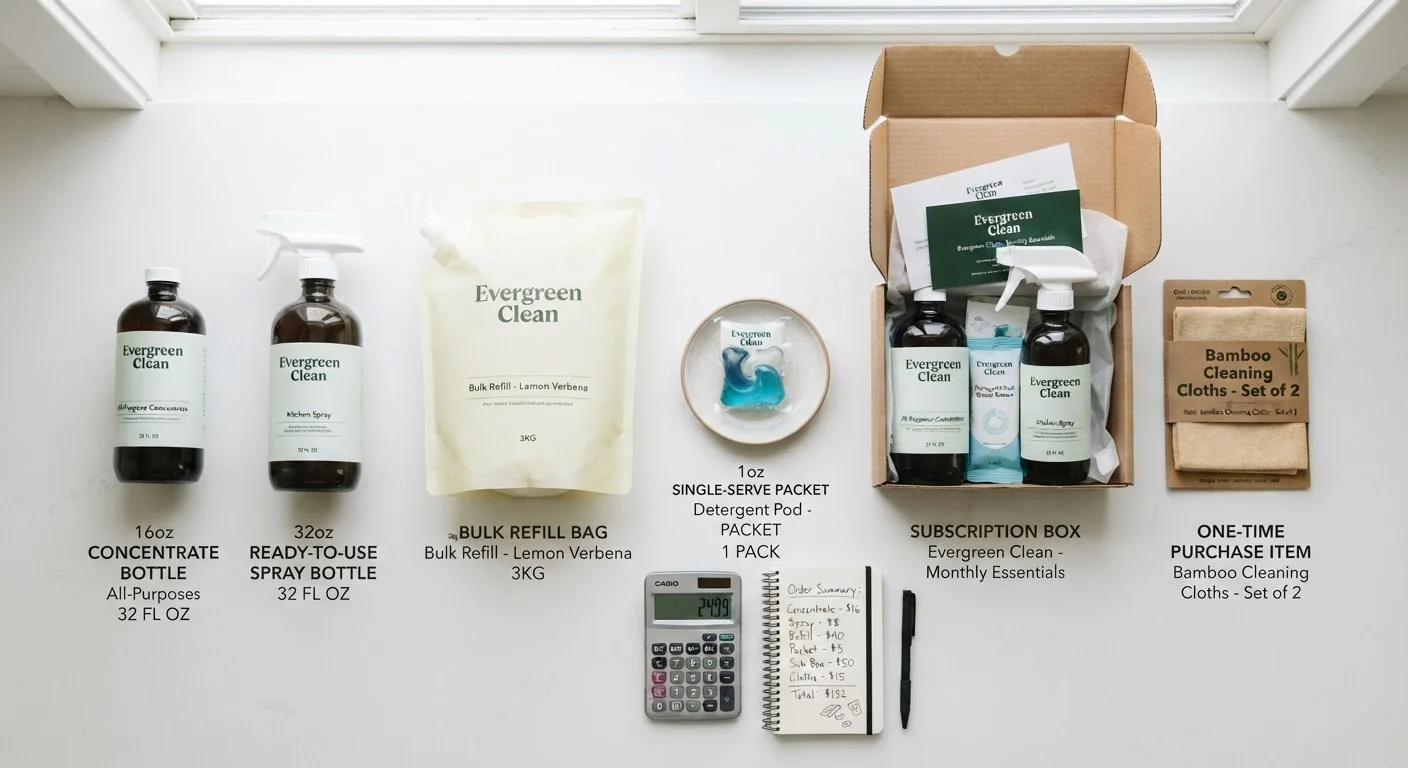
Photo: InsightsVault.com | Interesting Daily Reads editorial
Key Takeaways
- Sticker price rarely reflects true cost - unit price and yield are the numbers that matter.
- Subscriptions only save money if you actually use the product at the assumed rate.
- Concentrate and bulk formats can appear expensive upfront while costing far less per use.
- Storage space, shelf life, and usage patterns all affect whether a cheaper format is genuinely better value.
- A simple cost-per-use calculation is the most reliable way to compare unlike formats.
Why Format Comparison Is Harder Than It Looks
When two versions of the same product sit on a shelf - say, a 16 oz ready-to-use spray and a 4 oz concentrate - most shoppers reach for whichever has the lower sticker price. That's an understandable shortcut, but it's also how many people quietly overpay week after week.
Format differences break the standard mental shortcuts we use for price comparison. A monthly subscription doesn't compare naturally to a one-time purchase. A powder doesn't compare naturally to a liquid. Bulk doesn't compare naturally to single-serve. The formats are genuinely unlike, and treating unlike things as alike is the root of most value misjudgments at the point of purchase.
This guide gives you a practical framework for solving that problem - regardless of product category. The same logic applies whether you're weighing format price differences across shopping channels or comparing two bottles on the same grocery shelf.
Unit price
The cost of a product expressed per standard measure (ounce, liter, sheet, serving). It allows fair comparison between different package sizes or formats.
Cost per use
The total purchase price divided by the number of times you can use the product. More useful than unit price when formats differ significantly in how they're consumed.
Dilution ratio
For concentrates, this is how much water or other liquid you add per unit of product. A 1:10 ratio means one part concentrate yields eleven parts finished product.
Yield
The total usable quantity you get from a product after accounting for preparation - such as diluting a concentrate or portioning a bulk item.
Subscription cadence
How often a recurring subscription ships or renews. If cadence doesn't match your actual consumption rate, you may accumulate excess or run short.
Total cost of ownership
The full cost of a purchase including the price, ancillary costs (storage, accessories, disposal), and any ongoing fees - not just the sticker price.
The Unit Price Framework
Unit price is the foundation of format comparison. Expressed as cost per ounce, per sheet, per serving, or per dose, it normalizes products so you can compare them on the same scale.
Most US retailers are required to display unit prices on shelf tags, but the unit used isn't always consistent across products - one item might show cost per ounce, another per 100ml. When they don't match, convert them yourself: divide the total price by the total quantity and express both in the same unit.
Example: A 32 oz bottle priced at $4.80 costs $0.15/oz. A 12 oz bottle priced at $2.40 costs $0.20/oz. The larger format is 25% cheaper per ounce - but only delivers that saving if you use all 32 oz.
Unit price works well for straightforward comparisons. For concentrates or multi-step products, you need an additional step: calculating yield.
Subscription vs. One-Off: The Hidden Arithmetic
Subscriptions typically advertise a per-unit discount - often 10-20% off the one-time purchase price. That framing is real, but it obscures a more important question: does your actual usage rate match the subscription cadence?
If a monthly plan ships one unit every 30 days but you go through one every 45 days, you'll accumulate excess inventory you've already paid for. Conversely, if you go through product faster than the plan ships, the convenience gain disappears.
Before subscribing, calculate your realistic monthly consumption. Divide the annual cost of the subscription by 12 and compare it to what you actually spend per month buying on demand. Factor in any minimum commitments or cancellation requirements - these reduce the flexibility that makes the one-off option appealing in the first place.
For a broader view of how discount strategies interact with format decisions, see our guide on couponing across different product categories.
Bulk, Concentrate, and Ready-to-Use Formats
These three format types appear across categories from household cleaning to food to personal care, and each requires a slightly different comparison approach.
- Bulk formats lower unit price but raise break-even requirements. The saving only materializes if you consume everything within its usable life. Check shelf life or expiration dates before assuming bulk is better.
- Concentrates require you to calculate yield. A concentrate with a 1:10 dilution ratio produces 11 parts of finished product from every 1 part purchased. Divide the purchase price by total yield to get cost per usable ounce, then compare to the ready-to-use price per ounce.
- Ready-to-use formats cost more per unit but carry no preparation cost or waste risk. For low-frequency users or households with limited storage, the convenience premium can be worth it.
Don't Let 'Savings' Override Shelf Life
The right format depends on your usage rate, storage capacity, and tolerance for preparation steps - not on which option looks cheaper at the shelf.
Non-Price Factors That Change the Calculation
A format that wins on unit price can still be the wrong choice once you account for the full picture. Several non-price variables routinely tip the comparison:
- Storage requirements
- Bulk and concentrate formats often require dedicated space, specific temperature conditions, or child-safe storage. If you don't have it, the format isn't practical regardless of price.
- Usage consistency
- The cheaper format assumes regular use. If your usage is seasonal or irregular, a single-serve or smaller format may waste less and cost less overall.
- Preparation time and error
- Concentrates require accurate dilution. Consistent mismeasurement changes your effective cost per use and may affect product performance.
- Packaging and portability
- For products used in multiple locations or while traveling, a smaller ready-to-use format may serve a function the bulk option simply can't.
These factors are part of what's sometimes called the total cost of ownership approach to everyday spending - a broader framework for evaluating purchases beyond sticker price.
Shelf Labels Don't Always Use Matching Units
Building Your Own Comparison Habit
The mechanics above are straightforward, but the real value comes from applying them consistently before you buy rather than rationalizing after. A few practices that help:
- Do the math at the shelf (or the product page). Pull out your phone calculator before putting anything in your cart. A 30-second calculation pays for itself immediately.
- Anchor to cost per use, not sticker price. For most products, cost per use is more meaningful than unit price because it accounts for how you actually consume the product.
- Set a usage-rate honest test. Before buying bulk or subscribing, ask: in the last 90 days, how many times did I actually use this? Let that answer - not optimism about future habits - drive the format decision.
Keep a Running Cost-Per-Use Reference
Comparing formats is one dimension of a larger decision about where and how to shop. Our guide on shopping channels and the trade-offs between them covers how those channel differences layer on top of format decisions. Together, the two frameworks give you a more complete picture of where your money actually goes.
Cutting Daily Costs Hub
A practical collection of strategies for reducing everyday expenses. Useful context for applying format-comparison skills to your broader spending habits.
Consumer Financial Protection Bureau: Making a Budget
The CFPB offers free, plain-language budgeting tools that can help you track spending by category - useful when evaluating whether a format change actually shifts your monthly spend.
Frequently Asked Questions
The content provided on our blog site traverses numerous categories, offering readers valuable and practical information. Readers can use the editorial team’s research and data to gain more insights into their topics of interest. However, they are requested not to treat the articles as conclusive. The website team cannot be held responsible for differences in data or inaccuracies found across other platforms. Please also note that the site might also miss out on various schemes and offers available that the readers may find more beneficial than the ones we cover.