
Shopping Channels Side by Side: Weighing Convenience, Cost, and Control

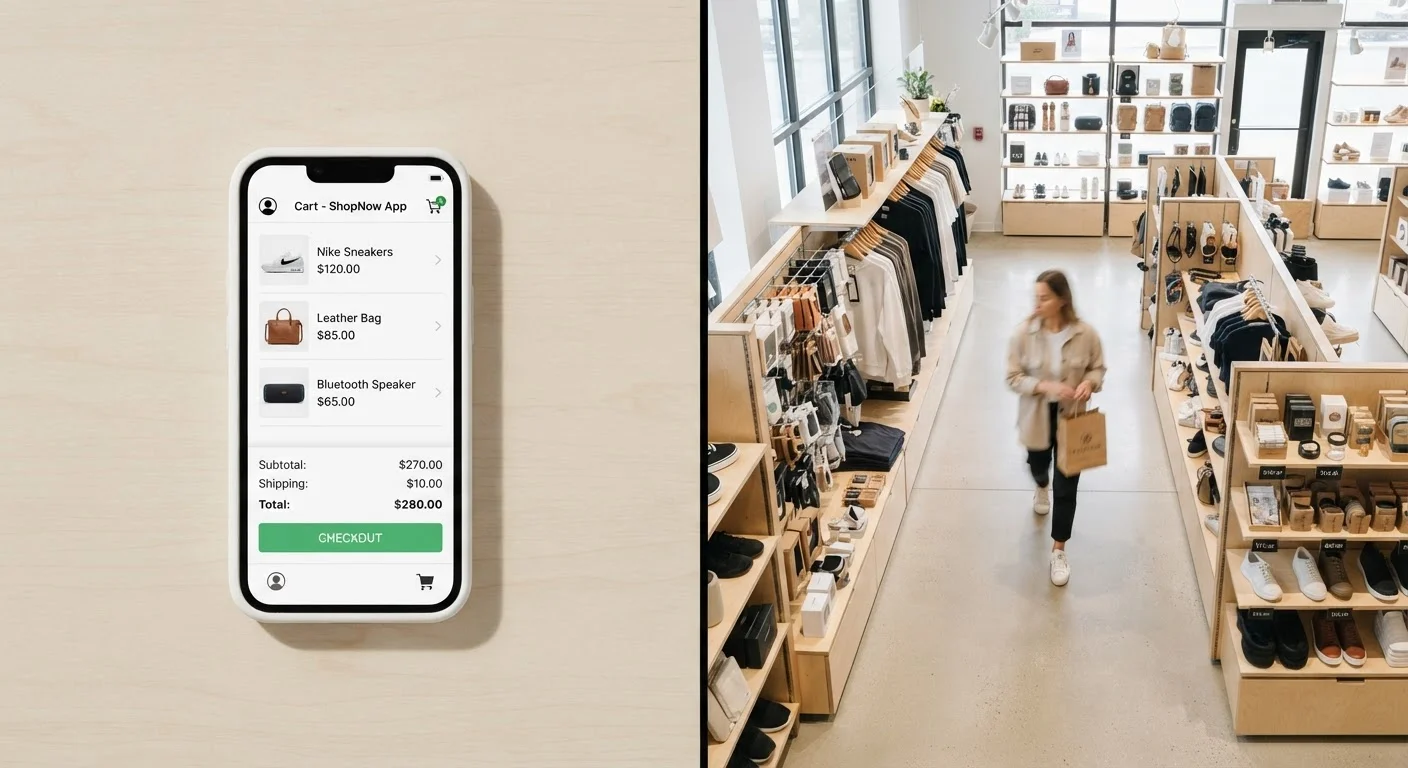
Photo: InsightsVault.com | Interesting Daily Reads editorial
Key Takeaways
- Online shopping typically offers wider selection and easier price comparison, but shipping costs and return friction can offset savings.
- Brick-and-mortar stores give you immediate possession, tactile evaluation, and simpler returns - but often at higher shelf prices.
- Neither channel wins across every category; the smartest shoppers match the channel to the specific purchase.
- Return policies, delivery timelines, and hidden fees are the factors most often overlooked when comparing channels.
Price: What You See Isn't Always What You Pay
Online prices frequently undercut in-store shelf prices - lower overhead costs, algorithmic repricing, and competition between marketplace sellers all push prices down. But the sticker price is rarely the final price. Shipping fees, subscription requirements for free delivery, and the lack of in-store-only promotions can quietly erase those savings.
In-store shopping carries its own price distortions. Retailers use physical store layout and scarcity cues to nudge spending upward. However, clearance racks, in-store-only coupons, and manager's specials are real - and frequently unmatched online. Certain categories see especially dramatic pricing gaps between channels. See which product categories show the widest price differences before deciding where to shop. For a deeper breakdown of why these gaps exist, this analysis of what actually changes the price you pay is worth your time.
| Online Shopping | Brick-and-Mortar | |
|---|---|---|
| Base price | Often lower due to competition | Higher shelf price, offset by in-store promotions |
| Hidden costs | Shipping fees, return postage | Travel costs, impulse-buy risk |
| Speed of possession | 1-5+ days delivery | Immediate, same visit |
| Product evaluation | Photos, reviews, specs only | Hands-on inspection before purchase |
| Return process | Repackage, ship, wait 1-3 weeks | Immediate at service desk |
| Selection breadth | Vastly wider, including niche items | Limited to local stock |
| Price transparency | Easy to compare across sellers | Requires visiting multiple stores |
Convenience and Speed: Defining What 'Easy' Actually Means
Online shopping wins on browsing convenience - no travel, no parking, no store hours to work around. You can compare dozens of options in minutes and read reviews before committing. The catch is delivery lag. Even expedited shipping takes time, and porch theft, missed deliveries, and damaged packaging are recurring friction points that in-store shopping eliminates entirely.
Brick-and-mortar stores offer something online cannot replicate: immediate possession. If you need an item today - a last-minute gift, a replacement part, a prescription - a local store solves the problem in hours rather than days. Store staff can also resolve questions in real time, which is particularly valuable for complex purchases like appliances or tools.
Check the Return Policy Before You Buy
Returns, Control, and Risk
Returns are where channel choice has the most underappreciated impact. Returning an online order typically involves repackaging, printing a label, and waiting for a refund to post - a process that can span one to three weeks. Some online sellers charge return shipping fees or restocking fees, which effectively penalize you for a sizing mistake or a product that didn't match the photo.
In-store returns are immediate: hand it to a customer service associate, get your money back on the spot. You also had the chance to inspect the item before buying, which materially reduces return rates. This tactile advantage is especially relevant for furniture, clothing, glasses, and fresh food. Evidence suggests certain categories consistently go smoother in person - a pattern worth factoring into your default channel choice.
Control over the full purchase experience - what you see, when you get it, and what happens if something goes wrong - tilts toward in-store for high-stakes or high-return-risk purchases. Online earns its place where your research is thorough and the return policy is genuinely consumer-friendly.
Making the Channel Work for You
The most practical framework is category-specific rather than channel-loyal. Electronics and commodity goods (standard sizes, well-reviewed, returnable) tend to favor online. Clothing, produce, furniture, and anything requiring assembly or a precise fit tend to favor in-store. A category-by-category guide can help you build this habit systematically.
Blending both channels deliberately is what separates efficient shoppers from reactive ones. Use online research to set a fair price benchmark, then buy in-store if you need it today or want to avoid return risk. Conversely, use an in-store visit to confirm the right model or size, then buy online if the price difference justifies the delivery wait. Strategies for combining both channels effectively can help you develop a consistent approach rather than deciding from scratch each time. You can also find additional frameworks for comparing value across formats at Smart Buying Tips.
~21%
US retail e-commerce share of total sales
The US Census Bureau has tracked e-commerce's share of total retail sales rising steadily, reaching roughly 21% in recent reporting periods.
30%
Typical online return rate for apparel
Industry analysts consistently estimate online clothing return rates around 30%, significantly higher than the in-store rate, reflecting the fit and color-accuracy challenge.
The content provided on our blog site traverses numerous categories, offering readers valuable and practical information. Readers can use the editorial team’s research and data to gain more insights into their topics of interest. However, they are requested not to treat the articles as conclusive. The website team cannot be held responsible for differences in data or inaccuracies found across other platforms. Please also note that the site might also miss out on various schemes and offers available that the readers may find more beneficial than the ones we cover.