
Nutrition Labels Decoded: What Budget Shoppers Should Actually Pay Attention To

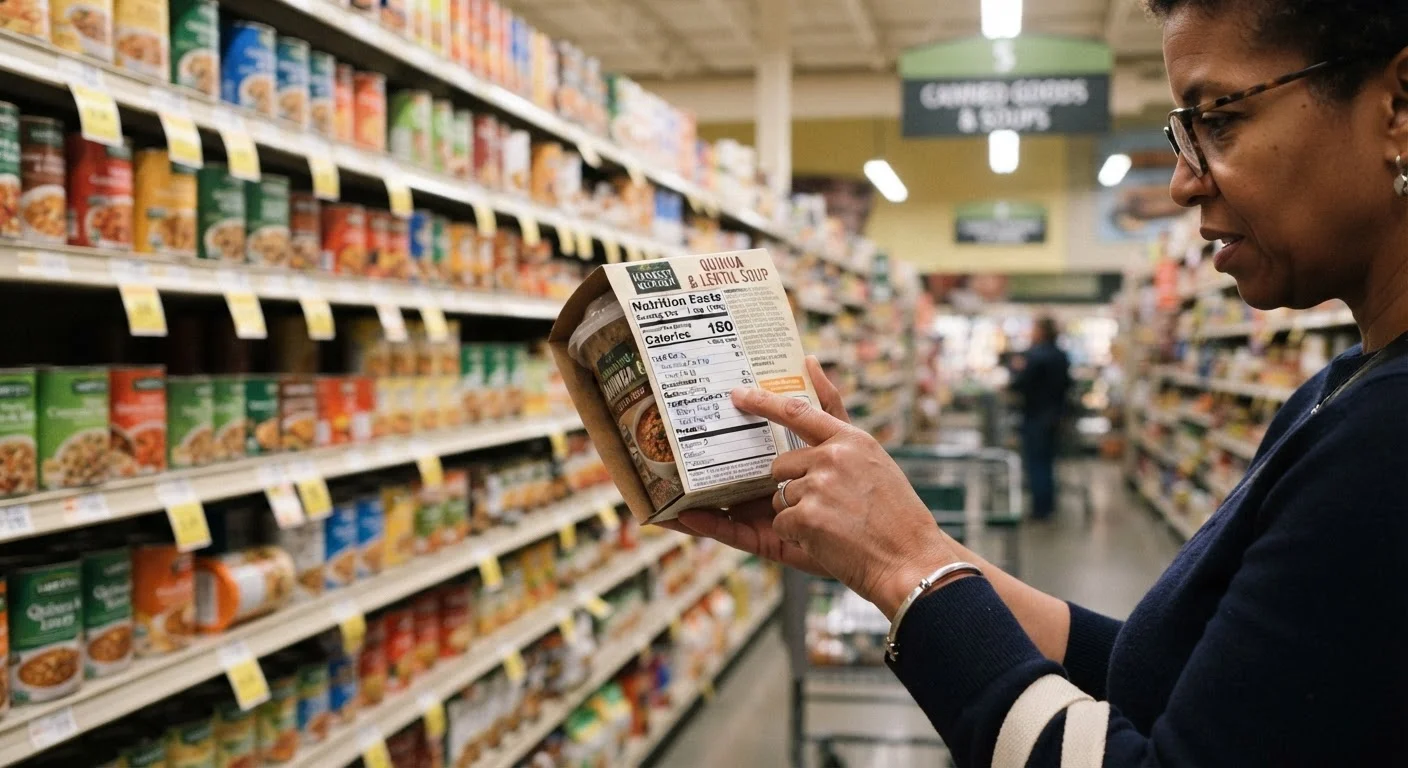
Photo: InsightsVault.com | Interesting Daily Reads editorial
Key Takeaways
- Serving size is the foundation of the entire label - always check it before comparing products.
- The % Daily Value column tells you at a glance whether a nutrient amount is high or low.
- Sodium and added sugars are the two nutrients most worth watching on budget food items.
- Fiber and protein density help you evaluate how filling - and therefore how cost-effective - a food really is.
- Ingredient lists are ordered by weight; the first few ingredients define what you're mostly eating.
- Generic and store-brand products often have nearly identical nutrition profiles to pricier name brands.
Start Here: Serving Size and Calories
Every number on a Nutrition Facts label is tied to the listed serving size - not the whole package. This single detail trips up more shoppers than any other. A bag of chips labeled 150 calories might contain 3.5 servings, making the real per-bag total over 500 calories.
Check the serving size first, then look at how many servings are in the container. If you typically eat the whole item in one sitting, multiply everything on the label accordingly. This habit takes seconds and immediately makes you a more informed shopper.
Calories reflect total energy per serving. For budget shoppers evaluating cost-per-calorie as a rough measure of value, this number matters - but calories alone don't tell you whether those calories are nourishing or not. That's where the rest of the label comes in.
Compare Per-Serving, Then Per-Container
The % Daily Value Column: Your Fastest Shortcut
The right-hand column on the Nutrition Facts panel shows % Daily Value (%DV) - how much of each nutrient a single serving contributes toward a standard 2,000-calorie daily diet. It's the fastest way to evaluate a food without doing math.
Use this rule of thumb: 5% DV or less means a food is low in that nutrient; 20% DV or more means it's high. For nutrients you want more of - fiber, protein, calcium, iron, vitamin D - higher %DV is better. For nutrients most Americans already consume in excess - sodium, saturated fat, added sugars - lower %DV is generally preferable.
70%+
Of packaged US foods considered ultra-processed
Research published in peer-reviewed nutrition journals has estimated that more than 70% of foods in US supermarkets qualify as ultra-processed, making label literacy particularly important for routine shoppers.
3,400 mg
Average daily sodium intake for US adults
According to the CDC, the average American adult consumes about 3,400mg of sodium per day - well above the recommended limit of 2,300mg - with the majority coming from packaged and processed foods.
17 tsp
Average daily added sugar consumption
The CDC estimates that Americans consume an average of about 17 teaspoons of added sugar per day, roughly double the recommended amount, much of it from packaged products where the label is the only way to detect it.
This column is particularly useful when comparing two similar products at different price points, which is a common situation for budget-conscious shoppers weighing store brands against name brands.
The Nutrients That Matter Most for Budget Shoppers
You don't need to scrutinize every line. Four nutrients reward the most attention for everyday grocery decisions:
- Sodium: Heavily processed and canned foods - often the cheapest options - tend to be high in sodium. The %DV column makes this easy to spot. Rinsing canned beans, for example, can reduce sodium content by a meaningful amount without adding cost.
- Added sugars: The 2020 label update requires manufacturers to list added sugars separately from naturally occurring sugars. Foods with high added sugar content often deliver calories with minimal nutritional return.
- Dietary fiber: Higher fiber content generally means a more filling food. Whole grains, legumes, and vegetables score well here and tend to be among the most affordable ingredients available.
- Protein: Protein contributes to satiety. Comparing protein grams per dollar across different protein sources - eggs, dried beans, canned tuna - is a practical way to stretch a food budget.
For a broader look at how these nutrients fit into a full eating strategy, see our guide to affordable nutrition fundamentals.
Reading the Ingredient List Alongside the Label
The ingredient list is separate from the Nutrition Facts panel but works in tandem with it. Ingredients are listed in descending order by weight - what appears first is what the product contains the most of. A bread with "whole wheat flour" as the first ingredient is meaningfully different from one where it appears fourth after enriched flour and added sugars.
For budget shoppers, the ingredient list helps explain why two similarly priced foods might differ in how they make you feel or how long they sustain you. A product with a long list of additives isn't automatically worse nutritionally, but the ingredient list gives you context the Nutrition Facts panel alone can't provide.
It's also worth noting that ultra-processed foods tend to have longer ingredient lists with items you wouldn't use in home cooking. This isn't a rule with hard cutoffs, but it's a useful signal. Our article on when cheap food choices backfire nutritionally explores this dynamic in more depth.
"Natural" and "Healthy" Labels Are Not Regulated the Same Way
Putting It to Work at the Store
Armed with these basics, comparing products takes about 30 seconds per item. When two products cost roughly the same, the Nutrition Facts panel lets you choose the one with more fiber, less sodium, or more protein - real value differences invisible on the price tag alone.
Store-brand and generic products frequently match their name-brand counterparts nutrient-for-nutrient. Checking labels side by side is the only reliable way to confirm this, rather than assuming one is better based on packaging or price.
For a comprehensive look at how label reading fits into a full grocery strategy - from planning and shopping to storage - see the end-to-end guide to eating well without overspending.
This article provides general nutrition education and is not a substitute for personalized advice from a registered dietitian or qualified healthcare professional.
Frequently Asked Questions
The content provided on our blog site traverses numerous categories, offering readers valuable and practical information. Readers can use the editorial team’s research and data to gain more insights into their topics of interest. However, they are requested not to treat the articles as conclusive. The website team cannot be held responsible for differences in data or inaccuracies found across other platforms. Please also note that the site might also miss out on various schemes and offers available that the readers may find more beneficial than the ones we cover.