
Gym Membership vs. Home Fitness: An Honest Comparison

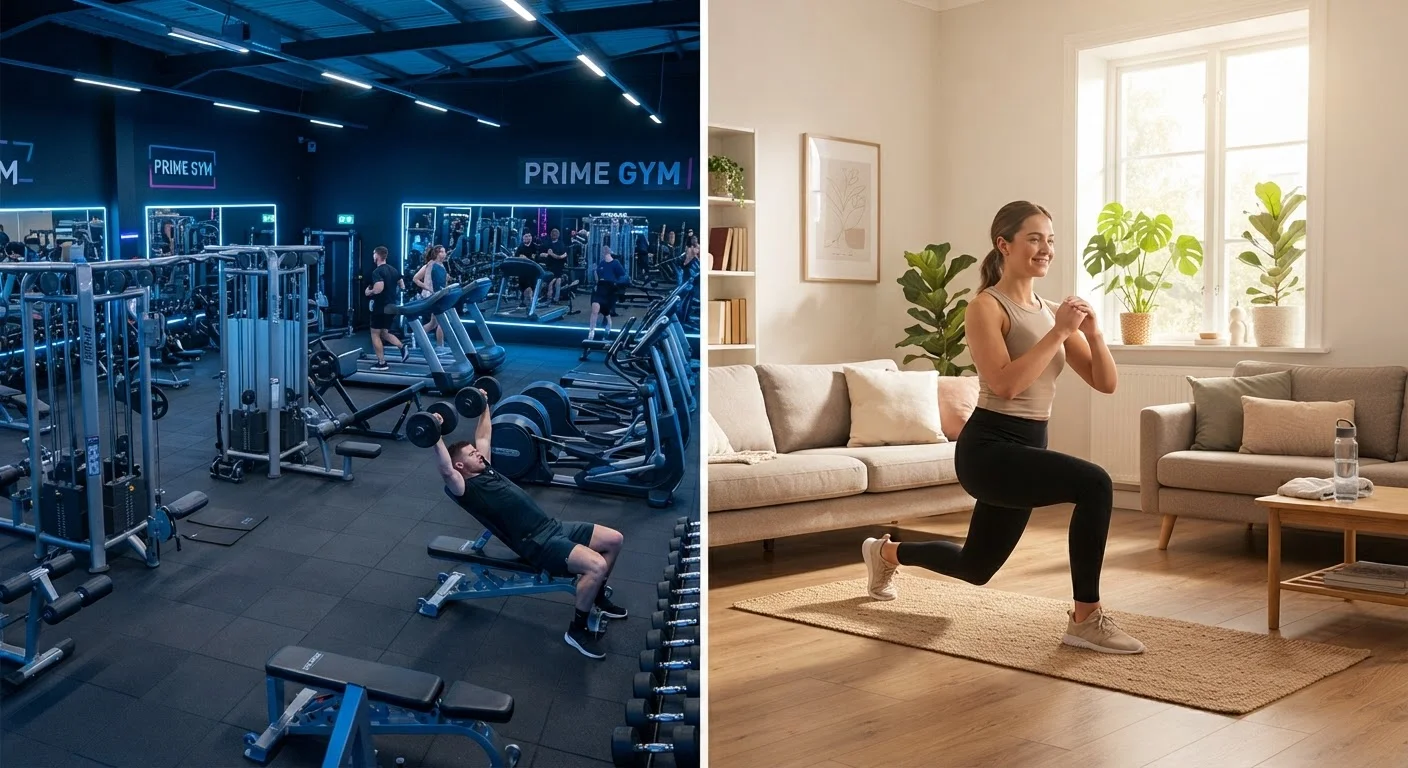
Photo: InsightsVault.com | Interesting Daily Reads editorial
Key Takeaways
- Gym memberships typically cost $30-$80/month; effective home fitness can cost little to nothing.
- Gyms offer equipment variety and structure; home workouts offer flexibility and zero commute.
- Consistency matters more than location - the best routine is one you'll actually stick with.
- Many free and low-cost tools make home fitness more accessible than ever before.
- Neither option is universally superior - your lifestyle, goals, and budget should guide the decision.
The Real Cost Difference
The financial gap between these two approaches is substantial. A basic gym membership in the US typically runs between $30 and $80 per month, putting the annual cost at $360-$960 before factoring in initiation fees, parking, or add-on classes. Premium gyms or those with personal training options can push well beyond that range.
Home fitness, by contrast, can be genuinely free. Bodyweight exercises - push-ups, squats, lunges, planks - require no equipment whatsoever. Free video workouts are widely available through public platforms, and many community centers and libraries offer fitness programming at low or no cost. For those who want to add resistance bands or a jump rope, the one-time investment is typically under $30.
That said, home fitness costs can creep up. Investing in a stationary bike, adjustable dumbbells, or a pull-up bar changes the calculus. If you're drawn to that kind of equipment, compare the purchase cost against a few years of gym fees - sometimes the gym is the better financial deal for specialized equipment access.
For a broader look at affordable options beyond either choice, the Low-Cost Fitness complete overview is a useful companion resource.
| Gym Membership | Home Fitness | |
|---|---|---|
| Typical annual cost | $360-$960+ | $0-$100 (one-time) |
| Equipment variety | High - weights, machines, cardio | Low to moderate - bodyweight or basic gear |
| Convenience | Requires commute and scheduling | Immediate, no travel needed |
| Social motivation | Strong - shared environment | Minimal - solo by default |
| Beginner-friendliness | Can feel intimidating | Low-pressure, private setting |
| Flexibility of schedule | Limited to gym hours | Fully flexible, anytime |
| Suitability for strength goals | High - heavy weights available | Moderate - limited without equipment |
What Each Option Actually Delivers
A gym's core value proposition is access: to heavy weights, cardio machines, pools, courts, and often group classes. For people pursuing specific strength goals, training for a sport, or seeking the motivational energy of a shared space, that access is genuinely difficult to replicate at home. Gyms also provide a defined physical separation between your workout and your living space - a psychological benefit that helps some people switch into exercise mode more easily.
Home fitness delivers something equally valuable: removal of friction. No commute, no wait for equipment, no schedule constraints. Research consistently shows that convenience is one of the strongest predictors of whether people maintain exercise habits over time. A 20-minute bodyweight session done at 7 a.m. in your living room beats a gym visit that keeps getting postponed.
The social dimension cuts both ways. Gyms offer community and accountability - but they can also feel intimidating to beginners. Home workouts are private and pressure-free, though some people find that isolation makes it easier to skip. Exercising alone versus with others involves real tradeoffs worth thinking through before committing.
Test Before You Commit
Making Home Fitness Work Without Spending Much
The biggest misconception about home fitness is that it requires equipment to be effective. It doesn't. A well-designed bodyweight routine can build strength, improve cardiovascular fitness, and support flexibility - all without a single piece of gear. The key is progressive overload: gradually increasing difficulty by adding reps, reducing rest time, or moving to harder exercise variations.
Free digital tools have made home programming more accessible than at any previous point. Many fitness instructors publish complete workout programs through publicly accessible video platforms. Community centers, YMCA branches, and local recreation departments often run low- or no-cost group classes as well. Our guide to free fitness resources worth your time covers what's actually useful versus what's just noise.
If you're newer to exercise entirely, starting at home removes financial risk - you can build the habit before deciding whether a gym adds real value. The beginner's guide to low-cost fitness walks through how to structure those early weeks without spending money. And if your home workouts eventually expand to include outdoor options, comparing outdoor and indoor home workouts can help you decide what mix suits your lifestyle.
This article is for general informational purposes only and is not medical or fitness advice. Consult a qualified healthcare or fitness professional before starting a new exercise program, especially if you have any underlying health conditions.
The content provided on our blog site traverses numerous categories, offering readers valuable and practical information. Readers can use the editorial team’s research and data to gain more insights into their topics of interest. However, they are requested not to treat the articles as conclusive. The website team cannot be held responsible for differences in data or inaccuracies found across other platforms. Please also note that the site might also miss out on various schemes and offers available that the readers may find more beneficial than the ones we cover.