
Where Heat Actually Escapes from a Typical Home

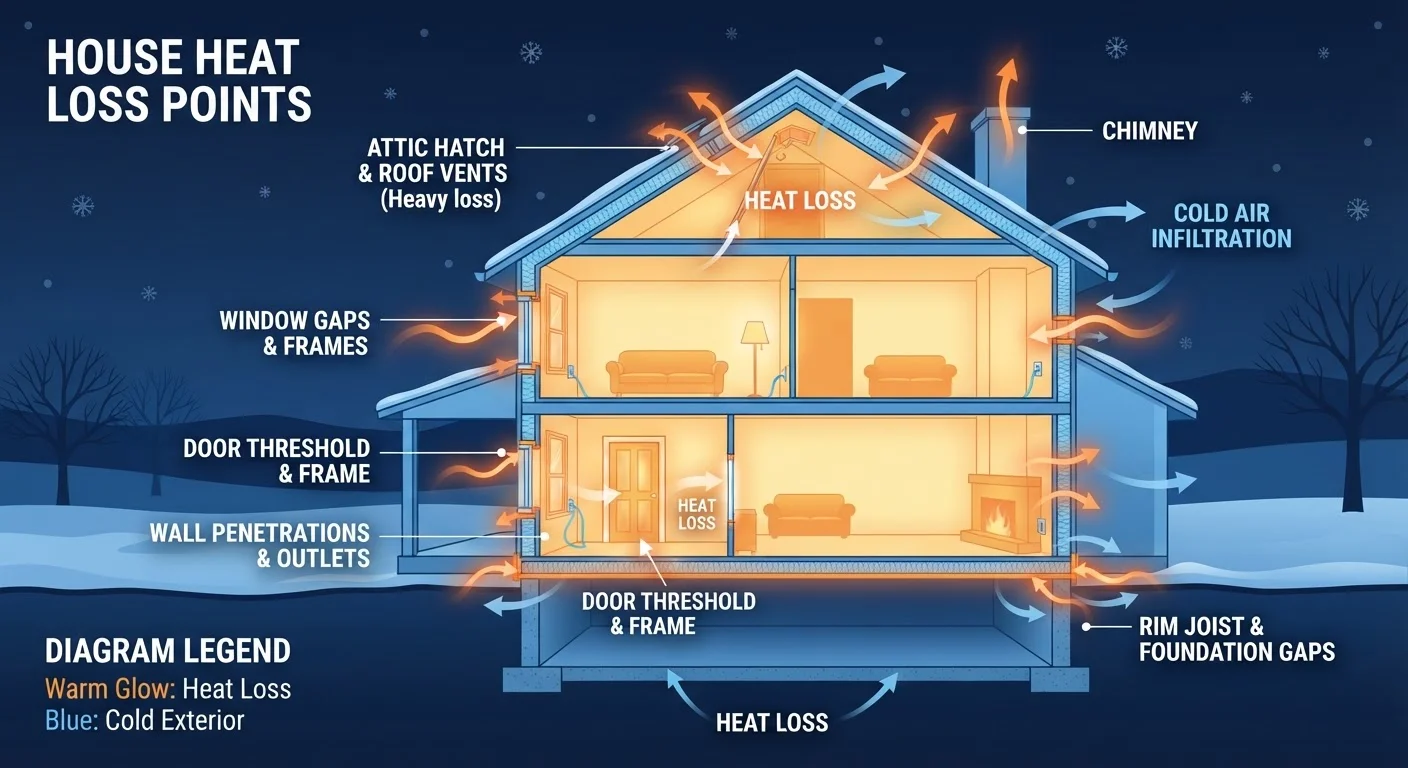
Photo: InsightsVault.com | Interesting Daily Reads editorial
The Main Heat-Loss Points, Ranked by Impact
Most homes leak heat through several areas simultaneously, but not equally. Understanding where the biggest losses occur helps you prioritize effort and spending. The U.S. Department of Energy estimates that air leaks and inadequate insulation together account for a substantial share of home heating costs - often more than windows or doors alone.
| Attic heat loss share | 25-35% of total (U.S. Department of Energy general estimate) |
| Air infiltration share | 20-40% of total (Varies by home age and construction type) |
| Window and door loss share | 10-20% of total (General residential building science estimate) |
| Floor and foundation loss share | 10-15% of total (General residential building science estimate) |
| Lowest-cost fix category | Air sealing (caulk & weatherstrip) (DOE Energy Saver guidance) |
| Highest-return insulation project | Attic insulation (Consistently cited in energy efficiency literature) |
Attic and Roof (25-35% of heat loss)
Heat rises. In homes with inadequate attic insulation or poorly sealed attic hatches, warm air migrates upward and out through the roof assembly. Attic insulation upgrades consistently rank among the most cost-effective improvements because the surface area is large and the fix is relatively straightforward.
Walls (15-25%)
Exterior walls in older homes often contain little or no cavity insulation. Heat conducts through framing members (called thermal bridging) even when cavity insulation is present. Blown-in insulation added to existing wall cavities can meaningfully reduce this loss without full renovation.
Air Infiltration Through Gaps and Cracks (20-40%)
This is frequently the most underestimated category. Gaps around plumbing penetrations, electrical outlets on exterior walls, recessed lights, and attic bypasses - hidden channels where conditioned air escapes - can collectively rival poorly insulated walls. Sealing these costs very little and delivers outsized results. See the beginner's guide to home energy efficiency for a practical starting framework.
Windows and Doors (10-20%)
Single-pane windows conduct heat readily, and poorly weather-stripped doors let air bypass the envelope entirely. While window replacement is expensive, weather stripping and window film are low-cost interim fixes. For a room-by-room breakdown of where these losses show up most, see energy-efficient practices for every room.
Floors and Foundation (10-15%)
Homes with uninsulated crawl spaces, slab foundations, or basement rim joists lose meaningful heat at the base of the structure. Cold floors are often a symptom. Insulating rim joists and crawl space walls is a DIY-accessible project that many homeowners overlook.
How to Use This Information Practically
Knowing where heat escapes is only useful if it shapes action. A few principles help translate this reference into decisions:
Thermal bridging
Heat conduction through a material - often structural framing - that bypasses insulation. In wood-framed walls, studs conduct heat even when cavity insulation is present, reducing the effective insulating value of the wall assembly.
Air infiltration
Uncontrolled movement of outside air into a building through gaps, cracks, and unsealed penetrations. Distinct from ventilation, infiltration is unplanned and typically increases heating and cooling costs.
Blower-door test
A diagnostic tool used by energy auditors that depressurizes a home with a calibrated fan to measure overall air leakage and help locate specific infiltration points.
Rim joist
The horizontal framing member that sits on top of a home's foundation wall and closes off the floor framing system. Rim joists are a common source of heat loss in homes with basements or crawl spaces.
R-value
A measure of thermal resistance - how well a material resists heat flow. Higher R-values indicate better insulating performance. Recommended R-values vary by climate zone and building assembly.
- Target air sealing first. It costs the least per dollar of heat saved. Caulk and weatherstrip before investing in insulation or windows.
- Prioritize the attic. The combination of large surface area and the natural upward movement of warm air makes attic insulation one of the highest-return investments a homeowner can make.
- Don't skip the unsexy spots. Rim joists, attic hatches, and recessed light housings are frequently missed. A home energy auditor can identify these with a blower-door test.
- Address moisture alongside air sealing. Sealing gaps without ensuring adequate ventilation can trap humidity and create condensation problems. When in doubt, consult a building professional before sealing large areas.
For a structured approach to tackling these areas across all four seasons, the Seasonal Home Energy Checklist provides a room-by-room plan. And if you want a broader strategy tying insulation, thermostats, and behavior changes together, the complete year-round energy savings roadmap is a logical next step.
One often-overlooked area: water heating. It doesn't contribute to envelope heat loss directly, but it represents a significant slice of total energy bills. The water heating cost guide explains the factors driving those costs and how to manage them.
This article provides general home energy information for educational purposes. Costs, heat-loss percentages, and improvement outcomes vary by home age, construction type, climate zone, and local energy prices. Consult a licensed energy auditor or building professional before undertaking significant insulation or air-sealing work.
The content provided on our blog site traverses numerous categories, offering readers valuable and practical information. Readers can use the editorial team’s research and data to gain more insights into their topics of interest. However, they are requested not to treat the articles as conclusive. The website team cannot be held responsible for differences in data or inaccuracies found across other platforms. Please also note that the site might also miss out on various schemes and offers available that the readers may find more beneficial than the ones we cover.