
The Role of Veterinary Teaching Hospitals in Affordable Pet Care

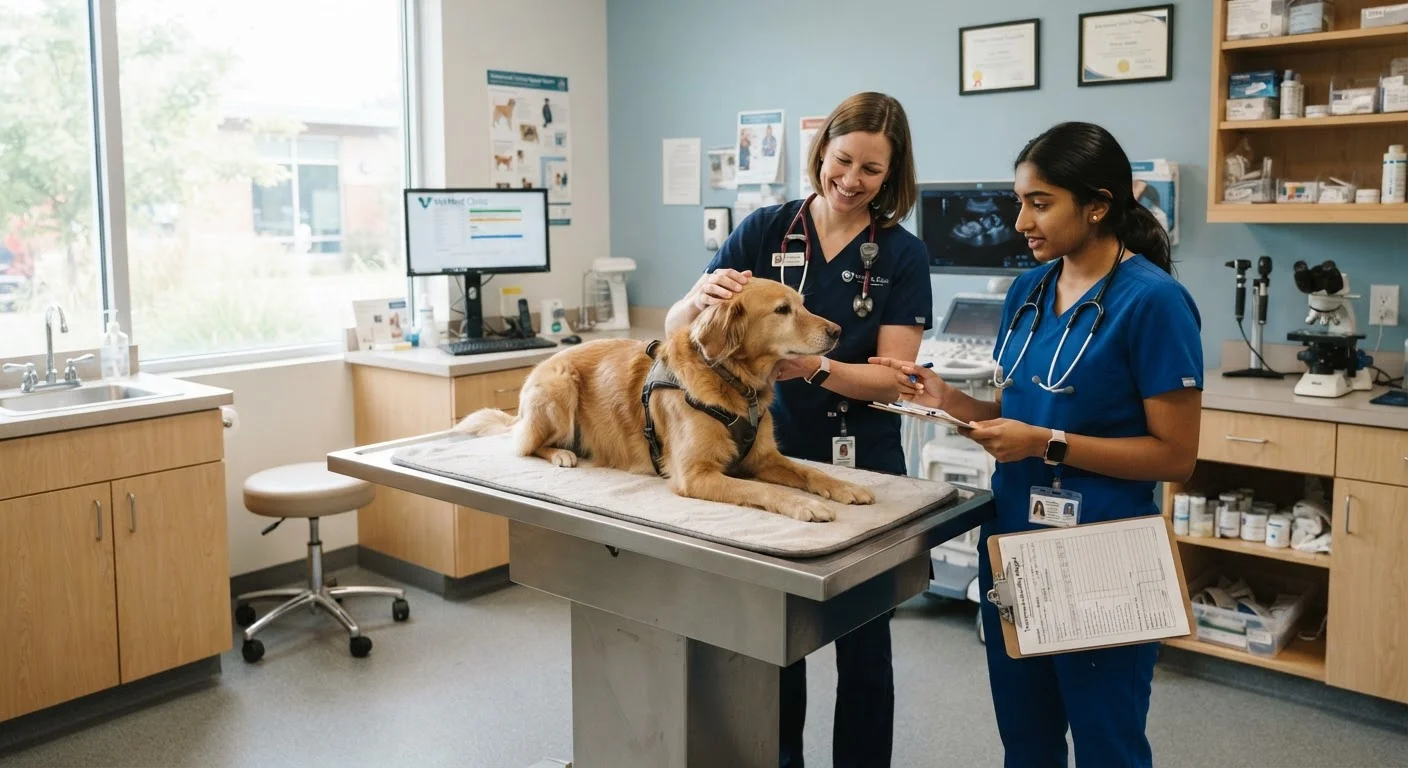
Photo: InsightsVault.com | Interesting Daily Reads editorial
Key Takeaways
- Veterinary teaching hospitals are real clinical facilities open to the public, not just training labs.
- Care is supervised by licensed veterinarians, so quality oversight is built into the structure.
- Costs are often significantly lower than private specialty practices for equivalent services.
- Wait times and appointment availability may differ from private clinics - planning ahead matters.
- VTHs commonly offer advanced diagnostics not available at general practices, at reduced cost.
What Makes a Veterinary Teaching Hospital Different
Most pet owners default to private veterinary practices for good reason - they're local, fast, and familiar. But for many common and complex conditions alike, a veterinary teaching hospital (VTH) offers a compelling alternative that most people never consider.
VTHs are full clinical hospitals staffed by fourth-year veterinary students, residents completing specialty training, and board-certified faculty veterinarians. The care model is layered: a student performs the initial workup, a resident or intern reviews the findings, and a faculty specialist signs off on the diagnosis and treatment plan. That chain of review can actually catch things a solo practitioner under time pressure might miss.
Unlike community pop-up clinics or mobile vaccine events - covered in our guide to community vet outreach events - VTHs are fully equipped hospitals. Expect MRI machines, CT scanners, in-house labs, surgical suites, and intensive care units. The infrastructure is hospital-grade, not pop-up grade.
VTHs Are Not the Same as Low-Cost Clinics
The Cost Advantage: What to Realistically Expect
The fee structure at a VTH reflects its educational mission. Because student participation reduces faculty labor overhead, and because these institutions are often subsidized by university funding or grants, prices are typically lower than at private specialty hospitals - sometimes substantially so.
For specialty referrals in particular - orthopedic surgery, oncology consultations, advanced imaging - the savings can be meaningful. A procedure priced at $3,000-$5,000 at a private specialty clinic might run $1,500-$2,500 at a comparable VTH. Routine wellness services, if offered, tend to be even more competitively priced.
33
AVMA-accredited U.S. vet colleges with teaching hospitals
Each accredited college of veterinary medicine in the U.S. operates a clinical teaching hospital open to the public, according to the AVMA.
30-50%
Typical savings vs. private specialty clinics
Pet owners commonly report fee reductions in this range for specialty services at VTHs, though actual savings vary by institution, service, and region.
4+ years
Minimum faculty veterinary training beyond vet school
Board-certified specialists who supervise VTH students typically complete internships and multi-year residencies after earning their veterinary degree.
That said, VTHs are not free by default. Some offer income-based assistance or participate in clinical trials that cover costs for qualifying patients, but standard appointments carry standard (if reduced) fees. It's worth asking about financial assistance programs when you call to schedule. For a broader picture of no- and low-cost care options, see our overview of community clinics and assistance programs.
What to Expect During a VTH Visit
Appointments at teaching hospitals run longer than at private practices - often significantly so. A new-patient workup that takes 30 minutes at a general practice might take two to three hours at a VTH, because the student must complete their assessment before the supervising clinician reviews it. If you're working with a complex case, that thoroughness is often a benefit. If your schedule is tight, plan accordingly.
You'll also interact with more people. A student will take the history and perform the physical exam. A resident or senior clinician will follow up. In teaching rounds, additional students may observe - you can decline participation if that makes you uncomfortable, and the hospital will accommodate that request without affecting your pet's care.
Case selection matters too. VTHs tend to prioritize cases with educational value, which means unusual presentations or conditions requiring specialist-level expertise often move through the system efficiently. Routine annual exams may be available but aren't always the primary focus of every VTH department.
Preventive care remains the most cost-effective strategy overall - a point reinforced by our article on why preventive vet care costs less than emergency treatment. VTHs can be part of that strategy, particularly for services like dental cleanings under anesthesia or early-detection diagnostics.
How to Find and Access a VTH Near You
The United States has 33 AVMA-accredited colleges of veterinary medicine, nearly all of which operate public-facing teaching hospitals. Coverage isn't uniform - most are affiliated with large state universities, so rural areas may face significant travel distances. That said, for high-cost specialty care, the travel may be worthwhile.
To locate a VTH, start with the AVMA's directory of accredited programs or search for the veterinary college associated with your state's land-grant university. Call the hospital directly to ask about the services they offer to the public, current wait times, and any income-based assistance they provide.
Some VTHs also run outreach programs or satellite clinics in underserved areas. These are worth asking about when you call. For a broader inventory of what's typically available through vet schools and similar programs, our roundup of lesser-known free vet care programs provides additional context.
This article provides general information about veterinary teaching hospitals and is not a substitute for advice from a licensed veterinarian regarding your specific pet's health needs.
Frequently Asked Questions
The content provided on our blog site traverses numerous categories, offering readers valuable and practical information. Readers can use the editorial team’s research and data to gain more insights into their topics of interest. However, they are requested not to treat the articles as conclusive. The website team cannot be held responsible for differences in data or inaccuracies found across other platforms. Please also note that the site might also miss out on various schemes and offers available that the readers may find more beneficial than the ones we cover.