
Dry Food, Wet Food, and Raw Diets: Weighing the Costs and Trade-Offs

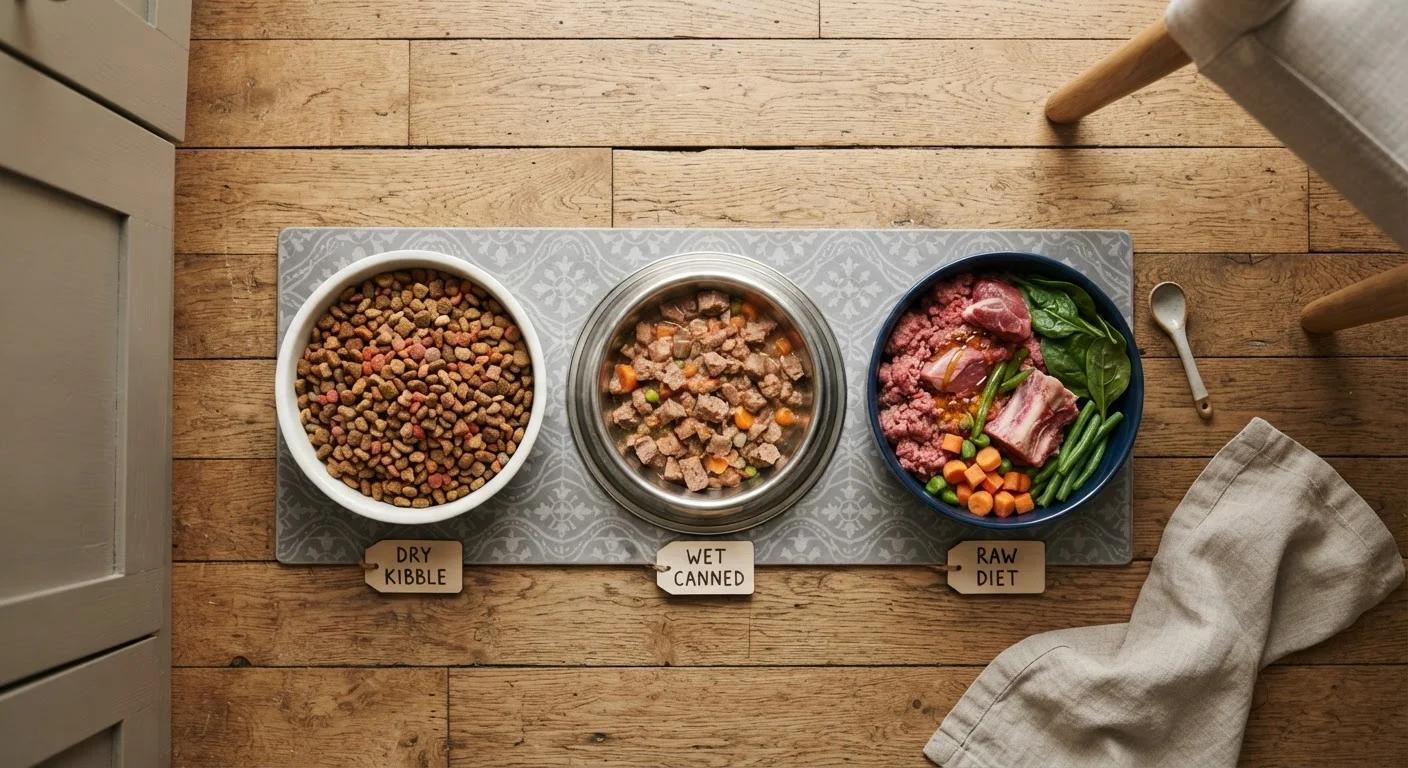
Photo: InsightsVault.com | Interesting Daily Reads editorial
Key Takeaways
- Dry food is the most budget-friendly option per day but varies widely in nutritional quality.
- Wet food costs two to four times more than dry kibble but offers higher moisture content, which matters for cats especially.
- Raw diets carry the highest monthly cost and require strict food-safety handling to avoid contamination risks.
- A mixed feeding approach can balance cost and nutritional variety for most pets.
- Always consult your veterinarian before switching your pet's diet, particularly for animals with health conditions.
What You Actually Pay: Cost Ranges by Diet Type
Food is typically the largest recurring expense in pet ownership, so understanding real cost differences between diet types is essential for building a realistic budget. The figures below are general ranges - actual costs vary by pet size, brand tier, and region.
- Dry food (kibble): Roughly $0.25-$1.50 per day for an average-sized dog; $0.20-$0.80 per day for a cat. Large bags bought strategically can lower the per-serving cost further, though storage and freshness matter - see our guide on bulk buying pet supplies.
- Wet food (canned or pouched): Typically $1.00-$4.00 per day for dogs; $0.60-$2.00 per day for cats. The cost gap versus kibble widens significantly at larger serving sizes, which is why wet food is rarely the sole diet for big dogs.
- Raw diets (commercial raw or DIY): Commercial frozen raw runs $3.00-$10.00 per day for a medium dog. DIY raw diets can be cheaper in theory but require careful nutrient balancing - errors can result in expensive veterinary visits that erase any savings.
If you're just starting to map out what pet food will cost your household annually, the pet health budgeting guide provides a useful framework for estimating total care expenses alongside food.
| Dry Food | Wet Food | Raw Diet | |
|---|---|---|---|
| Typical daily cost (avg. dog) | $0.25-$1.50 | $1.00-$4.00 | $3.00-$10.00 |
| Typical daily cost (cat) | $0.20-$0.80 | $0.60-$2.00 | $2.00-$6.00 |
| Moisture content | ~10% | 70-80% | 60-70% (varies) |
| Shelf stability | High - months in sealed bag | Moderate - refrigerate once opened | Low - requires freezer |
| Nutritional completeness (commercial) | AAFCO options widely available | AAFCO options widely available | Varies; verify labeling carefully |
| Food safety considerations | Low risk | Low risk when fresh | Higher - bacterial contamination risk |
| Preparation time | Minimal | Minimal | Significant - thawing, portioning |
Nutritional Trade-Offs Worth Knowing
Cost alone doesn't tell the full story. Each diet type has genuine nutritional strengths and limitations that should factor into your decision - ideally in conversation with your veterinarian.
Dry food is calorie-dense, shelf-stable, and convenient. Quality varies enormously, and a higher price tag doesn't always mean better nutrition. Learning to read labels is more valuable than relying on marketing claims - our guide to decoding pet food labels walks through what actually matters on the nutrition panel.
Wet food contains 70-80% moisture, which supports kidney and urinary tract function - particularly relevant for cats, who have a naturally low thirst drive. It's typically more palatable for picky eaters and useful for older animals with dental pain.
Raw diets proponents point to minimally processed ingredients and high protein bioavailability. However, organizations including the American Veterinary Medical Association (AVMA) have raised concerns about bacterial contamination risks - for both pets and the humans handling the food - and about the difficulty of achieving complete nutritional balance without expert formulation. This is a genuinely contested area; consult your vet rather than relying solely on anecdotal reports.
Mix and Match to Manage Costs
Hidden Costs and Practical Considerations
The sticker price per day doesn't capture the full financial picture. A few factors that budget-minded owners often overlook:
- Storage and waste: Dry food requires airtight containers to stay fresh; raw food demands freezer space and careful thawing schedules. Spoilage from mismanaged storage adds cost without adding nutrition.
- Transition costs: Switching diets abruptly can cause digestive upset, sometimes requiring a vet visit. Gradual transitions over 7-10 days are standard practice and reduce this risk.
- Supplementation: DIY raw feeders often need to purchase supplements to meet AAFCO (Association of American Feed Control Officials) nutrient profiles - an expense that can erode the savings versus commercial options.
- Health outcomes: A poorly formulated diet - at any price point - can contribute to long-term health problems. Spending a bit more on a nutritionally complete food may reduce veterinary costs over time, though no diet can guarantee specific health outcomes.
For a broader view of where food fits into your total pet care spending, the pet care budget overview explains which expense categories offer flexibility and which generally don't.
Making the Right Call for Your Pet and Your Budget
There's no single diet that works optimally for every pet or every household. A few practical principles can guide the decision:
- Start with your vet's input. Life stage, health conditions, and species-specific needs should shape the conversation before cost does. This is especially true for pets with kidney disease, food allergies, or weight management needs.
- Prioritize AAFCO-complete formulas. Whether dry or wet, look for packaging that states the food meets AAFCO nutritional profiles for your pet's life stage. This is a baseline, not a guarantee of quality, but it filters out nutritionally incomplete options.
- Consider mixed feeding strategically. Using primarily dry food supplemented with a small amount of wet food several times a week can deliver hydration and palatability benefits at a fraction of an all-wet diet's cost.
- Factor in your time. Raw diets in particular require planning, sourcing, and safe food handling. If those demands aren't sustainable, a well-chosen commercial diet will serve your pet better than an inconsistently managed raw one.
Understanding routine care costs by pet type can also help you see how food spending fits relative to veterinary, preventive, and other recurring expenses across the year.
This article provides general information for educational purposes only and is not a substitute for personalized veterinary advice. Consult a licensed veterinarian before making significant changes to your pet's diet.
The content provided on our blog site traverses numerous categories, offering readers valuable and practical information. Readers can use the editorial team’s research and data to gain more insights into their topics of interest. However, they are requested not to treat the articles as conclusive. The website team cannot be held responsible for differences in data or inaccuracies found across other platforms. Please also note that the site might also miss out on various schemes and offers available that the readers may find more beneficial than the ones we cover.