
Digital Coupons vs. Paper Coupons: Which Format Still Holds Its Ground

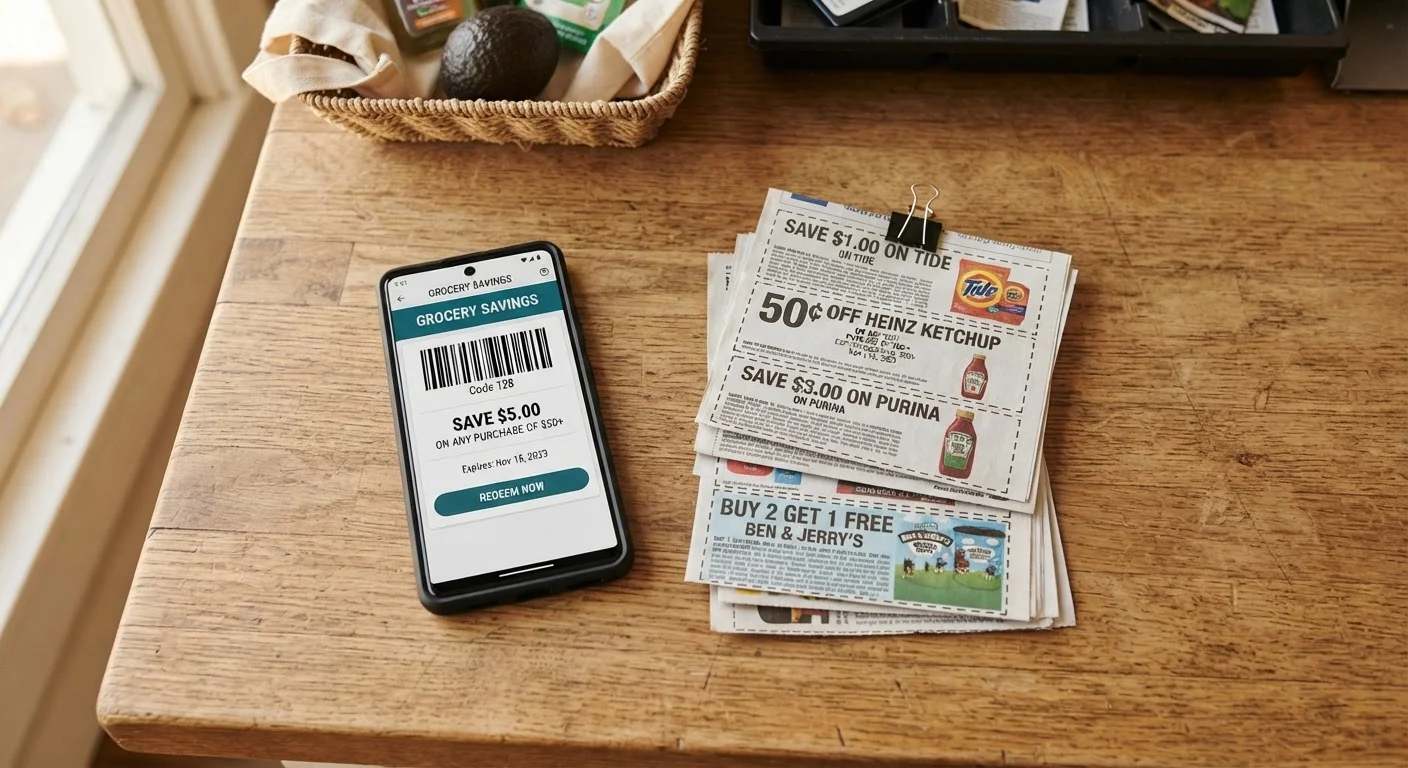
Photo: InsightsVault.com | Interesting Daily Reads editorial
Key Takeaways
- Digital coupons require an account or app login; paper coupons work at the register with no technology barrier.
- Paper coupons can often be stacked with digital store coupons, but retailer policies vary widely.
- Digital coupons are easier to organize and less prone to expiration surprises if you clip them promptly.
- Paper coupon circulation has declined, but manufacturer inserts still appear in Sunday newspapers and direct mail.
- Neither format is universally superior - the right choice depends on your store, shopping habits, and available offers.
How Each Format Works
Paper coupons are physical vouchers - clipped from newspaper inserts, printed at home, or received through direct mail - that a cashier scans or manually enters at the register. Manufacturer paper coupons are issued by the product's brand and accepted at most retailers that carry the item. Store paper coupons, by contrast, are retailer-specific and only work in that chain's locations.
Digital coupons operate through a retailer's app or website. You "clip" them to your loyalty account before shopping, and they apply automatically when your card or phone number is entered at checkout. Some retailers also use one-time promo codes entered during online checkout. Understanding who issues each offer matters - see how retailers decide what to offer for the mechanics behind coupon distribution.
| Criterion | Digital Coupons | Paper Coupons |
|---|---|---|
| How to access | Retailer app or website account | Newspaper inserts, direct mail, printable |
| Technology required | Smartphone or computer | None |
| Accepted for online orders | Yes, standard format | Rarely accepted |
| Stackable with other coupons | Sometimes (store policy dependent) | Often yes, with digital store coupons |
| Shareable with others | No - tied to your account | Yes - hand to anyone |
| Expiration tracking | App usually alerts you | Manual tracking required |
| Privacy trade-off | Account and purchase data shared | Anonymous at register |
Stacking, Acceptance, and the Rules That Trip Shoppers Up
One of the most practical differences between formats is how they interact. Many major grocery chains allow one manufacturer coupon and one store coupon per item - which creates a genuine opportunity to combine a paper manufacturer coupon with a digital store coupon on the same purchase. This is sometimes called "stacking," and when it works, it compounds the discount on a single product.
However, stacking rules differ by retailer and are subject to change. Some chains prohibit combining digital and paper discounts on the same item. Others limit digital coupon use to one per transaction or one per household account. Always check the store's current coupon policy before assuming stacking is permitted - this is especially relevant if you're new to couponing. Getting started with grocery couponing covers these policy basics in more depth.
1.3 billion
Digital coupons redeemed in the US annually
Statista has reported annual US digital coupon redemptions in the low billions, reflecting widespread adoption of app-based savings in grocery and retail.
~1%
Typical paper coupon redemption rate
Industry estimates have long placed paper coupon redemption rates below 2%, meaning the vast majority of distributed paper coupons go unused.
60%+
US adults using digital coupons
Multiple consumer surveys indicate a majority of US adults have used a digital coupon or promo code in the past year, particularly for grocery and online shopping.
Paper coupons are also not accepted for online grocery orders in most cases. If you regularly use delivery or curbside pickup, digital coupons are the only format that integrates with those checkout flows. For a broader view of how discount strategies differ by channel, the online vs. in-store comparison is worth reviewing.
Practical Trade-Offs Worth Knowing
Paper coupons have real advantages: they don't require a smartphone, they can be handed to a family member or friend, and they work even if your phone battery is dead. The downside is physical management - clipping, sorting, and remembering to bring them. Expiration dates are easy to miss, and a coupon you forgot to bring is useless.
Digital coupons solve the organizational problem but introduce friction of their own. You need an account with each retailer, which means sharing contact information and agreeing to marketing communications. If you shop across four different stores, you're managing four separate apps. There's also the risk that a clipped digital coupon fails to apply due to a system error - something shoppers should check on their receipt before leaving the store.
It's worth being clear-eyed about both formats. Common coupon myths covers assumptions that can lead shoppers to overestimate what either format delivers. And if you're looking at browser-based tools that auto-apply digital codes, browser extensions for automatic coupons offers a practical breakdown of how those tools differ. For those who coupon across different product categories - groceries, travel, services - adapting your approach by category explains where each format tends to apply.
The content provided on our blog site traverses numerous categories, offering readers valuable and practical information. Readers can use the editorial team’s research and data to gain more insights into their topics of interest. However, they are requested not to treat the articles as conclusive. The website team cannot be held responsible for differences in data or inaccuracies found across other platforms. Please also note that the site might also miss out on various schemes and offers available that the readers may find more beneficial than the ones we cover.