
Electric vs. Petrol: How Running Costs Diverge After the First Year

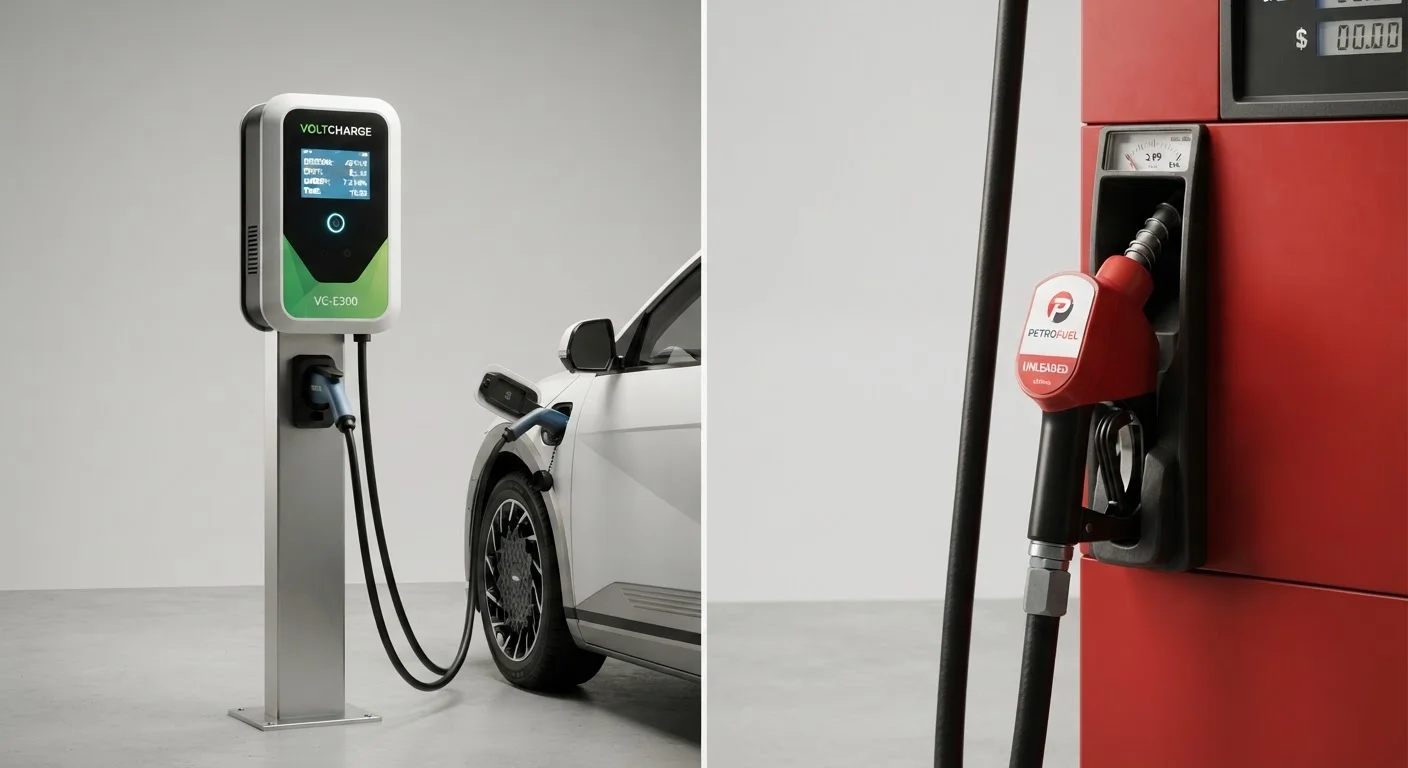
Photo: InsightsVault.com | Interesting Daily Reads editorial
Key Takeaways
- EV owners typically spend less on fuel and routine maintenance but may face higher tyre wear costs due to vehicle weight.
- Petrol vehicles carry predictable servicing costs but ongoing fuel expenses can add up significantly over several years.
- Depreciation patterns differ: EVs can lose value faster in early years, though this varies by model and market conditions.
- Home charging rates are far cheaper than public fast-charging, making where you charge a major budget variable.
- Neither drivetrain is universally cheaper - the gap depends heavily on annual mileage, driving patterns, and local energy prices.
Fuel vs. Charging: Where the Gap Shows Up Most
Energy cost is where electric vehicles most consistently outspend - or rather, underspend - their petrol equivalents. The U.S. Department of Energy has consistently found that the per-mile cost of electricity is lower than the per-mile cost of petrol for comparable vehicles, though the exact margin shifts with local utility rates and pump prices.
The catch is where you charge. Home charging on a standard overnight rate can cost the equivalent of roughly $1-1.50 per gallon in energy terms, depending on your state's electricity rates. Public DC fast-charging, however, can run two to three times that - narrowing or even erasing the cost advantage. Drivers who rely heavily on highway fast-chargers should calculate their real per-mile charging cost rather than assuming home rates apply. See our guide on managing fuel and insurance costs over a car's lifetime for a broader look at how energy costs evolve as a vehicle ages.
Petrol costs, meanwhile, are volatile. Fuel spending depends on more than pump prices - engine efficiency degrades slightly over time, and driving behavior has a measurable impact on real-world consumption.
Maintenance and Servicing: Fewer Moving Parts, Lower Bills
An internal combustion engine has hundreds of moving components - oil, coolant, belts, spark plugs, exhaust systems - each requiring periodic attention. A battery-electric drivetrain eliminates most of them. There's no oil to change, no timing belt to replace, and regenerative braking significantly reduces brake wear.
Consumer data and AAA research have both found that EV owners spend materially less per mile on routine maintenance than petrol vehicle owners. The savings are most pronounced between years two and five, after the initial warranty period on consumables ends for petrol cars. However, EVs are not maintenance-free: cabin air filters, tyre rotations, brake fluid checks, and coolant servicing for the battery thermal system still apply.
Calculate Your Real Charging Cost
For a full picture of what scheduled and unscheduled servicing actually costs across a vehicle's life, the Car Ownership and Repair Costs overview breaks down both planned and surprise expenses.
Tyres, Weight, and a Cost Most EV Owners Underestimate
Battery packs make EVs heavier than comparable petrol models - often by 20-30%. Extra weight accelerates tyre wear, and the strong instant torque of electric motors can compound this on the front axle. Some EV-specific tyres are also priced at a premium due to low-rolling-resistance requirements and load ratings.
Industry data suggests EV owners may replace tyres somewhat more frequently than petrol-car owners driving similar mileage. The difference isn't dramatic in any single year but compounds over a five-year ownership period. Rotating tyres on schedule and avoiding aggressive acceleration helps manage this. For a detailed look at tyre budgeting, see Tyre Costs: The Recurring Expense Most Budgets Underestimate.
| Cost Category | Electric Vehicle | Petrol Vehicle | |
|---|---|---|---|
| Fuel / Charging (annual estimate) | Lower with home charging; higher with public fast-charging | Moderate to high; volatile with pump prices | |
| Routine Servicing | Lower - no oil changes, fewer wear items | Higher - oil, filters, plugs, belts required | |
| Brake Wear | Reduced by regenerative braking | Standard wear; replacement more frequent | |
| Tyre Wear | Faster due to weight and torque | Typical wear rate for vehicle class | |
| Depreciation (years 1-3) | Often steeper; model-dependent | More predictable, established curves | |
| Insurance | Often higher due to repair complexity | Generally lower; more repair options | |
| Unexpected Repairs | Battery issues costly; fewer mechanical failures | More frequent mechanical wear; parts widely available |
Depreciation and Resale: The Wildcard in the Total Cost Equation
Depreciation is typically the single largest component of annual car ownership cost, often exceeding fuel and maintenance combined. The True Annual Cost of Owning a Car addresses this in detail, but it's worth examining how EVs and petrol vehicles diverge here specifically.
EVs have historically depreciated faster in their first three years, driven partly by rapid model evolution and uncertainty around battery longevity. However, this pattern is not uniform - popular models from established manufacturers have held value more strongly than early-generation or niche EVs. Petrol vehicles follow a more established and predictable depreciation curve, which can make resale planning easier.
Battery health is a significant resale variable unique to EVs. A battery showing significant capacity loss will suppress resale value, while one with documented health above 85-90% of original capacity typically holds up better at auction. Some manufacturers publish battery health data through apps or service reports, which can help buyers and sellers negotiate more accurately.
Drivers comparing older versus newer models of either type should also consider the broader trade-off explored in Older Vehicle vs. Newer Model: Weighing Long-Term Running Costs.
This article is for general informational purposes only and does not constitute personalised financial or purchasing advice. Costs vary significantly by location, vehicle model, driving habits, and market conditions. Consult a qualified financial adviser for decisions specific to your situation.
The content provided on our blog site traverses numerous categories, offering readers valuable and practical information. Readers can use the editorial team’s research and data to gain more insights into their topics of interest. However, they are requested not to treat the articles as conclusive. The website team cannot be held responsible for differences in data or inaccuracies found across other platforms. Please also note that the site might also miss out on various schemes and offers available that the readers may find more beneficial than the ones we cover.