
Reading Your Car's Warning Lights Before They Become Expensive Problems

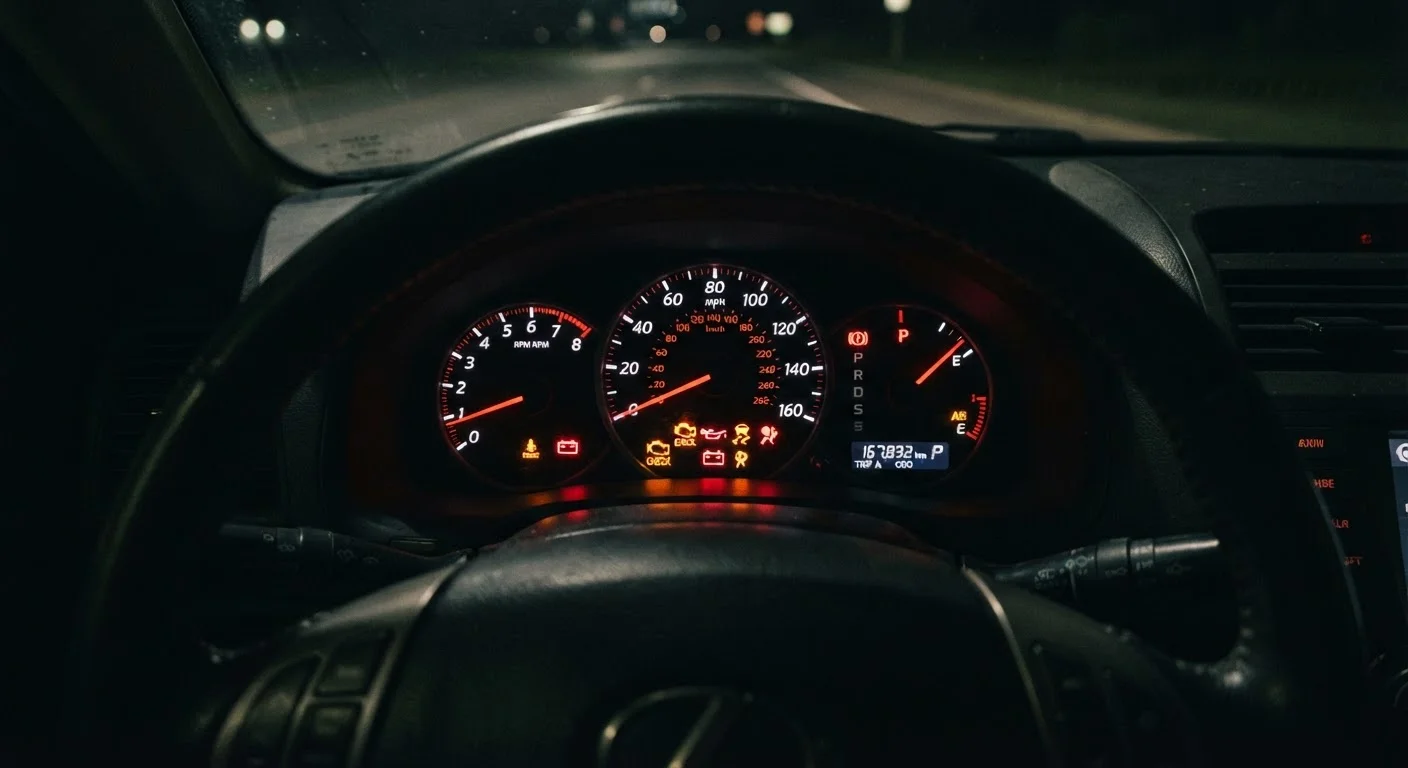
Photo: InsightsVault.com | Interesting Daily Reads editorial
Key Takeaways
- Red warning lights usually signal an immediate safety risk and warrant stopping the car when safe.
- Yellow or amber lights indicate a developing issue - get it checked within days, not weeks.
- A check engine light can mean anything from a loose gas cap to a failing catalytic converter.
- Reading your own OBD-II fault codes before visiting a shop helps you avoid inflated diagnostic fees.
- Ignoring warning lights rarely makes problems disappear - it typically makes repairs more expensive.
- Your owner's manual remains the single most reliable reference for what each light means on your specific vehicle.
What Warning Lights Are Actually Telling You
Your car's dashboard is essentially a reporting system. Sensors throughout the vehicle - monitoring oil pressure, coolant temperature, brake function, emissions, and more - feed data to the onboard computer. When a reading falls outside acceptable parameters, the computer triggers a warning light and, in many cases, stores a diagnostic fault code that a technician (or you) can retrieve later.
Understanding this matters for your wallet. A warning light isn't a demand to spend money immediately. It's information - and the more you understand it, the less leverage a rushed or opportunistic repair shop has over you. Deferred maintenance nearly always costs more in the long run, but so does overreacting and authorizing unnecessary work.
OBD-II
On-Board Diagnostics, second generation - a standardized system in all US cars built after 1996 that monitors vehicle systems and stores fault codes when something goes wrong. These codes can be read with an inexpensive scanner.
Fault code
A specific alphanumeric code (like P0300) stored by your car's computer when a sensor reading falls outside normal range. Fault codes identify which system triggered the warning light.
TPMS
Tire Pressure Monitoring System - sensors inside the wheels that alert you when one or more tires drops significantly below the recommended pressure.
Catalytic converter
An emissions control device in the exhaust system that converts harmful gases into less harmful ones. It can be damaged by engine misfires and is expensive to replace.
Alternator
A generator driven by the engine that keeps the battery charged while the car is running. A failing alternator means the battery will eventually drain while driving.
Diagnostic fee
A charge from a repair shop for the time spent identifying what's causing a warning light or symptom. Fees typically range from $75 to $150 and may or may not be credited toward the repair cost.
The Color-Coded Urgency System
Most modern vehicles use a three-color system that mirrors traffic lights in logic:
- Red - Stop or act immediately. These lights signal conditions that can cause rapid mechanical failure or pose a safety hazard: oil pressure loss, overheating, brake system failure, or a charging system failure.
- Amber/Yellow - Attention needed soon. These lights flag developing problems that won't necessarily strand you today but will worsen and become more expensive if ignored. The check engine light, TPMS (tire pressure), and traction control warnings commonly fall here.
- Green or Blue - Informational. These indicate systems are active, such as high beams or cruise control. No action required.
Your owner's manual lists every light specific to your make and model - it's the most reliable reference available and is often overlooked. A generic internet search can get you close, but symbol designs vary between manufacturers.
Lights That Demand Immediate Action
These red-category lights warrant pulling over safely and stopping the engine, or at minimum not driving further until the issue is understood:
- Oil Pressure Warning - Low oil pressure can destroy engine internals in minutes. Check the oil level immediately. If it reads full, do not drive; have the vehicle towed.
- Engine Temperature - An overheating engine can warp cylinder heads, a repair that runs into thousands of dollars. Pull over, turn off the engine, and let it cool before investigating coolant levels.
- Brake System Warning - If the brake warning light comes on while driving (not just the parking brake reminder), brake fluid may be critically low or there's a hydraulic failure. Have it inspected before driving further.
- Battery/Charging System - This typically means the alternator isn't charging the battery. You may have limited miles before the car loses power entirely. Drive directly to a shop or home.
Never Ignore a Red Warning Light While Driving
Lights You Can Investigate Before Panicking
Amber lights give you a window - usually days, not hours - to diagnose and plan:
- Check Engine Light (CEL) - Triggered by hundreds of possible fault codes. A steady CEL without other symptoms or drivability changes can usually wait a day or two. A flashing CEL should be addressed the same day, as it often indicates an active misfire damaging the catalytic converter. An OBD-II scanner (available at most auto parts stores for under $30, or free to borrow at many locations) lets you pull the specific fault code before visiting a shop.
- TPMS (Tire Pressure Monitoring) - Check all four tires with a handheld gauge. Cold weather commonly causes this light; inflating tires to the pressure on the driver's door jamb sticker usually clears it.
- Service Engine Soon / Maintenance Required - Often just a mileage-based reminder for an oil change or service interval. Confirm what it means in your owner's manual.
Routine checks you can do yourself - like fluid levels and tire pressure - often reveal the cause of amber lights before you ever need a mechanic.
How to Use Warning Lights to Avoid Overpaying for Repairs
Warning lights give you negotiating information if you use them correctly. Here's a practical approach:
- Pull the fault code yourself. OBD-II ports have been standard on US vehicles since 1996. A basic scanner or a free app paired with a Bluetooth adapter lets you see the code. Research it before authorizing any diagnosis fee.
- Don't describe the light to a shop - describe the code. Saying "my check engine light is on" invites a broad (and billable) diagnostic. Saying "I have a P0420 code" tells the technician exactly where to look.
- Get a second opinion on amber-light repairs. Because amber lights rarely leave you stranded, you have time to get a written estimate from more than one shop. Labor rates and parts markups vary significantly.
- Understand what you're authorizing. Ask whether the repair addresses the fault code directly or whether additional work is being bundled in. Decline work unrelated to the diagnosed issue unless you have a clear explanation of why it's connected.
Staying ahead of your car's maintenance schedule is the most reliable way to reduce the frequency of warning lights in the first place. Keeping ownership costs under control starts with catching small problems before they cascade. And if your repair bills are starting to rival car payments, it may be worth reading about when holding onto an older car stops making financial sense.
Borrow a Code Reader for Free
Frequently Asked Questions
The content provided on our blog site traverses numerous categories, offering readers valuable and practical information. Readers can use the editorial team’s research and data to gain more insights into their topics of interest. However, they are requested not to treat the articles as conclusive. The website team cannot be held responsible for differences in data or inaccuracies found across other platforms. Please also note that the site might also miss out on various schemes and offers available that the readers may find more beneficial than the ones we cover.