
Repairing vs. Replacing Windows: What the Decision Actually Hinges On

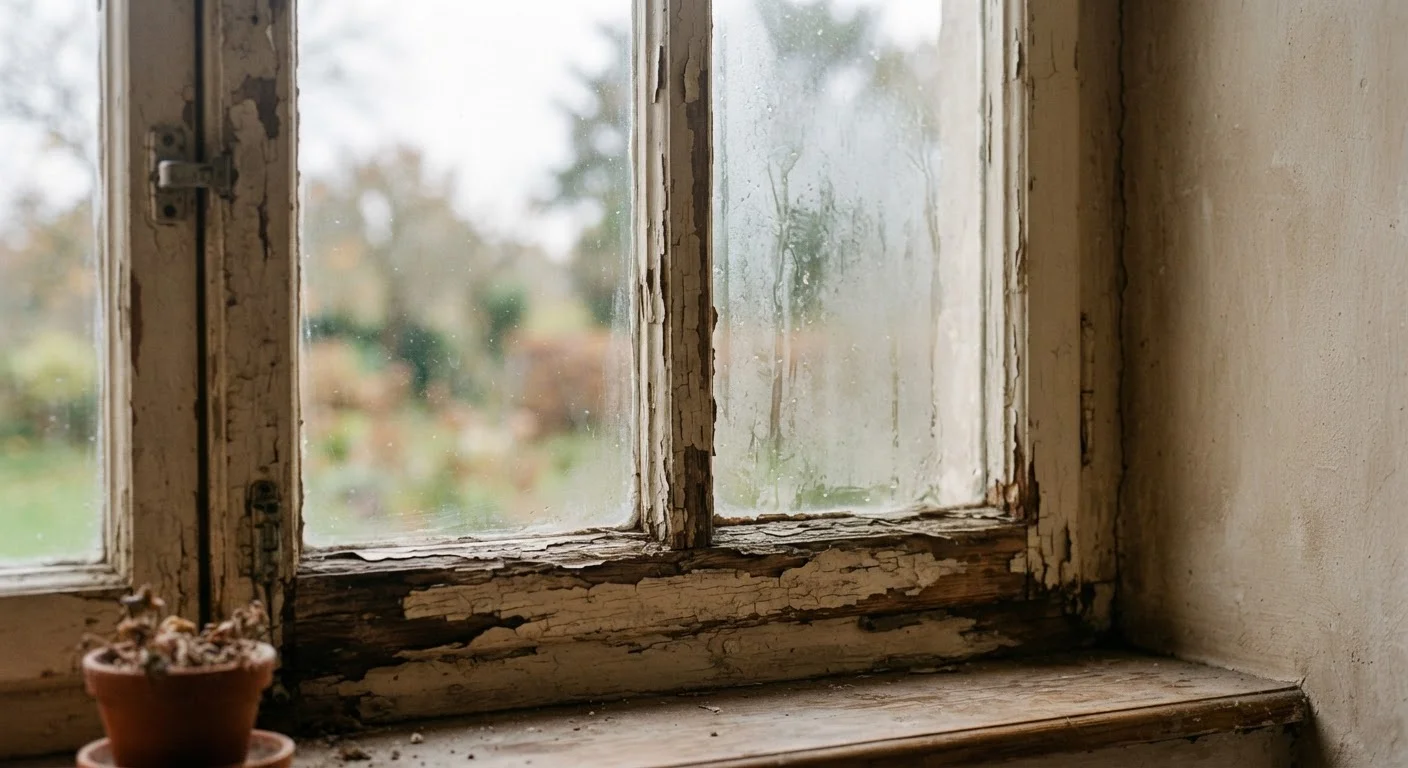
Photo: InsightsVault.com | Interesting Daily Reads editorial
Key Takeaways
- Repair is almost always cheaper short-term; replacement pays off over years through energy savings.
- Fogged glass between panes is a sealant failure - often repairable without replacing the whole window unit.
- Wood rot, warped frames, or single-pane glass in cold climates typically tip the math toward replacement.
- DIY repairs on hardware, weatherstripping, and caulk are low-risk and can save $100-$300 per window.
- Permits and professional installation are generally required for full window replacement in most US jurisdictions.
The Core Question: What Is Actually Failing?
Before pricing anything, diagnose the failure accurately. Window problems fall into three broad categories - and which one you're dealing with determines whether repair or replacement makes financial sense.
- Seal and glass failures: Foggy condensation trapped between double-pane glass means the inert gas fill has leaked and the seal has failed. The frame may be perfectly sound.
- Hardware and operational failures: Broken balances, stuck sashes, failed latches, or corroded hinges are mechanical problems. Replacement parts are widely available and installation is generally DIY-friendly.
- Structural failures: Rot in wood frames, warped vinyl from prolonged UV exposure, or frames pulling away from the rough opening signal that the window unit itself is compromised.
Getting this diagnosis right matters because the cost gap between repair and replacement is substantial. A glazier replacing just the insulated glass unit (IGU) in a standard double-hung window typically runs $150-$400. Full window replacement - including labor and a new frame - commonly ranges from $400 to $1,000+ per window depending on size, material, and installation complexity. See our homeowner's repair glossary if any of these terms are unfamiliar.
Repair: Where It Wins
Repair earns the clear nod in several common scenarios:
Fogged or failed IGU seals
When only the glass unit has failed, a professional can replace the IGU while leaving the sash and frame intact. This costs a fraction of full replacement and restores thermal performance. Some companies also offer defogging services, though their longevity varies.
Weatherstripping and caulk
Draughty windows are frequently a weatherstripping or caulk problem - not a window problem. Replacing foam or V-strip weatherstripping costs under $20 in materials and takes under an hour. Re-caulking around the exterior frame is similarly low-cost. These are among the highest-return DIY fixes in any home. For a broader look at energy upgrades that complement this work, see air sealing vs. insulation.
Broken hardware
Sash locks, operators (on casement windows), and balance systems are replaceable components. Sourcing the correct part by window brand and model is the main challenge - manufacturer websites and specialty hardware suppliers typically stock them.
Test Before You Replace
Replacement: When the Math Shifts
Replacement becomes the more rational choice when repair costs begin approaching the window's replacement value, or when the underlying problem is structural.
| Repair | Replacement | |
|---|---|---|
| Typical cost per window | $20-$400 | $400-$1,000+ |
| DIY-friendly | Often yes (hardware, seals, caulk) | Rarely - frame work needs pros |
| Energy performance gain | Moderate (restores original spec) | High (modern low-E glass upgrade) |
| Permit typically required | Usually not | Often yes |
| Lifespan extension | 5-15 years depending on fix | 20-30 years for new unit |
| Best suited for | Isolated component failure | Structural or chronic energy loss |
Frame rot or warping
Wood rot spreads. Treating a small patch of surface rot is viable; rot that has reached the structural framing members or the sill plate is a different problem - one that may also require carpenter work beyond the window itself.
Single-pane glass in heating climates
Single-pane windows have R-values around 1. A standard double-pane low-E window delivers R-2 to R-3. In heating-dominated US climate zones (roughly the northern half of the country), the annual energy savings from upgrading can meaningfully offset replacement costs over a 10-15 year horizon, though actual payback depends on energy prices, window area, and local climate.
When repair costs stack up
If a window needs a new IGU and rebuilt weatherstripping and a new balance system, total repair costs can approach 60-70% of replacement cost - at which point a new, warranted unit often makes more sense. This parallels the logic described in when DIY makes sense and when it costs more.
Permits, Safety, and What to DIY Carefully
Most minor window repairs - caulking, weatherstripping, hardware swaps, and even IGU replacement on an existing sash - do not require permits in most US jurisdictions. Full window replacement (removing and reinstalling the frame in the rough opening) commonly does require a permit, particularly if it changes the window's egress dimensions or affects a fire-escape route. Always verify with your local building department before starting replacement work.
Structural work around windows - addressing rot in the rough framing, sill plates, or load-bearing headers - should involve a licensed contractor. This is not a DIY-appropriate task, regardless of skill level.
Don't Skip the Egress Check
Thoughtful timing matters too. Proactively repairing minor window issues before they compound is generally cheaper than waiting for failure - a principle that applies broadly to home maintenance, as explored in our look at scheduled versus reactive repairs.
This article provides general home improvement information for educational purposes. Costs, local code requirements, and appropriate repair strategies vary by location and window type. Consult a licensed contractor or your local building department for decisions specific to your home.
The content provided on our blog site traverses numerous categories, offering readers valuable and practical information. Readers can use the editorial team’s research and data to gain more insights into their topics of interest. However, they are requested not to treat the articles as conclusive. The website team cannot be held responsible for differences in data or inaccuracies found across other platforms. Please also note that the site might also miss out on various schemes and offers available that the readers may find more beneficial than the ones we cover.