
When DIY Makes Sense - and When It Quietly Costs More

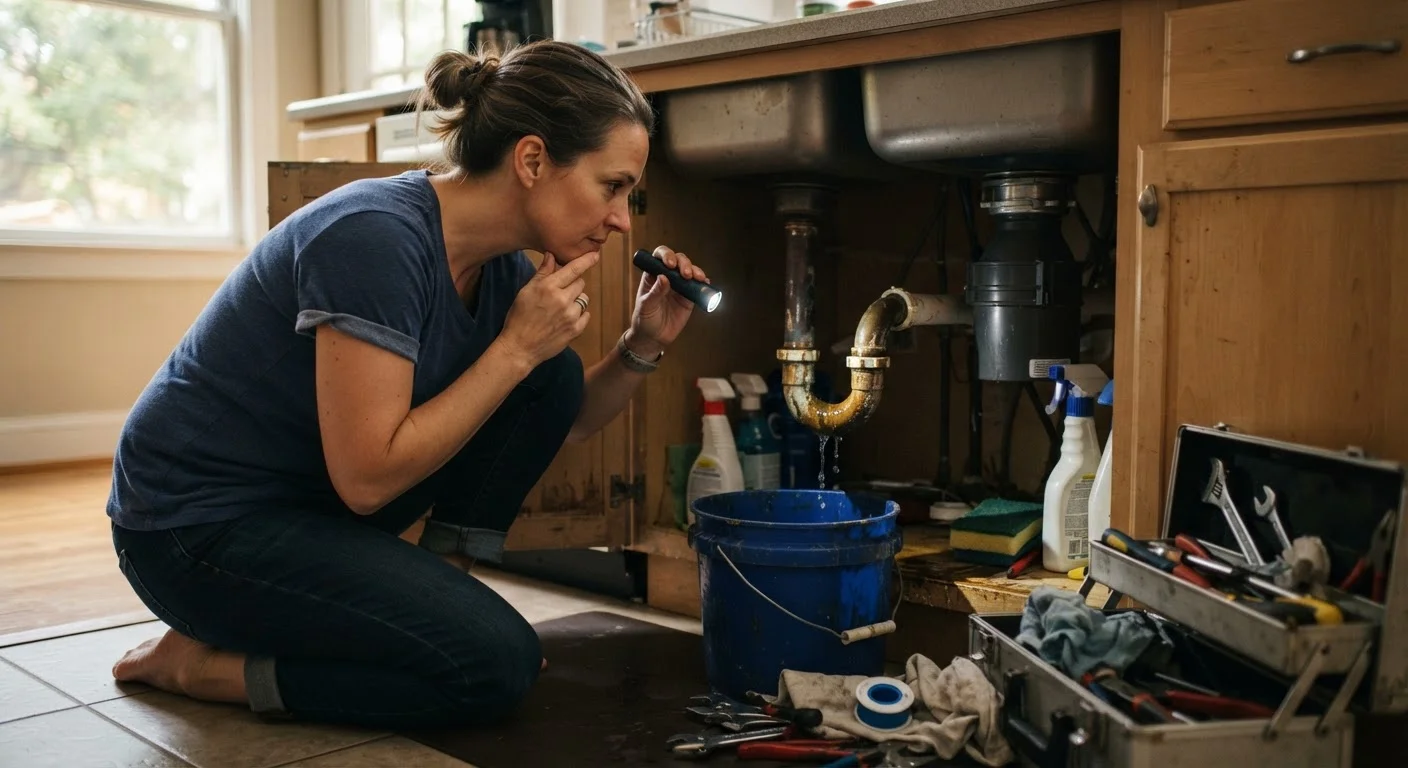
Photo: InsightsVault.com | Interesting Daily Reads editorial
Key Takeaways
- DIY saves the most money on low-risk, repeatable tasks like caulking, painting, and minor patching.
- Hidden costs - wasted materials, tool purchases, and botched repairs - can easily erase labor savings.
- Electrical, structural, and gas work typically require permits and licensed professionals in most US jurisdictions.
- Your skill level, available time, and cost of failure should all factor into the go/no-go decision.
- Some DIY mistakes void homeowner's insurance claims or create safety hazards that cost more to fix later.
Eliminates labor costs on straightforward repairs
Labor often represents the majority of a professional repair quote. Handling low-complexity jobs yourself can save $100-$500 per project on tasks like painting, caulking, or fixture swaps.
Builds skills that compound over time
Each completed repair reduces your dependence on contractors for future work. Homeowners who develop basic repair skills tend to maintain their homes more proactively, avoiding larger problems.
Flexible scheduling, no waiting for tradespeople
DIY lets you address minor problems immediately rather than waiting days or weeks for a contractor appointment, which can matter when a small issue risks becoming a larger one.
Greater control over material quality
You choose what goes into the repair, which matters for durability. Some contractors use the minimum-grade materials included in a quote; DIY lets you upgrade where it counts.
Mistakes can cost far more than professional repair
A DIY plumbing error that causes water damage, or an electrical mistake that trips a breaker and damages appliances, can turn a $50 repair into a multi-thousand-dollar remediation job.
Unpermitted work creates legal and insurance risk
Work requiring permits - electrical panels, structural changes, HVAC modifications - done without them can complicate home sales and may void homeowner's insurance claims related to that system.
Tool investment often narrows real savings
Specialty tools needed for a single job can cost as much as or more than hiring out. Without honest accounting, the 'savings' can be largely illusory.
Time investment is frequently underestimated
A job a professional completes in two hours can take an inexperienced homeowner an entire weekend, including research, supply runs, and correcting early attempts.
Some repairs require licensed professionals by law
Gas line work, main electrical panel upgrades, and certain structural modifications are legally restricted to licensed contractors in most US states - DIY here isn't just risky, it may be illegal.
The Real Calculation Behind DIY Savings
The appeal of doing it yourself is obvious: skip the labor bill, keep the money. But the actual savings depend on a calculation that most homeowners don't run before picking up a tool. Labor typically accounts for 40-65% of a professional repair quote, so the opportunity is real - but it's not automatic.
Before starting any repair, estimate three things: the cost of materials, the value of your time, and the likely cost if something goes wrong. On a simple job - replacing a door handle, patching drywall, regrouting a tub - the math usually works in your favor. On a complex job where the failure mode is a flooded basement or a voided insurance policy, the calculus shifts quickly.
For a practical framework on matching your skill level to the right jobs, see our complete DIY home repair planning guide.
Eliminates labor costs on straightforward repairs
Labor often represents the majority of a professional repair quote. Handling low-complexity jobs yourself can save $100-$500 per project on tasks like painting, caulking, or fixture swaps.
Builds skills that compound over time
Each completed repair reduces your dependence on contractors for future work. Homeowners who develop basic repair skills tend to maintain their homes more proactively, avoiding larger problems.
Flexible scheduling, no waiting for tradespeople
DIY lets you address minor problems immediately rather than waiting days or weeks for a contractor appointment, which can matter when a small issue risks becoming a larger one.
Greater control over material quality
You choose what goes into the repair, which matters for durability. Some contractors use the minimum-grade materials included in a quote; DIY lets you upgrade where it counts.
Where DIY Genuinely Pays Off
The strongest case for DIY sits in a specific category: tasks that are low-stakes, well-documented, and repeatable. These are jobs where the materials are inexpensive, tutorial quality is high, and a mistake means redoing the work - not calling an emergency plumber at midnight.
Painting interior walls, replacing outlet covers, installing weather stripping, swapping light fixtures (with the breaker off), and fixing squeaky floorboards are all examples where a beginner can realistically save $100-$400 per job in labor. Caulking a bathtub or resealing a deck takes an afternoon and extends the life of surfaces that would otherwise need expensive professional restoration.
If you're new to hands-on repairs, weekend-friendly beginner repairs are a practical starting point that builds skills without taking on serious risk.
40-65%
Labor's share of a typical repair quote
Industry estimates consistently show labor accounts for the majority of contractor pricing, which is where DIY captures its primary savings on eligible tasks.
10-15%
Extra material needed for tiling projects
Standard tiling guidance recommends ordering this buffer to account for cuts, breakage, and pattern matching - a cost beginners routinely forget to budget.
Where DIY Quietly Costs More
The jobs that punish inexperienced DIYers share a pattern: the visible part of the problem is simple, but the underlying system is complex. A dripping faucet looks like a washer swap - until you discover corroded supply lines, a non-standard valve seat, and water damage behind the wall. What should have been a $15 fix becomes a $600 plumber visit because the problem got bigger while you were experimenting.
Electrical panel work, load-bearing wall modifications, gas line connections, and roofing are in a different category altogether. Most US jurisdictions require permits and licensed contractors for this work - and unpermitted repairs can complicate home sales, void insurance claims, and create safety hazards. Our explainer on what load-bearing walls actually are covers why misidentifying structural elements is one of the costliest DIY mistakes homeowners make.
Mistakes can cost far more than professional repair
A DIY plumbing error that causes water damage, or an electrical mistake that trips a breaker and damages appliances, can turn a $50 repair into a multi-thousand-dollar remediation job.
Unpermitted work creates legal and insurance risk
Work requiring permits - electrical panels, structural changes, HVAC modifications - done without them can complicate home sales and may void homeowner's insurance claims related to that system.
Tool investment often narrows real savings
Specialty tools needed for a single job can cost as much as or more than hiring out. Without honest accounting, the 'savings' can be largely illusory.
Time investment is frequently underestimated
A job a professional completes in two hours can take an inexperienced homeowner an entire weekend, including research, supply runs, and correcting early attempts.
Some repairs require licensed professionals by law
Gas line work, main electrical panel upgrades, and certain structural modifications are legally restricted to licensed contractors in most US states - DIY here isn't just risky, it may be illegal.
When a Permit Is Required
The Hidden Costs Most DIYers Don't Account For
Even on jobs you can handle, the savings calculation often omits real costs. Specialty tools - a tile saw, pipe threader, or oscillating multi-tool - can cost $80-$300 if you don't already own them. If you'll only use a tool once, renting is usually smarter, but rental costs still chip away at your margin.
Material waste is another underestimated line item. Professionals order accurately; beginners typically overbuy or cut incorrectly and need extra runs to the hardware store. A tiling job, for instance, often requires 10-15% extra material for cuts and breakage - a figure that catches first-timers off guard.
For a reality check on common assumptions that inflate DIY confidence, DIY home repair myths debunked is worth reading before you commit to a project. The principle also mirrors broader spending logic covered in when paying more upfront saves money long-term.
The content provided on our blog site traverses numerous categories, offering readers valuable and practical information. Readers can use the editorial team’s research and data to gain more insights into their topics of interest. However, they are requested not to treat the articles as conclusive. The website team cannot be held responsible for differences in data or inaccuracies found across other platforms. Please also note that the site might also miss out on various schemes and offers available that the readers may find more beneficial than the ones we cover.