
When Spending More Upfront Actually Costs Less Over Time

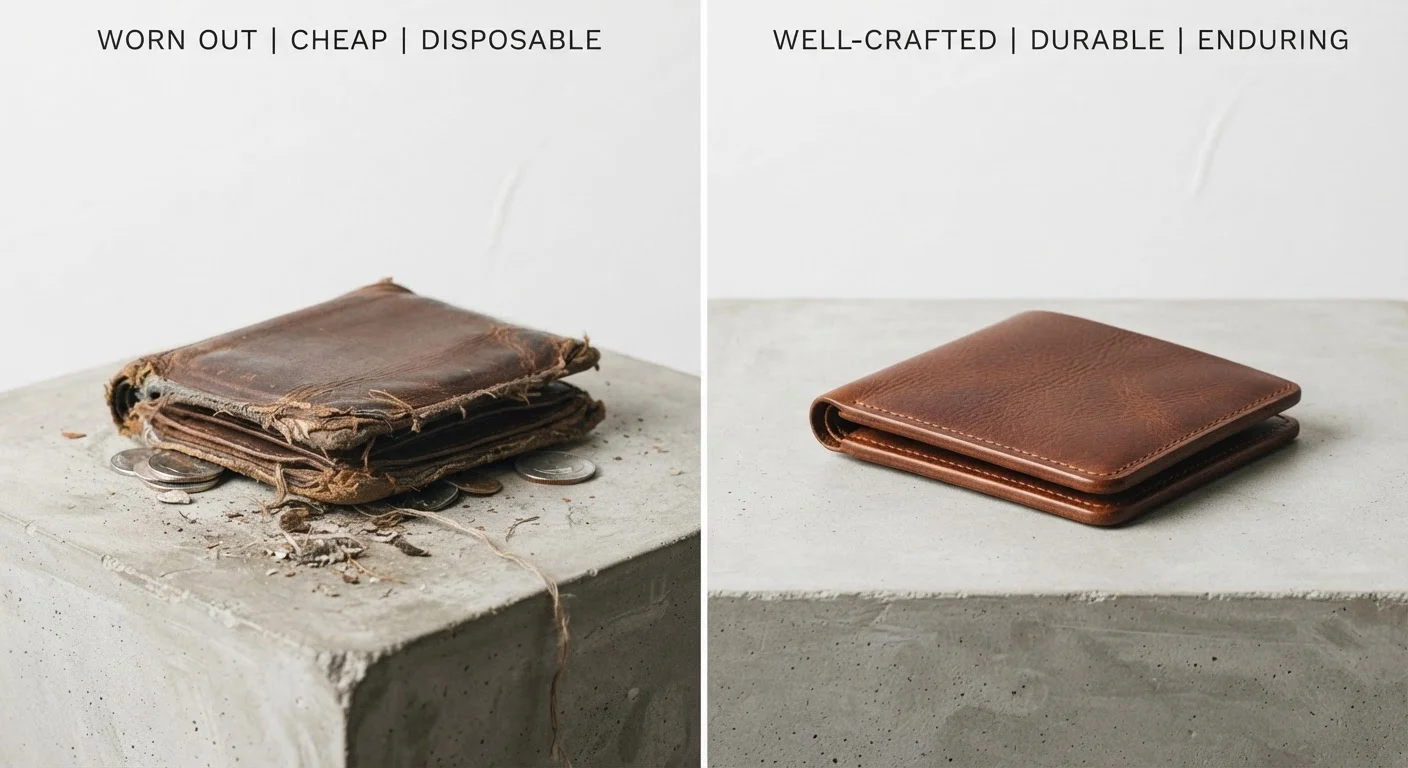
Photo: InsightsVault.com | Interesting Daily Reads editorial
Key Takeaways
- Higher upfront cost only makes financial sense when the item's lifespan justifies the price difference.
- Cost-per-use is a more reliable metric than sticker price for evaluating long-term value.
- Repair costs, replacement frequency, and energy consumption all affect total ownership cost.
- Not every expensive item outperforms its cheaper counterpart - verify quality signals before committing.
- Some categories - tools, appliances, footwear - reliably reward spending more; others rarely do.
Lower cost-per-use over full product lifespan
A durable item used hundreds or thousands of times distributes its cost far more efficiently than a cheap replacement cycle. This advantage grows strongest with daily-use products.
Reduced replacement and disposal frequency
Buying less often saves not just money but the time and friction of researching, purchasing, and disposing of items - costs that rarely appear in simple price comparisons.
Better performance in demanding conditions
For tools, footwear, and equipment used under stress, higher-quality construction often means consistent performance rather than degraded results as materials wear.
Energy or operating cost savings over time
Premium appliances frequently carry efficiency certifications that translate to lower monthly utility bills, with savings accumulating meaningfully over a decade of use.
Stronger warranty and repair support
Higher-priced goods in established categories often come with longer or more comprehensive warranties, reducing the financial exposure of early failures.
Higher cash outlay strains short-term budgets
Paying more upfront requires available capital that many households don't have on hand. If the purchase requires financing, interest costs can negate long-term savings entirely.
Premium price doesn't guarantee premium quality
Price and quality correlate imperfectly across many categories. Brand positioning, marketing spend, and retail markup can inflate prices without delivering proportional durability.
Obsolescence can outpace the payback period
In fast-moving categories like consumer electronics, a product may become functionally outdated before accumulated cost-per-use savings justify the initial premium.
Low usage frequency undermines the math
Cost-per-use only works when use is frequent enough to accumulate savings. Occasional-use items rarely generate enough uses to recover a significant price premium.
Opportunity cost of capital tied up in goods
Money spent on premium goods is money not available for savings, debt reduction, or other financial priorities - a trade-off that deserves honest accounting.
The Case for Thinking in Cost-Per-Use
Sticker price is a poor measure of value. A $15 item you replace four times a year costs $60 annually. A $45 version that lasts three years costs $15 per year - and produces less waste. That's the core logic behind cost-per-use thinking, and it applies across categories from kitchen tools to work boots to mattresses.
The calculation is straightforward: divide the purchase price by the realistic number of uses or years of service. Then compare that figure across price tiers. When a more expensive option produces a meaningfully lower cost-per-use, the premium is doing real financial work. When it doesn't - when the difference is mostly brand markup - you're paying for perception, not performance.
This framing also applies to services and consumables. Bulk buying follows a similar logic - the apparent savings only materialize if you actually use the quantity before it expires or goes to waste. The same discipline of projecting actual usage applies when evaluating premium versus budget products.
Where Premium Pricing Tends to Pay Off
Certain categories consistently reward higher initial investment because quality directly affects longevity or performance in ways that generate measurable savings.
Lower cost-per-use over full product lifespan
A durable item used hundreds or thousands of times distributes its cost far more efficiently than a cheap replacement cycle. This advantage grows strongest with daily-use products.
Reduced replacement and disposal frequency
Buying less often saves not just money but the time and friction of researching, purchasing, and disposing of items - costs that rarely appear in simple price comparisons.
Better performance in demanding conditions
For tools, footwear, and equipment used under stress, higher-quality construction often means consistent performance rather than degraded results as materials wear.
Energy or operating cost savings over time
Premium appliances frequently carry efficiency certifications that translate to lower monthly utility bills, with savings accumulating meaningfully over a decade of use.
Stronger warranty and repair support
Higher-priced goods in established categories often come with longer or more comprehensive warranties, reducing the financial exposure of early failures.
Appliances and energy efficiency are a reliable example. An energy-efficient refrigerator or washing machine may carry a higher purchase price, but lower monthly utility costs can offset that gap over several years. Look for ENERGY STAR certification as a concrete indicator - not just a marketing claim.
Footwear for daily use is another strong case. Cheap work boots or everyday shoes degrade quickly under regular use, and frequent replacement erodes any upfront savings. Quality construction - resoleable soles, full-grain leather, reinforced stitching - extends service life substantially.
Hand tools and power tools used frequently tend to hold up significantly better when built to professional-grade standards. For occasional home projects, budget options may suffice. For regular DIY work, tool failure mid-project can create costs that exceed the original savings.
Where the Logic Breaks Down
The "buy quality once" argument is frequently overapplied. There are real limits to when premium pricing delivers proportional value.
Higher cash outlay strains short-term budgets
Paying more upfront requires available capital that many households don't have on hand. If the purchase requires financing, interest costs can negate long-term savings entirely.
Premium price doesn't guarantee premium quality
Price and quality correlate imperfectly across many categories. Brand positioning, marketing spend, and retail markup can inflate prices without delivering proportional durability.
Obsolescence can outpace the payback period
In fast-moving categories like consumer electronics, a product may become functionally outdated before accumulated cost-per-use savings justify the initial premium.
Low usage frequency undermines the math
Cost-per-use only works when use is frequent enough to accumulate savings. Occasional-use items rarely generate enough uses to recover a significant price premium.
Opportunity cost of capital tied up in goods
Money spent on premium goods is money not available for savings, debt reduction, or other financial priorities - a trade-off that deserves honest accounting.
Trend-sensitive or quickly obsolete categories - consumer electronics, fashion, software-dependent devices - rarely reward maximizing upfront spend. Technological change can render a premium purchase outdated before its lifespan pays off. In these cases, mid-range options often represent better actual value.
Low-frequency use items also undercut the cost-per-use argument. A high-end stand mixer used twice a year won't accumulate enough uses to justify a significant price premium over a competent budget alternative. Frequency of use is a gating factor - without it, the math rarely closes.
For a related example in a different context, pet care spending illustrates the same principle: some expenditures protect long-term health and avoid bigger costs, while others offer diminishing returns. The category and use case matter more than a blanket preference for premium.
When "Buy Quality Once" Becomes Rationalization
Signals That Justify the Higher Price
Before committing to a premium purchase, look for verifiable quality indicators - not just price or brand reputation.
3-5×
Lifespan difference between quality tiers
Consumer testing organizations have found that durable goods in categories like footwear and hand tools can last three to five times longer than budget equivalents under equivalent use conditions.
10-30%
Potential energy savings from efficient appliances
The U.S. Department of Energy estimates that ENERGY STAR-certified appliances can use 10-30% less energy than standard models, depending on the product category.
- Warranty length and terms: A longer, more comprehensive manufacturer warranty signals confidence in the product's durability and shifts financial risk back to the maker.
- Repairability: Items designed to be repaired - with available parts and straightforward disassembly - have a structurally longer service life than sealed, disposable-by-design equivalents.
- Material and construction specifics: Concrete details (gauge of steel, thread count of fabric, type of joint in furniture) are more reliable indicators than vague marketing language like "premium" or "professional grade."
- Total ownership costs: For vehicles and appliances, factor in fuel or energy consumption, maintenance schedules, and insurance implications. The full cost of ownership is rarely captured in the purchase price alone.
When these signals are absent or vague, treat skepticism as the default. A higher price without verifiable quality indicators is often just a higher price. For practical guidance on parsing pricing math across retail contexts, unit pricing tools offer a useful complementary framework.
The content provided on our blog site traverses numerous categories, offering readers valuable and practical information. Readers can use the editorial team’s research and data to gain more insights into their topics of interest. However, they are requested not to treat the articles as conclusive. The website team cannot be held responsible for differences in data or inaccuracies found across other platforms. Please also note that the site might also miss out on various schemes and offers available that the readers may find more beneficial than the ones we cover.