
The Real Trade-Offs of Buying in Bulk

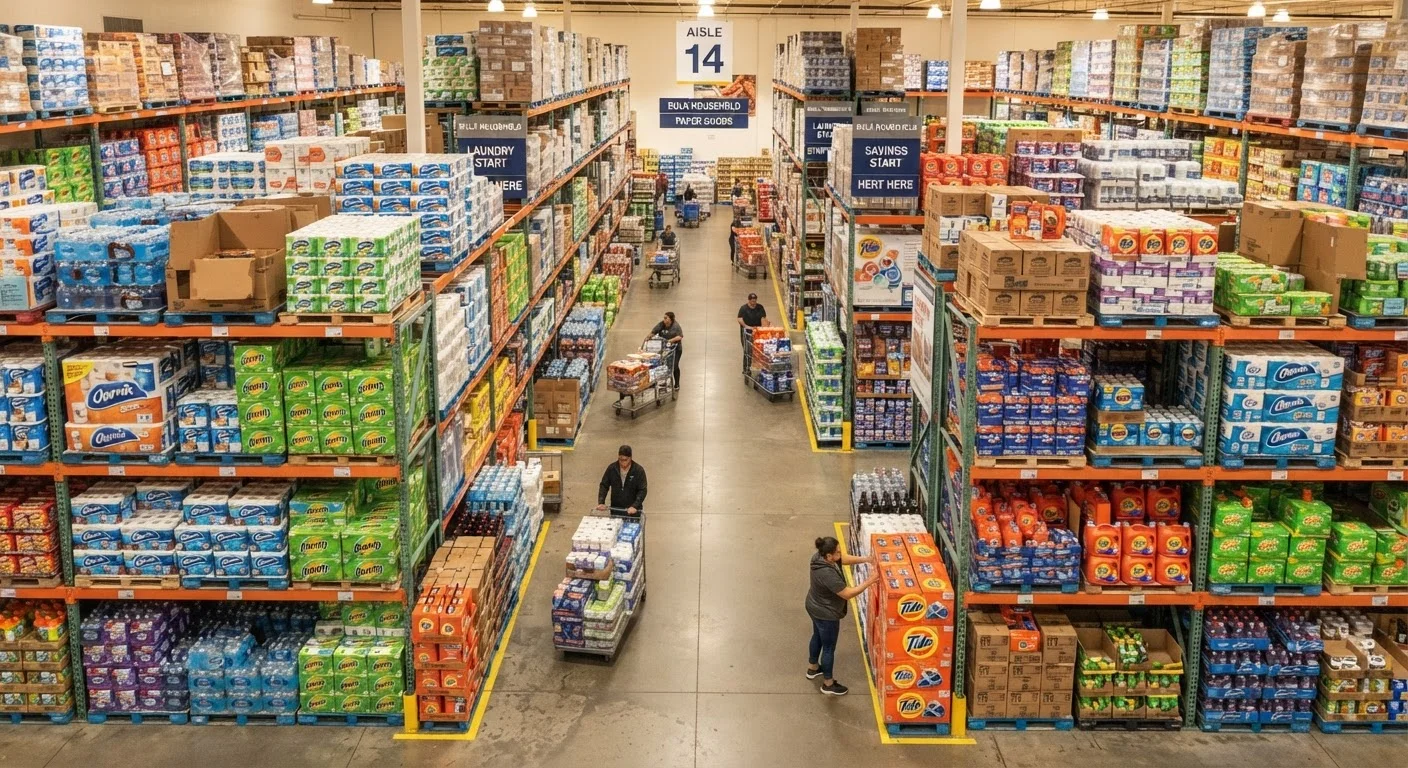
Photo: InsightsVault.com | Interesting Daily Reads editorial
Key Takeaways
- Bulk buying lowers the cost per unit but requires upfront cash and adequate storage space.
- Non-perishables and frequently used items are generally the safest candidates for bulk purchases.
- Buying more than you can use before expiry can erase any savings - or create a net loss.
- Membership fees and impulse buys at warehouse stores can quietly offset bulk savings.
- Comparing unit prices, not package prices, is the only reliable way to confirm you're saving.
Lower cost per unit on staple products
Buying larger quantities typically reduces what you pay per ounce, roll, or item. For products you use consistently, this gap compounds meaningfully over a full year.
Fewer shopping trips save time and fuel
Stocking up reduces how often you need to visit a store, which can lower incidental spending on gas and reduce the risk of impulse purchases during extra trips.
Protection against price increases
Purchasing a supply when prices are favorable locks in that cost, insulating you against short-term price fluctuations on commodities like cooking oil, coffee, or cleaning products.
Fewer stockouts of essential household items
Keeping a deep supply of high-use goods - toilet paper, soap, pantry staples - reduces the chance of running out and needing a last-minute, potentially expensive purchase.
Simplifies routine budgeting for staples
When staple categories are well-stocked, month-to-month spending on those items becomes more predictable, making it easier to allocate budget elsewhere.
High upfront cost strains cash flow
A single bulk purchase can cost two to five times more than a standard-size purchase, which can create short-term budget pressure - particularly for households living paycheck to paycheck.
Waste erases savings when items expire
Perishables and products with shorter shelf lives bought in excess frequently end up thrown away. Discarding even a portion of a bulk purchase can eliminate the savings entirely.
Storage space requirements are significant
Large quantities of goods require adequate storage - shelving, pantry space, or a dedicated area - that many apartments and smaller homes simply don't have.
Membership fees reduce net savings
Warehouse club memberships typically cost $50-$65 or more annually. Unless your bulk purchases generate savings that clearly exceed this fee, the math may not work in your favor.
Bulk environments encourage impulse spending
Warehouse stores are designed to encourage additional purchases through food samples, limited-time displays, and large quantities of non-essential items. Unplanned spending is a common outcome.
Locks you into a product you may not prefer
Committing to a large quantity of something you haven't used before - or that household members' preferences may shift away from - can leave you stuck with a product you won't use.
Why Bulk Buying Appeals to Budget-Conscious Shoppers
The core appeal of buying in bulk is straightforward: purchasing larger quantities of a product typically lowers the cost per unit. For shoppers who use a product regularly, that per-unit gap compounds into real annual savings. A household that buys paper towels, laundry detergent, or canned goods in bulk 10-12 times a year can potentially reduce spending on those categories by a meaningful margin over time.
This is the same principle behind small, consistent savings habits - the idea that modest, repeated actions accumulate into significant outcomes. Bulk buying, when executed with discipline, fits neatly into that framework.
But the strategy comes with conditions. Whether it actually saves money depends heavily on what you buy, how much you consume, and how you manage what you bring home.
The Genuine Advantages
When the conditions are right, bulk buying delivers several concrete benefits:
Lower cost per unit on staple products
Buying larger quantities typically reduces what you pay per ounce, roll, or item. For products you use consistently, this gap compounds meaningfully over a full year.
Fewer shopping trips save time and fuel
Stocking up reduces how often you need to visit a store, which can lower incidental spending on gas and reduce the risk of impulse purchases during extra trips.
Protection against price increases
Purchasing a supply when prices are favorable locks in that cost, insulating you against short-term price fluctuations on commodities like cooking oil, coffee, or cleaning products.
Fewer stockouts of essential household items
Keeping a deep supply of high-use goods - toilet paper, soap, pantry staples - reduces the chance of running out and needing a last-minute, potentially expensive purchase.
Simplifies routine budgeting for staples
When staple categories are well-stocked, month-to-month spending on those items becomes more predictable, making it easier to allocate budget elsewhere.
For a closer look at how to verify you're genuinely getting a better deal, see our guide on unit pricing vs. pack pricing - because bulk packaging doesn't automatically mean a lower cost per unit.
The Real Downsides Worth Knowing
Bulk buying's disadvantages are less visible than its benefits - which is precisely why shoppers tend to underestimate them.
High upfront cost strains cash flow
A single bulk purchase can cost two to five times more than a standard-size purchase, which can create short-term budget pressure - particularly for households living paycheck to paycheck.
Waste erases savings when items expire
Perishables and products with shorter shelf lives bought in excess frequently end up thrown away. Discarding even a portion of a bulk purchase can eliminate the savings entirely.
Storage space requirements are significant
Large quantities of goods require adequate storage - shelving, pantry space, or a dedicated area - that many apartments and smaller homes simply don't have.
Membership fees reduce net savings
Warehouse club memberships typically cost $50-$65 or more annually. Unless your bulk purchases generate savings that clearly exceed this fee, the math may not work in your favor.
Bulk environments encourage impulse spending
Warehouse stores are designed to encourage additional purchases through food samples, limited-time displays, and large quantities of non-essential items. Unplanned spending is a common outcome.
Locks you into a product you may not prefer
Committing to a large quantity of something you haven't used before - or that household members' preferences may shift away from - can leave you stuck with a product you won't use.
~30%
Average food waste in US households
The USDA estimates that American households waste roughly 30-40% of the food supply, a figure that bulk perishable purchases can worsen if not managed carefully.
$65+
Typical annual warehouse club membership cost
Standard warehouse club memberships in the US typically run $65 or more per year, a fixed cost that must be recouped through actual bulk savings before any net benefit is realized.
These trade-offs don't make bulk buying a bad idea, but they do make it a conditional one. The upfront cost question matters here: a large outlay only makes financial sense if you're confident you'll use the product fully before it expires or degrades.
What Actually Works Well in Bulk - and What Doesn't
The category of item matters more than most shoppers realize. As a general principle, the best bulk purchases share three traits: long shelf life, stable demand in your household, and no risk of quality degradation from extended storage.
Generally solid bulk candidates: toilet paper, paper towels, laundry detergent, dish soap, trash bags, canned goods, dried beans, rice, pasta, and shelf-stable condiments.
Riskier bulk purchases: fresh produce, bread, dairy, specialty items you've never tried before, or any product where your household's tastes may shift.
The same logic applies in specific contexts. If you have pets, for instance, the calculus changes by product category - see our breakdown of bulk buying pet supplies for a category-by-category view. And for food specifically, what's worth stocking up on nutritionally adds another dimension worth considering.
A Note on Food Quality and Nutrition
It's also worth comparing generic versus brand-name products before committing to a large quantity - buying a bulk supply of the wrong brand can lock in a disappointing choice for months.
How to Make Bulk Buying Work for Your Budget
Applying a few simple rules consistently turns bulk buying from a gamble into a reliable savings habit.
- Check the unit price, not the sticker price. Divide total cost by quantity. If the unit price isn't lower than what you'd pay elsewhere, it's not a bulk deal.
- Only buy what you've already used before. Buying in bulk is not the time to experiment with a new product or flavor.
- Account for storage honestly. If you don't have a dry, cool place to store 40 pounds of rice or a case of olive oil, the savings may not materialize.
- Factor in membership costs. If you pay an annual fee for a warehouse club, calculate how much you need to save across all purchases just to break even on that fee alone.
- Track what you actually use. If a product consistently expires or gets discarded, remove it from your bulk list.
Used selectively, bulk buying is one of the more reliable tools in a smart buying toolkit - not a strategy to apply universally, but one that rewards disciplined, deliberate shoppers.
This article is for general informational purposes only and does not constitute personalised financial advice. Savings outcomes vary based on individual household habits, local pricing, and consumption patterns. Consult a qualified financial professional for guidance specific to your situation.
The content provided on our blog site traverses numerous categories, offering readers valuable and practical information. Readers can use the editorial team’s research and data to gain more insights into their topics of interest. However, they are requested not to treat the articles as conclusive. The website team cannot be held responsible for differences in data or inaccuracies found across other platforms. Please also note that the site might also miss out on various schemes and offers available that the readers may find more beneficial than the ones we cover.