
Mulch Materials Compared: What Actually Works and What Costs Too Much

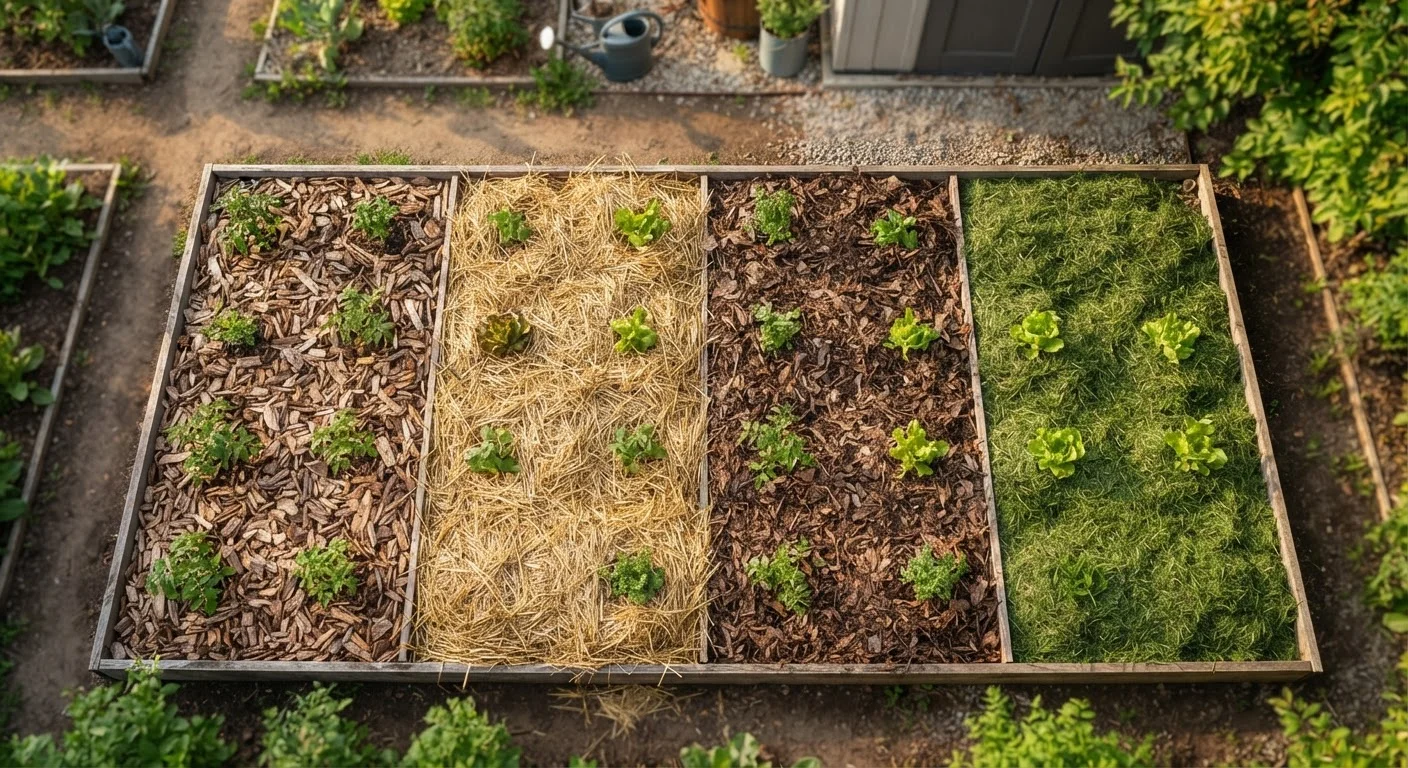
Photo: InsightsVault.com | Interesting Daily Reads editorial
Key Takeaways
- Free or near-free mulches like grass clippings and shredded leaves often outperform expensive bagged options.
- Wood chips excel at moisture retention and weed suppression but break down slowly in vegetable beds.
- Straw is a reliable, low-cost choice for vegetable gardens but quality varies - avoid hay, which carries weed seeds.
- Newspaper and cardboard are effective weed barriers when used as a base layer under other mulch.
- The real cost of mulch includes not just purchase price but how often it needs replacing.
Why Mulch Choice Is a Real Money Decision
Mulch is one of the most effective tools in any garden - it suppresses weeds, retains soil moisture, moderates temperature, and gradually builds organic matter. But the range of options on the market, from dyed cedar bark to rubber nuggets to plain straw, varies enormously in both cost and actual performance. Choosing poorly means paying too much for too little - or worse, introducing weed seeds or chemicals you didn't bargain for.
This comparison focuses on the six most widely used mulch materials for home gardens in the US: wood chips, straw, grass clippings, shredded leaves, newspaper/cardboard, and rubber mulch. Each is evaluated on upfront cost, weed suppression, moisture retention, soil benefit, and how long it lasts before needing replenishment.
For a broader look at where gardening budgets tend to leak, see common costly gardening habits worth avoiding.
| Wood Chips | Straw | Grass Clippings | Shredded Leaves | Cardboard/Newspaper | Rubber Mulch | |
|---|---|---|---|---|---|---|
| Typical cost per season | Free-$30+ (varies) | $6-$12 per bale | Free | Free | Free | $100-$200+ |
| Weed suppression | Excellent | Good | Moderate | Good | Excellent (as base) | Excellent |
| Moisture retention | Excellent | Good | Good | Good | Good | Moderate |
| Soil improvement | Slow but meaningful | Yes, within 1 season | Yes, nitrogen boost | Yes, rich humus | Yes, adds carbon | None |
| Longevity before top-up | 2-3 years | 1 season | Weeks | 1 season | 1 season | 5-10 years |
| Best use | Paths, perennial beds | Vegetable gardens | Annual beds, thin layer | All beds, fall application | Weed barrier base layer | Playgrounds only |
The Free and Near-Free Options: Leaves, Clippings, and Cardboard
Shredded leaves are arguably the best mulch most gardeners already have access to and consistently overlook. A 3-inch layer suppresses weeds effectively, breaks down into rich humus over a season, and costs nothing beyond the time to collect and shred them. Run them through a mower or leaf blower set to vacuum mode to prevent matting.
Grass clippings work well as a thin (1-2 inch) mulch layer around vegetables. They decompose quickly, releasing nitrogen back into the soil - a genuine soil benefit. The key caution: never use clippings from a lawn treated with herbicides, and avoid thick layers that can form an impermeable mat and restrict airflow.
Cardboard and newspaper shine as a weed-suppression base layer. Lay several overlapping sheets directly on the soil, wet thoroughly, and top with 2-3 inches of another organic mulch. This smothers even tough perennial weeds and breaks down within a season, adding carbon to the soil. Remove any tape or glossy inserts from cardboard before use. This is especially effective when starting a new bed - pair it with homemade compost and you have a productive growing medium at minimal cost. Making your own compost from kitchen scraps completes the low-cost system.
Get Free Wood Chips from Arborists
Wood Chips and Straw: The Mid-Range Workhorses
Wood chips are the standard reference point for many gardeners. A cubic yard of arborist wood chips - often available free from tree services that need to offload material - covers roughly 100 square feet at a 3-inch depth. Purchased bagged, costs climb quickly. Wood chips excel at moisture retention and long-term weed suppression, lasting 2-3 years before needing a top-up. However, they are not ideal for annual vegetable beds: they decompose slowly and can temporarily tie up soil nitrogen as they break down at the soil surface interface.
Straw is the practical workhorse of the vegetable garden. It's light, easy to apply, insulates soil well in both heat and cold, and breaks down in a single season - adding organic matter where you need it most. A bale costs roughly $6-$12 depending on region and covers a substantial area. The critical distinction: straw (grain stalks with seeds removed) is not the same as hay (dried grass and legumes containing seeds). Using hay is one of the most common and avoidable ways to introduce a season's worth of weeds. Check the label or ask your supplier explicitly.
Both wood chips and straw represent good value relative to the premium end of the mulch market. For more on how DIY soil inputs compare to purchased products, see the real cost of bagged soil amendments.
What to Skip: Rubber Mulch and Dyed Wood Products
Rubber mulch is the clearest example of a product that costs more and delivers less for the typical home gardener. Made from recycled tires, it doesn't decompose, contributes nothing to soil health, and some studies have raised questions about chemical leaching, though research findings remain mixed. It's heavy, difficult to remove if you change your mind, and can become uncomfortably hot in summer sun. It may have a place in playground surfaces, but not in a food garden or a bed where soil improvement matters.
Dyed or colored wood mulch often uses low-quality wood waste - sometimes including treated lumber - and the colorants, while generally considered safe in current formulations, add cost with no soil benefit. The dye fades within a season, and the underlying material may contain chunks that take years to break down. Unless aesthetics are the primary goal and the bed contains no edibles, this product category is hard to justify on a performance-per-dollar basis.
The guiding principle for any mulch purchase: if it doesn't improve your soil over time, it's a consumable expense rather than an investment. That framing is central to building a genuinely low-cost garden system that pays dividends each season.
Avoid Hay - It's Not the Same as Straw
The content provided on our blog site traverses numerous categories, offering readers valuable and practical information. Readers can use the editorial team’s research and data to gain more insights into their topics of interest. However, they are requested not to treat the articles as conclusive. The website team cannot be held responsible for differences in data or inaccuracies found across other platforms. Please also note that the site might also miss out on various schemes and offers available that the readers may find more beneficial than the ones we cover.