
The Real Cost of Chemical Fertilisers vs. Making Your Own Soil Amendments

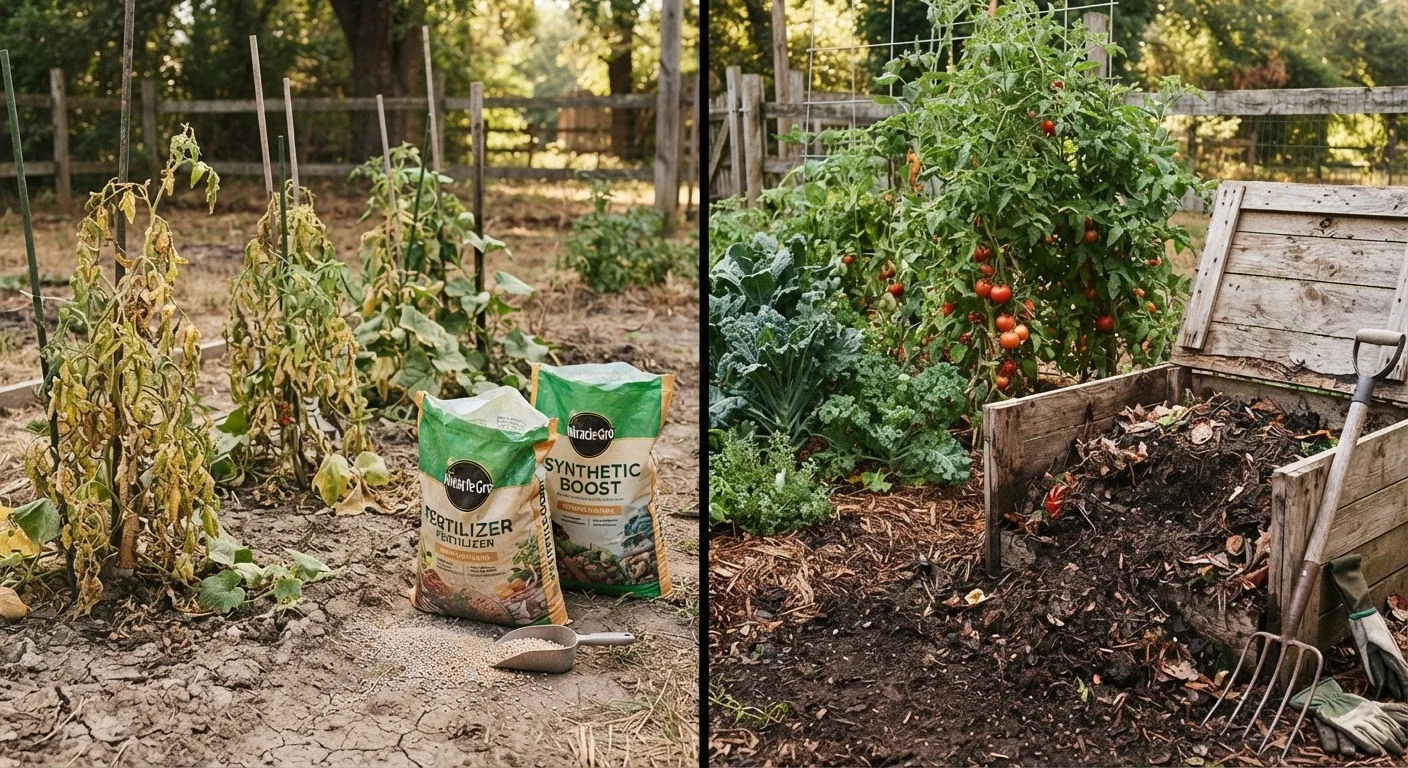
Photo: InsightsVault.com | Interesting Daily Reads editorial
Key Takeaways
- Bagged chemical fertilisers typically cost $20-$60 per season per garden bed, and that cost recurs every year.
- DIY amendments like compost, leaf mould, and compost tea are made largely from materials you already have.
- Chemical fertilisers feed plants directly but do little to improve soil structure over time.
- Homemade amendments build soil biology gradually, reducing your fertiliser dependency season after season.
- A combined approach - amendments as the foundation, targeted chemicals only when needed - often delivers the best cost-to-yield ratio.
What You're Actually Paying for with Bagged Fertiliser
Walk into any garden centre and you'll find shelves of granular and liquid fertilisers ranging from a few dollars to upward of $50 a bag. The price covers three things: the nutrient content (expressed as the N-P-K ratio - nitrogen, phosphorus, potassium), the carrier or filler that delivers those nutrients, and the convenience of a ready-to-use format.
For a typical 200-square-foot vegetable bed, a standard application of a 10-10-10 granular fertiliser costs roughly $8-$15 per application, with most gardens requiring two to four applications per growing season. That adds up to $16-$60 per bed, per year - and the soil itself receives almost nothing of lasting structural value. Each new season starts from scratch because chemical fertilisers don't feed the microbial networks that make soil fertile long term.
That recurring cost is the core budget problem. As noted in our guide to expensive gardening habits, fertiliser spending is one of the easiest line items to reduce - but only once you understand what the alternative actually delivers.
| Criterion | Chemical Fertilisers | DIY Soil Amendments |
|---|---|---|
| Annual cost per bed | $16-$60 recurring | Near $0 after setup |
| Setup effort | Minimal - open and apply | Moderate - build system, wait |
| Speed of results | Days to weeks | Months to seasons |
| Soil structure improvement | Little to none | Significant over time |
| Feeds soil biology | No | Yes |
| Risk of over-application | Higher - can burn plants | Lower - self-limiting |
| Ongoing input required | Every season | Decreases over time |
The Real Cost of DIY Alternatives
The most common homemade soil amendments are finished compost, leaf mould, compost tea, and aged grass clippings. Their material cost is often close to zero if you already generate organic waste at home.
Compost requires a bin or pile (a basic DIY timber frame costs under $20 in lumber), kitchen scraps, and yard waste. After three to six months, you have a free, nutrient-rich amendment. Our companion piece on composting on any budget walks through exactly how to get started with no-cost inputs.
Leaf mould - decomposed autumn leaves - takes 12-18 months but requires nothing except a wire cage and patience. It's especially valuable for improving clay or sandy soil structure.
Compost tea is made by steeping finished compost in water for 24-48 hours, then applying the liquid to plant roots. Total equipment cost: a bucket, an aquarium air pump (around $10-$15 one-time), and unsulfured molasses. Per application cost is essentially zero once the pump is purchased.
The honest caveat: DIY amendments are labor-dependent and slower to show results. If your soil is severely deficient, waiting for compost to mature isn't a realistic strategy for this season's crop. This is where a targeted, minimal use of chemical fertilisers alongside an amendment program makes practical sense.
$30-$60
Typical annual fertiliser spend per vegetable bed
Based on standard application rates for granular 10-10-10 fertiliser across a typical US growing season of two to four applications.
~$15
One-time cost for compost tea equipment
An aquarium air pump and food-grade bucket are the only purchases required; ongoing per-application cost is negligible.
2-3 seasons
Time to see measurable soil improvement from amendments
University extension research consistently shows organic matter improvements require multiple seasons of consistent amendment application.
Which Approach Builds Better Soil Over Time?
This is where the comparison shifts decisively. Chemical fertilisers deliver nutrients but bypass soil biology - the fungi, bacteria, and earthworm populations that make nutrient cycling efficient and natural. Repeated reliance on synthetics without organic matter inputs can gradually compact soil and reduce its water-holding capacity.
DIY amendments work differently. They add organic matter that feeds microbial communities. Over two to three seasons, well-amended beds typically need less intervention of any kind: better drainage, stronger root development, and improved drought resistance all reduce the need for additional inputs.
For gardeners focused on frugal, sustainable growing, this long-term payoff is significant. Organic gardening on a tight budget is achievable precisely because building soil biology compounds over time - you invest effort now and spend less money later.
The practical middle ground: use amendments as your foundation every season, conduct a basic soil test every two to three years (most cooperative extension services offer these for under $20), and only reach for targeted chemical fertilisers when a confirmed deficiency justifies it. This approach also fits neatly into the broader strategy covered in our frugal gardening overview.
Get a Soil Test Before You Buy Anything
The content provided on our blog site traverses numerous categories, offering readers valuable and practical information. Readers can use the editorial team’s research and data to gain more insights into their topics of interest. However, they are requested not to treat the articles as conclusive. The website team cannot be held responsible for differences in data or inaccuracies found across other platforms. Please also note that the site might also miss out on various schemes and offers available that the readers may find more beneficial than the ones we cover.