
Organic Gardening on a Tight Budget: Separating Useful Practices from Expensive Trends

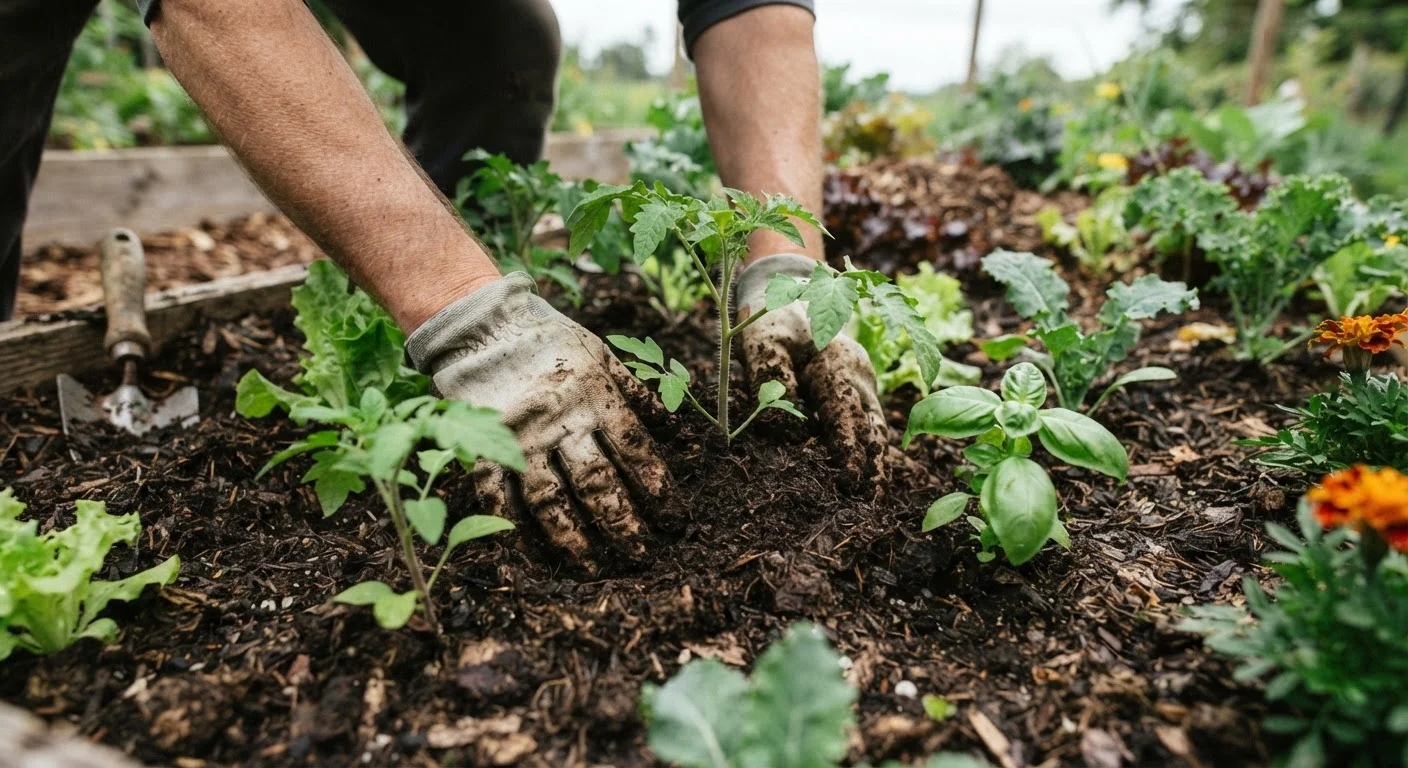
Photo: InsightsVault.com | Interesting Daily Reads editorial
Key Takeaways
- Homemade compost outperforms most purchased organic soil amendments for routine garden use.
- Several premium 'organic' products - like bottled compost tea and proprietary mycorrhizal blends - have limited supporting evidence.
- Seed-starting from home and saving your own seeds can cut annual plant costs dramatically.
- Effective organic pest management relies on planning and observation, not expensive sprays.
- The label 'organic' on a product does not automatically mean it offers better value or results.
Why 'Organic' Doesn't Always Mean 'Worth the Price'
The organic gardening market has grown considerably, and with it, a wave of premium-priced products promising natural, chemical-free results. But budget-conscious gardeners should know that the word "organic" on a label is a marketing claim as much as an agricultural one. It tells you about inputs and certifications - not about cost-effectiveness or even guaranteed performance in your specific soil and climate.
The practices that consistently produce healthy, productive gardens - building organic matter in soil, watering thoughtfully, timing plantings well, and observing plants closely - cost very little. Many of the expensive add-ons sold alongside them are either redundant or supported only by thin evidence. See our guide to gardening habits that quietly drain budgets for a broader look at where garden money tends to leak.
Myth
You need to buy specialized organic fertilizers and soil amendments to garden organically.
Fact
Homemade compost and basic mulching materials provide most of what a healthy garden needs, at minimal or no cost.
Bagged organic fertilizers are convenient, but they're rarely necessary for gardens that receive regular compost inputs. Well-made compost improves soil structure, supports microbial life, and releases nutrients gradually - functions that mirror what expensive organic amendments claim to provide. If a soil test reveals a specific deficiency, targeted amendments make sense. Buying premium blends as a precaution typically adds cost without proportional benefit. See what DIY soil amendments actually offer for a detailed comparison.
Myth
Bottled compost tea delivers significant plant benefits that justify its cost.
Fact
The evidence for purchased compost tea as a reliable plant booster is limited; results vary considerably with soil conditions and application method.
Compost tea - made by aerating compost in water to multiply microorganisms - has enthusiastic advocates in organic gardening communities, but peer-reviewed research on its benefits has produced inconsistent results. While applying a homemade batch costs almost nothing, commercially bottled versions can be expensive. Experts at university extension programs generally suggest that direct compost incorporation is a more reliable way to introduce beneficial soil biology than liquid extracts.
Myth
Organic pest sprays are safe to apply freely because they're natural.
Fact
'Natural' or 'organic' does not mean non-toxic; some approved organic pesticides can harm beneficial insects and require careful, targeted application.
Pyrethrin, spinosad, and copper-based fungicides are all approved for organic use but carry genuine risks to beneficial insects - particularly pollinators - and some have soil persistence concerns. Neem oil, while widely used, can affect aquatic organisms if it runs off. The safer and less expensive approach is to address pest pressure through plant selection, crop rotation, and habitat for natural predators before reaching for any spray, organic or otherwise.
[warning_callout]Myth
Proprietary mycorrhizal inoculant products are essential for healthy transplanting.
Fact
Most garden soils already contain native mycorrhizal fungi; purchased inoculants may offer little benefit in established or compost-enriched beds.
Mycorrhizal fungi form beneficial relationships with most plant roots, and the case for inoculating transplants is strongest in heavily disturbed or sterilized soils - like those in brand-new raised beds filled with bagged mix. In a garden with existing organic matter and biological activity, adding a commercial inoculant is unlikely to produce measurable results. Save that budget for compost inputs instead. For raised bed cost context, see container and raised bed cost breakdown.
Myth
Buying certified organic seeds is always necessary for an organic garden.
Fact
Non-treated, open-pollinated seeds grown organically at home are functionally equivalent for most home gardeners; certified organic seed is more important for market growers.
Certified organic seed is required for certified organic commercial production. For home gardeners, the practical priority is avoiding chemically treated seed (often coated in fungicide - usually indicated by colored coating) and choosing open-pollinated or heirloom varieties that you can save from year to year. Open-pollinated seeds are widely available at lower prices, and saving your own eliminates future seed costs almost entirely. See our seed saving guide for how to get started.
Practices That Genuinely Pay Off
Not everything marketed to organic gardeners is overpriced. Some widely recommended practices stand up under scrutiny and deliver real value relative to their cost - often because they use what you already have.
Composting is the clearest example. Kitchen scraps, yard trimmings, and cardboard break down into a soil amendment that improves structure, feeds soil biology, and reduces dependence on any purchased fertilizer. Our compost guide covers how to build an effective system from materials you're already discarding.
Seed saving is another practice with strong return on investment. Once you learn which plants produce reliable seed, you can propagate year after year at near-zero cost. The seed saving fundamentals guide explains what to collect and how to store it. Similarly, strategic companion planting can reduce pest pressure without any purchased spray.
$30-$60
Typical annual seed packet spend for a kitchen garden
Growing from seed rather than transplants can reduce per-plant costs by 50-80% or more, depending on variety and local nursery pricing.
~$0
Cost of homemade compost from kitchen and yard waste
University extension programs consistently cite homemade compost as the highest-value soil amendment available to home gardeners, at effectively no material cost.
For gardeners doing a broader review of where their garden budget goes each season, a seasonal spending audit checklist can quickly surface which purchases deliver results and which don't.
Making Smart Decisions Going Forward
The practical test for any organic gardening purchase is straightforward: does this address a specific, identified problem in your garden, or is it preventive spending based on marketing? Soil tests - available inexpensively through many cooperative extension services - tell you exactly what your garden needs before you buy anything. Broad-spectrum amendments purchased on instinct often go to waste.
Starting plants from seed rather than buying transplants is one of the more reliable ways to cut costs. Our breakdown of when seedlings are worth the price and when they aren't can help you decide case by case. For expanding your garden overall, free and low-cost ways to acquire plants - cuttings, swaps, and community giveaways - bypass the nursery entirely.
For a consolidated view of cost-effective organic growing from soil prep to harvest, see the frugal gardening complete overview. The methods that work best tend to be the ones that cost the least.
The content provided on our blog site traverses numerous categories, offering readers valuable and practical information. Readers can use the editorial team’s research and data to gain more insights into their topics of interest. However, they are requested not to treat the articles as conclusive. The website team cannot be held responsible for differences in data or inaccuracies found across other platforms. Please also note that the site might also miss out on various schemes and offers available that the readers may find more beneficial than the ones we cover.