
Rainwater Harvesting for Home Gardens: What You Need to Know Before You Start

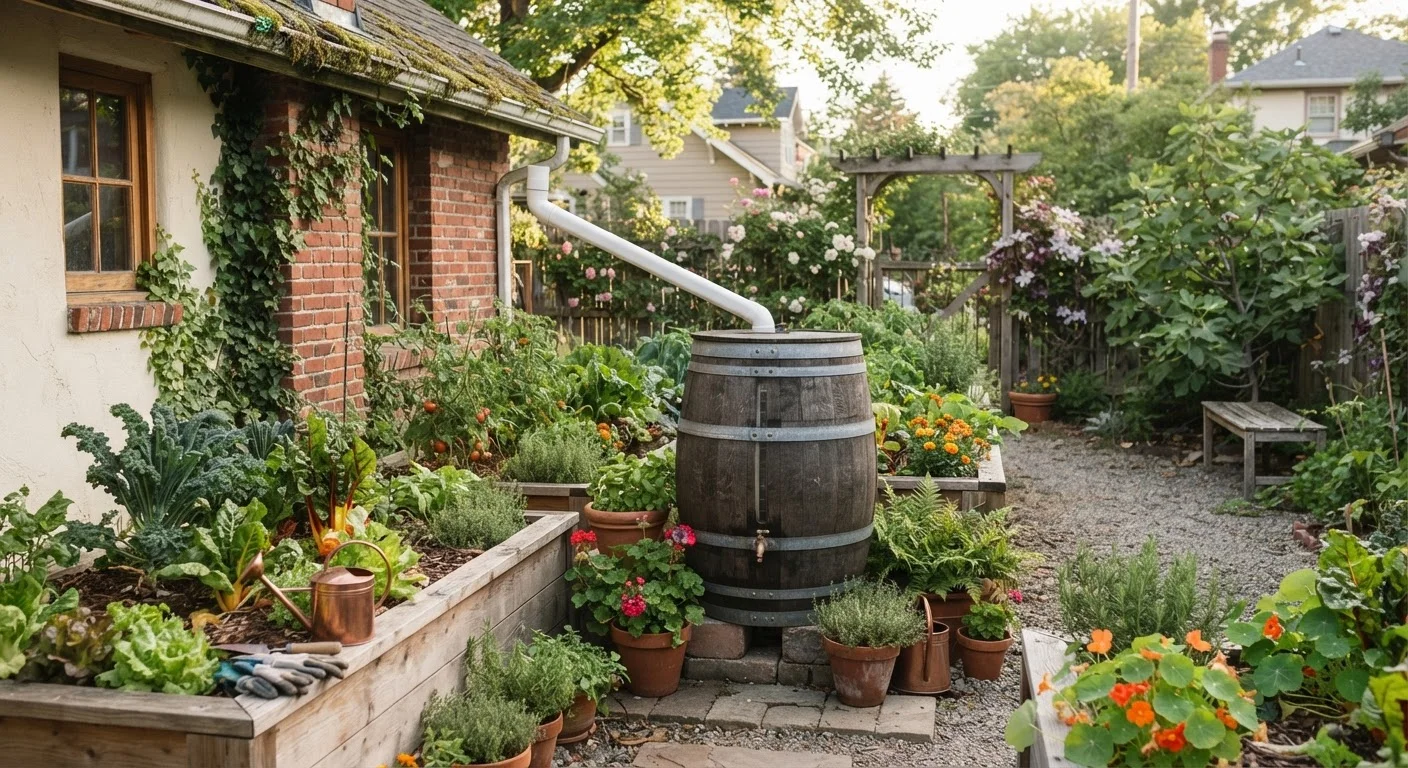
Photo: InsightsVault.com | Interesting Daily Reads editorial
Key Takeaways
- Rainwater harvesting can meaningfully reduce outdoor water bills, especially during summer irrigation seasons.
- Setup costs range widely depending on system size - from under $100 for a basic barrel to several thousand for a cistern system.
- Regulations vary significantly by state and municipality; always check local rules before installing a system.
- Harvested rainwater is generally suitable for garden irrigation but is not safe to drink without proper treatment.
- Proper maintenance - screen cleaning, overflow management, winter draining - is essential for system longevity.
How Rainwater Harvesting Systems Actually Work
At its simplest, a rainwater harvesting system intercepts runoff at the point it leaves your roof. Gutters channel water to a downspout, which is then fitted with a diverter - a small valve or fitting that redirects flow into a storage container rather than letting it drain to the ground. From there, you draw water via a spigot or pump for use in the garden.
Systems range from a single 55-gallon barrel costing under $100 to large underground cisterns holding thousands of gallons. For most home gardeners, a one- or two-barrel setup at each downspout is the practical starting point. More elaborate systems add features like first-flush diverters (which discard the initial, dirtiest runoff), overflow pipes, and gravity-fed or pump-assisted distribution to garden beds.
The math is straightforward: roughly half a gallon of collectible runoff per square foot of roof area per inch of rainfall. A 1,500 sq ft roof during a one-inch rain event could theoretically yield around 750 gallons - though actual collection depends on evaporation, roof pitch, gutter efficiency, and storage capacity. Understanding these variables helps you size a system realistically rather than optimistically.
~0.5 gal
Collectible runoff per sq ft per inch of rain
A commonly cited rule of thumb used by extension services and rainwater harvesting guides to help homeowners estimate potential system yield.
30%
Portion of household water use for outdoor irrigation
The EPA's WaterSense program has estimated that outdoor water use represents roughly 30% of total household consumption on average, with higher percentages in arid regions.
$75-$150
Typical DIY single-barrel setup cost
Based on general retail pricing for standard rain barrels, diverter kits, and basic hardware at the time of writing; costs vary by region and supplier.
Regulatory Rules: Check Before You Build
This is the step many first-time harvesters skip - and it matters. Water rights law in the US is complex, and historically some western states restricted or outright prohibited private rainwater collection on the grounds that precipitation belongs to downstream water rights holders. That legal landscape has shifted in many states, but patchwork rules remain.
Colorado, for example, now permits limited residential collection after years of prohibition, but caps volumes at 110 gallons. Other states like Texas and Oregon have actively promoted harvesting through incentive programs or rebates. Some municipalities layer their own ordinances on top of state rules, and many HOAs add another tier of restrictions on visible outdoor storage containers.
Before purchasing anything, contact your state's department of natural resources or environmental quality, then check with your local building department and HOA if applicable. This step costs nothing and prevents a situation where you've invested in equipment that you're required to remove.
Start with a State Agency Search
Setup Considerations for Home Gardeners
Once you've confirmed legality, practical setup decisions come next. Location matters: position barrels close to the garden beds they'll serve, since gravity-fed flow from a standard spigot is low-pressure and moving water far requires a pump. Place barrels on a stable, level surface - a cinder block or timber platform elevates the spigot enough to fill a watering can underneath.
Roof material also affects water quality. Asphalt shingles, metal roofing, and clay tiles all have different leaching profiles. Older roofs with lead flashing or treated wood shingles introduce additional contaminants. For vegetable gardens specifically, a first-flush diverter is a low-cost addition worth taking seriously, as it removes the heaviest concentration of pollutants from each rain event before water enters storage.
Mosquito control is non-negotiable in most climates. Any standing water is a breeding site - ensure barrels have tight-fitting, screened lids and that overflow outlets are also screened. Some gardeners add Bti dunks (a naturally occurring biological larvicide widely available for this purpose) as an additional precaution.
For cost context and broader frugal gardening strategy, see the complete frugal gardening overview which covers water use alongside soil-building, seed saving, and tool decisions. You can also pair harvesting with smarter irrigation habits - the water-wise gardening guide covers scheduling and low-cost drip methods that make stored water go further.
Costs, Savings, and Realistic Expectations
A basic single-barrel setup - including the barrel, diverter kit, and basic hardware - typically runs $75-$150 installed DIY. Pre-made rain barrels sold through garden centers often cost $100-$200 but come ready to connect. Larger cistern systems (250-1,500 gallons) can run from $500 to several thousand dollars including installation, and may require professional plumbing depending on local codes.
Savings depend heavily on local water rates, how much of your garden water use you can realistically offset, and regional rainfall patterns. In drought-prone areas where summer water restrictions are common, harvested water has practical value beyond bill savings - it keeps gardens alive when tap restrictions apply. In consistently wet climates, storage may fill and overflow regularly, limiting the effective benefit.
Think of a rain barrel as a buffer rather than a complete water solution. It covers a fraction of a garden's needs during moderate dry spells; it doesn't replace a well or municipal supply. Paired with other habits that quietly drain your garden budget, reducing irrigation waste is one of the higher-leverage changes a home gardener can make. For a structured seasonal review of where garden money goes, the garden spending audit checklist is a useful companion tool.
This article provides general informational guidance only. Water regulations, costs, and safe use conditions vary by location and individual circumstance. Verify local rules with appropriate authorities before installing any system.
Frequently Asked Questions
The content provided on our blog site traverses numerous categories, offering readers valuable and practical information. Readers can use the editorial team’s research and data to gain more insights into their topics of interest. However, they are requested not to treat the articles as conclusive. The website team cannot be held responsible for differences in data or inaccuracies found across other platforms. Please also note that the site might also miss out on various schemes and offers available that the readers may find more beneficial than the ones we cover.