
Free Microchipping Events: What They Cover and What They Don't

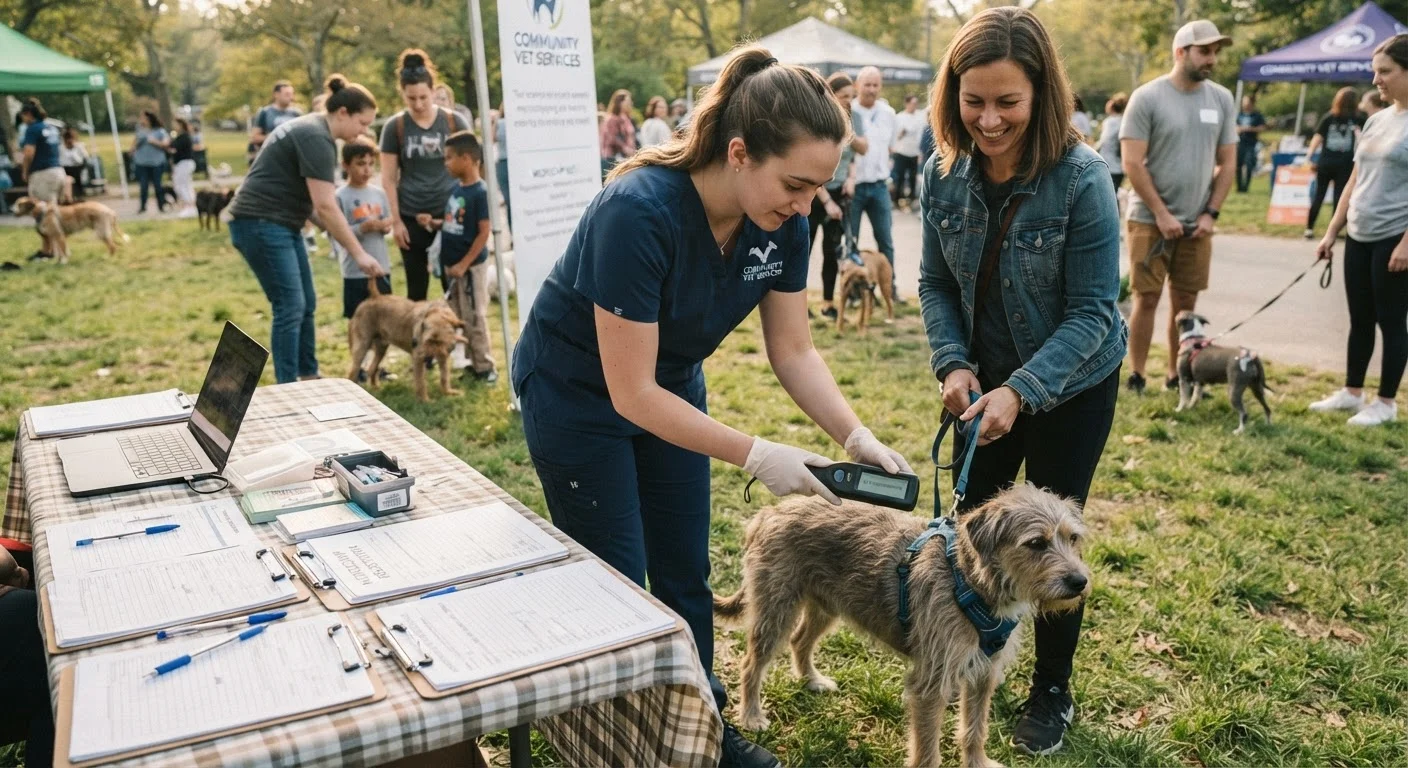
Photo: InsightsVault.com | Interesting Daily Reads editorial
Key Takeaways
- Free microchipping events cover the implantation procedure but rarely include registration fees.
- A chip without active registration in a national database offers limited lost-pet protection.
- Eligibility rules vary - some events are income-restricted or limited to specific zip codes.
- Follow-up costs like vet health checks or premium database subscriptions can add up.
- Preparation and the right questions on the day can close most of the coverage gaps.
Eliminates the core procedure cost entirely
Private veterinary clinics typically charge $25-$50 for microchip implantation. Free events remove this barrier, making permanent ID accessible to owners on tight budgets.
Quick, low-stress experience for pets
Implantation takes seconds with a needle - no sedation required. High-volume event staff are usually practiced at keeping the process calm and efficient.
Increases lifetime reunion odds meaningfully
Studies from shelter systems have found that microchipped dogs are returned to owners at significantly higher rates than unchipped animals - the chip is a proven tool, not just a formality.
Often bundled with other free services
Shelter-run and nonprofit events frequently pair microchipping with vaccinations, spay/neuter referrals, or basic wellness checks - amplifying the value of a single visit.
No ongoing maintenance required for the chip itself
Once implanted, the passive RFID chip requires no battery, no charging, and no replacement under normal circumstances - it lasts the life of the pet.
Registration is rarely guaranteed or included
Many events provide the chip but not confirmed, lifetime database registration. Owners who don't follow up independently have a chip that may never resolve to their contact details.
Eligibility restrictions can exclude many owners
Events are often capped by income level, zip code, or pet type. Showing up without verifying eligibility can result in being turned away after waiting in line.
No veterinary examination or health context
A free event is not a wellness visit - staff typically don't assess the pet's overall health, catch underlying conditions, or provide individualized guidance.
Scanner compatibility issues still exist
While ISO-standard chips have improved cross-scanner compatibility, not all shelters and clinics operate universal scanners, which can occasionally result in a chip going undetected.
Event availability is inconsistent and unpredictable
Free events depend on grant funding, volunteer capacity, and organizational scheduling - they may not be available in your area or may be infrequent enough to create long waits.
What Free Microchipping Events Actually Include
Community microchipping events - run by shelters, humane societies, municipal animal control agencies, and nonprofit groups - typically cover one thing: the physical implantation of a radio-frequency identification (RFID) chip beneath your pet's skin, usually between the shoulder blades. The procedure itself takes seconds and requires no anesthesia.
What you generally also receive on the day: a certificate or card noting your pet's unique chip number, and sometimes a brief scan to confirm the chip is reading correctly. Some events, particularly those affiliated with larger shelters or mobile outreach programs, may include a basic wellness check as part of a broader free-care clinic.
What the fee-free label almost never includes: registration of that chip number in a national or universal pet recovery database. This distinction is critical and catches many owners off guard.
Chip Number vs. Registration: Two Separate Steps
The Registration Gap - Why It Matters
A microchip is only as useful as the database it's linked to. When a shelter or veterinary clinic scans a stray animal, they retrieve a number - but that number must be matched to owner contact details in a registry to enable a reunion. In the US, there is no single mandated national database; multiple registries operate independently, and scanners don't always cross-check all of them.
Many free events partner with a specific registry and include a one-time free registration - but this is not universal. Some events hand owners a chip number and leave registration entirely as a follow-up task. Free registry options do exist (such as the Found Animals Registry and several shelter-affiliated databases), but lifetime registration with premium features on some platforms carries a fee, typically $15-$20 or more.
~52%
Return rate for microchipped dogs in shelters
A peer-reviewed study published in the Journal of the American Veterinary Medical Association found microchipped dogs were returned to owners at roughly 52% versus about 22% for unchipped dogs.
58%
Microchipped pets with unregistered or outdated info
The same JAVMA research found that when microchipped animals weren't reunited with owners, the most common reason was an unregistered chip or incorrect contact details in the database.
The practical takeaway: always ask the event organizer, before your appointment, which database registration is included - if any - and whether it is a lifetime entry or a trial period. If you need to register independently, search for no-cost registry options before defaulting to a paid service. Our overview of free veterinary programs covers some shelter-affiliated registries worth checking.
Pros and Cons of Attending a Free Microchipping Event
Free microchipping events offer a meaningful financial benefit, but they come with real limitations. Here's the balanced picture:
Eliminates the core procedure cost entirely
Private veterinary clinics typically charge $25-$50 for microchip implantation. Free events remove this barrier, making permanent ID accessible to owners on tight budgets.
Quick, low-stress experience for pets
Implantation takes seconds with a needle - no sedation required. High-volume event staff are usually practiced at keeping the process calm and efficient.
Increases lifetime reunion odds meaningfully
Studies from shelter systems have found that microchipped dogs are returned to owners at significantly higher rates than unchipped animals - the chip is a proven tool, not just a formality.
Often bundled with other free services
Shelter-run and nonprofit events frequently pair microchipping with vaccinations, spay/neuter referrals, or basic wellness checks - amplifying the value of a single visit.
No ongoing maintenance required for the chip itself
Once implanted, the passive RFID chip requires no battery, no charging, and no replacement under normal circumstances - it lasts the life of the pet.
Registration is rarely guaranteed or included
Many events provide the chip but not confirmed, lifetime database registration. Owners who don't follow up independently have a chip that may never resolve to their contact details.
Eligibility restrictions can exclude many owners
Events are often capped by income level, zip code, or pet type. Showing up without verifying eligibility can result in being turned away after waiting in line.
No veterinary examination or health context
A free event is not a wellness visit - staff typically don't assess the pet's overall health, catch underlying conditions, or provide individualized guidance.
Scanner compatibility issues still exist
While ISO-standard chips have improved cross-scanner compatibility, not all shelters and clinics operate universal scanners, which can occasionally result in a chip going undetected.
Event availability is inconsistent and unpredictable
Free events depend on grant funding, volunteer capacity, and organizational scheduling - they may not be available in your area or may be infrequent enough to create long waits.
For a broader look at how these events fit within the wider landscape of subsidized pet care, see our guide to low-cost veterinary care options.
How to Prepare Before You Go
Getting full value from a free event requires a few minutes of preparation. Contact the organizer in advance to confirm: which species are eligible (some events are dogs-only), whether there is an income or residency requirement, what database registration is included, and whether proof of rabies vaccination is required to participate - this is common at shelter-run events.
Bring documentation of prior chips if your pet has been rehomed; duplicate chips do occur and can complicate future scans. Once you have the chip number in hand, record it somewhere secure - your phone, a document at home, and your vet's file.
If your area doesn't currently have an upcoming event, use our community pet support audit checklist to identify local resources systematically. Many owners also miss eligible programs simply due to awareness gaps - a pattern explored in this breakdown of common access barriers.
This article provides general informational guidance only and does not constitute veterinary or legal advice. Consult a licensed veterinarian for questions about your specific pet's health needs.
The content provided on our blog site traverses numerous categories, offering readers valuable and practical information. Readers can use the editorial team’s research and data to gain more insights into their topics of interest. However, they are requested not to treat the articles as conclusive. The website team cannot be held responsible for differences in data or inaccuracies found across other platforms. Please also note that the site might also miss out on various schemes and offers available that the readers may find more beneficial than the ones we cover.