
Coupon Stacking Explained: Combining Discounts for Maximum Savings

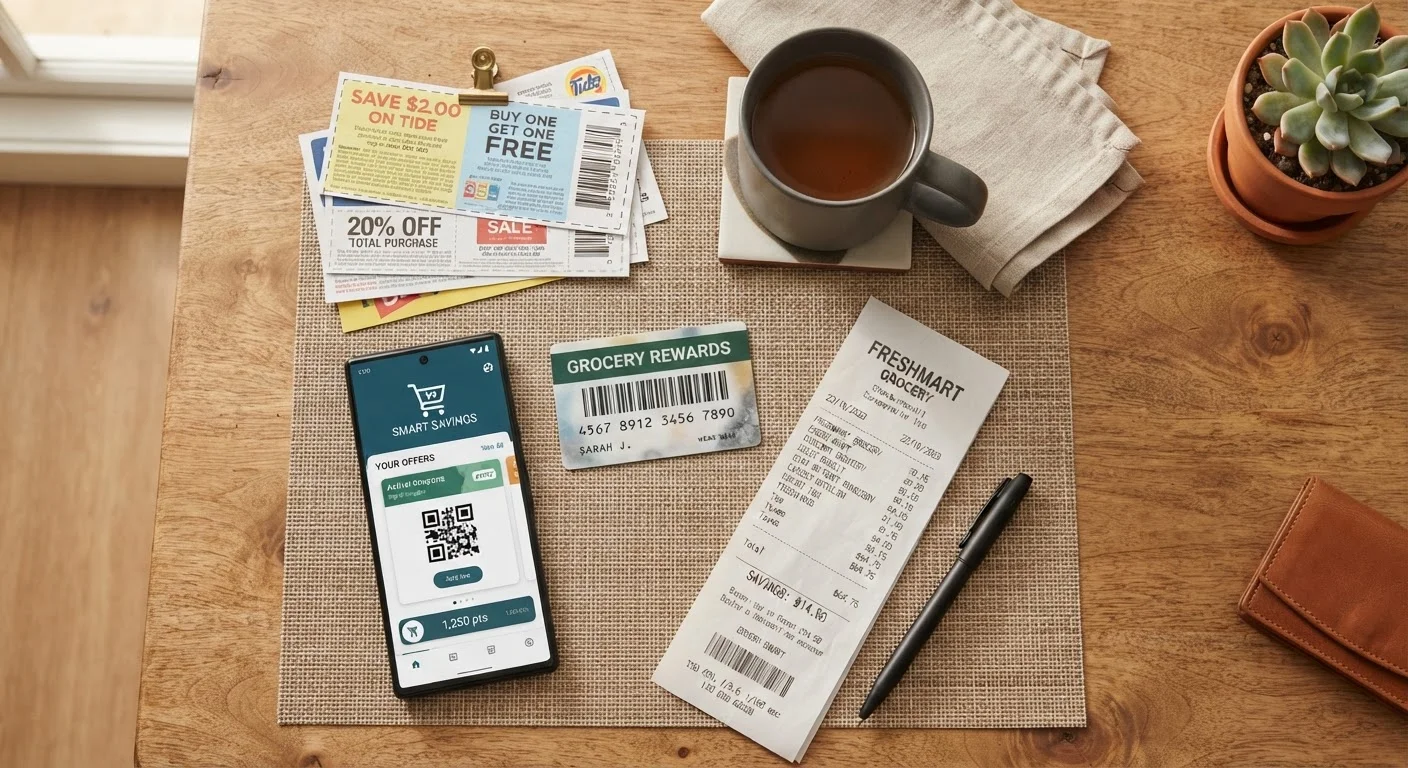
Photo: InsightsVault.com | Interesting Daily Reads editorial
Key Takeaways
- Coupon stacking combines multiple discount types on one purchase to reduce the final price.
- Manufacturer coupons and store coupons are usually stackable because they come from different sources.
- Retailer policy - not a universal rule - determines whether stacking is allowed.
- Cashback apps can often layer on top of existing coupons without voiding either.
- Stacking works across grocery, pharmacy, and some retail categories but rules vary by store.
How Coupon Stacking Actually Works
At its core, stacking exploits the fact that different discount instruments are funded and governed by different parties. A manufacturer coupon is reimbursed to the retailer by the product's maker. A store coupon is funded out of the retailer's own margin. Because these come from separate budgets, applying both to the same item doesn't typically violate anyone's terms - and most major grocery and pharmacy chains explicitly allow it.
A straightforward stack looks like this: a box of cereal has a shelf price of $5.00. The store has it on sale for $3.50. A manufacturer coupon takes off another $1.00. A store loyalty discount clips an additional $0.50. Final price: $2.00 - a 60% reduction achieved through four overlapping discount layers, none of which individually would have gotten you there.
Understanding where coupons originate helps you spot stacking opportunities more reliably. Our article on how retailers decide what coupons to offer explains the business logic behind these discounts.
~$3B
Annual manufacturer coupon redemptions in the US
Industry estimates from coupon clearinghouses suggest billions of manufacturer coupons are redeemed annually, reflecting the scale of coupon use in everyday grocery and household purchases.
3-4 layers
Typical discount layers in a structured grocery stack
Consumer couponing educators commonly describe a sale price, store coupon, manufacturer coupon, and loyalty reward as the four standard layers available in a grocery stacking scenario.
60%+
Possible price reduction with a full four-layer stack
When a deeply discounted sale price is combined with multiple coupon layers, total savings can exceed 60% of the original shelf price, though results vary significantly by item and retailer.
Retailer Policies: Where Stacking Is and Isn't Allowed
There is no universal stacking rule. Each retailer sets its own coupon policy, and those policies can change. Some chains publish detailed coupon acceptance policies online - these are worth reading before you plan a stacking trip.
Common restrictions include: prohibiting more than one coupon per item, excluding stacking on items already marked clearance, and limiting the number of identical coupons in a single transaction. Online retailers usually restrict checkout to one promo code field, which limits traditional code stacking - though cashback browser extensions and portal rewards can still layer on top.
Pharmacy chains have historically offered some of the most flexible stacking environments, allowing manufacturer coupons, store coupons, loyalty rewards, and app-based offers to combine on a single transaction. Grocery stacking policies vary more widely by chain. General merchandise retailers tend to be more restrictive.
Read the Store's Coupon Policy First
Practical Stacking Strategies Across Categories
The mechanics differ depending on where you shop. Here's how stacking typically works across common categories:
- Grocery: Stack a manufacturer coupon (from a newspaper insert, brand app, or printable site) with a store coupon and your loyalty card price. Timing this to a weekly sale cycle maximizes the effect.
- Pharmacy: Many pharmacy loyalty programs issue store reward dollars that can be applied on a future transaction. Combine these with a manufacturer coupon and a current sale for a multi-layer stack across two visits.
- Online retail: Sale price plus a cashback shopping portal plus a rewards credit card is a common three-layer online stack. Promo codes are usually limited to one, but other layers remain open.
- Apps and cashback: As covered in our guide on using cashback apps alongside coupons, these tools typically operate independently of in-store coupons and can be applied on top of other discounts without conflict.
For a broader view of how discount strategies shift by shopping category, see couponing across categories.
Mistakes That Undermine a Stacking Strategy
Stacking only saves money if the purchases were already planned. Buying an item solely because a stack is available - particularly for non-essentials - can produce net spending, not net savings. This is one of the misconceptions explored in common coupon myths that cost shoppers real money.
Other common errors include using expired coupons (which registers will reject and which can slow checkout for other shoppers), misreading size or variety restrictions printed on a coupon, or attempting to stack two manufacturer coupons on one item - which is not permitted by standard industry policy regardless of retailer.
The most reliable approach: check the store's coupon policy before shopping, match coupons carefully to the correct product size and variety, and treat stacking as a planned exercise rather than an improvised one. The complete guide to using coupons throughout the year offers a structured framework for building this habit.
Frequently Asked Questions
The content provided on our blog site traverses numerous categories, offering readers valuable and practical information. Readers can use the editorial team’s research and data to gain more insights into their topics of interest. However, they are requested not to treat the articles as conclusive. The website team cannot be held responsible for differences in data or inaccuracies found across other platforms. Please also note that the site might also miss out on various schemes and offers available that the readers may find more beneficial than the ones we cover.