
Hand Tools Every DIY Homeowner Should Understand Before Buying

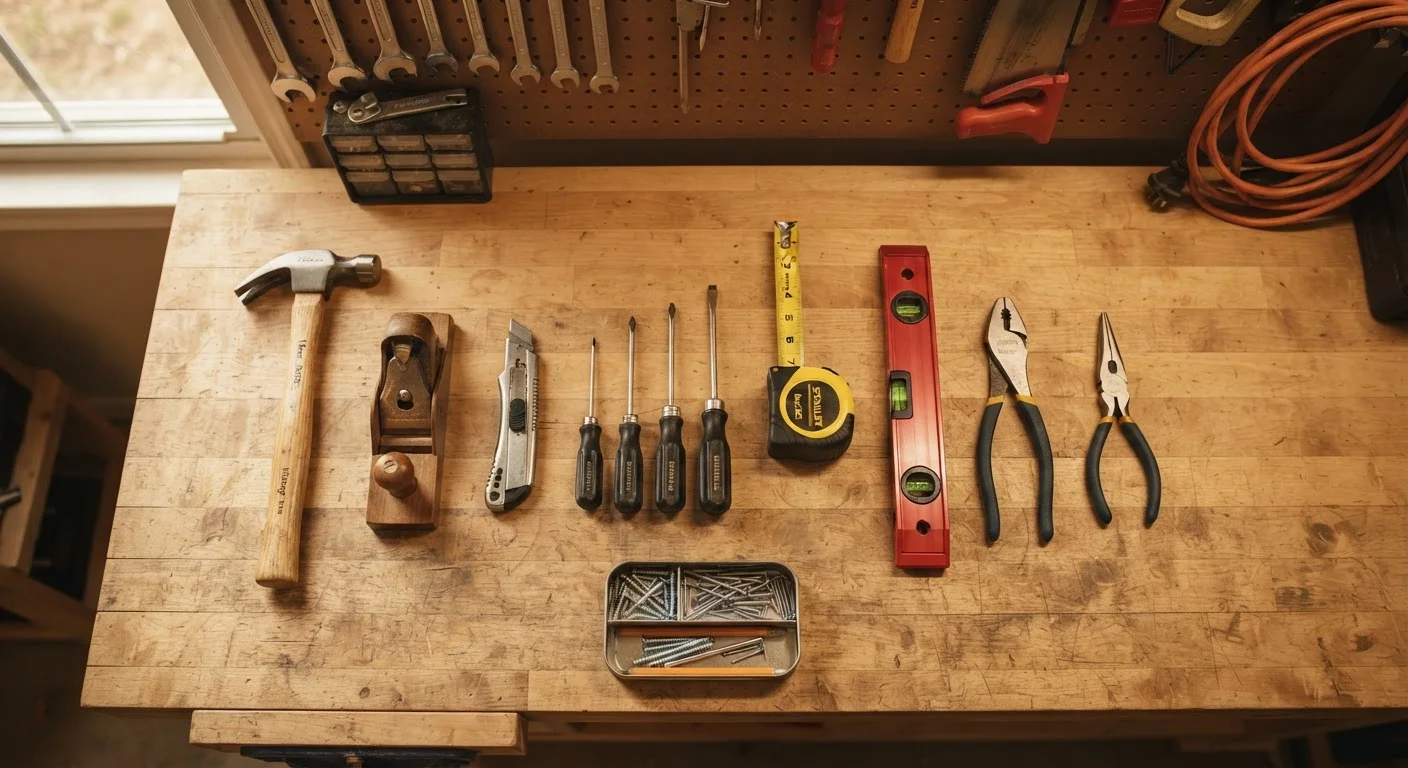
Photo: InsightsVault.com | Interesting Daily Reads editorial
Key Takeaways
- Understanding a tool's purpose before buying prevents redundant purchases and wasted money.
- A small core set of hand tools can handle the majority of common household repairs.
- Quality matters more than quantity - a few well-chosen tools outperform a drawer full of cheap ones.
- Knowing your limits on DIY tasks can prevent costly damage or safety hazards.
- Hand tools require no batteries or cords, making them reliable for quick, everyday fixes.
Why Understanding Tools First Saves Money Later
Walk into any home improvement store without a plan and it's easy to leave with tools you'll rarely use. A cluttered toolbox isn't just frustrating - it's money sitting idle. The smarter approach is to understand what each hand tool actually does before you decide whether you need it.
For most homeowners, a well-chosen set of hand tools can handle a surprising range of repairs: hanging shelves, fixing a sticking door, patching drywall, tightening loose hardware, and more. Each job avoided at a trade's labor rate - often $75-$150 per hour in many U.S. markets - adds up quickly. But that math only works if you have the right tool for the task at hand.
This guide breaks down the core hand tools worth understanding, what each one genuinely does, and when it earns its place in your home. For a broader picture of planning and executing repairs safely, see the complete DIY home repairs guide.
Buy for the Job You Actually Have
The Core Hand Tools and What They Actually Do
Claw Hammer
The claw hammer is the single most versatile tool in most households. The striking face drives nails into wood; the curved claw on the opposite end removes them. A standard 16-oz head handles most interior tasks - hanging pictures, assembling flat-pack furniture, light framing work like building a garden bed frame.
What to understand before buying: head weight matters. A heavier head (20 oz) drives fasteners faster but tires your arm on detail work. For general home use, 16 oz is the practical middle ground. A fiberglass or steel handle absorbs vibration better than bare wood over time.
A 16-oz claw hammer handles the majority of household nailing and removal tasks with minimal fatigue.
Screwdriver Set (Flathead and Phillips)
Screwdrivers turn fasteners - that's the whole job. But the type of tip must match the screw head. Phillips screws have an X-shaped recess; flathead screws have a single slot. Using the wrong driver strips the screw head, making removal much harder.
A basic set covering multiple sizes of each type handles outlet plates, cabinet hinges, door hardware, appliance panels, and countless other fixtures. Ergonomic handles with a wider grip reduce hand strain during extended use. A magnetic tip helps seat screws in tight spaces without dropping them.
Matching screwdriver tip to screw head prevents stripping - the most common DIY frustration with fasteners.
Tape Measure
Accurate measurement is the foundation of almost every home project. A tape measure records dimensions for cutting materials, spacing studs, hanging shelves level, or ordering replacement components without guessing.
A 25-foot tape covers most interior work. Look for a blade with clear, easy-to-read markings in both inches and metric - some projects or materials are specified in metric. The blade lock holds your measurement while you mark; a sturdy belt clip keeps it accessible. Cheap tape measures have blades that buckle at short extensions, making one-person measuring unreliable.
A 25-foot tape measure with a reliable blade lock covers nearly every interior measurement task a homeowner faces.
Torpedo Level
A torpedo level is a compact (typically 9-12 inch) spirit level that tells you whether a surface is perfectly horizontal (level) or vertical (plumb). The bubble in a fluid-filled vial sits centered between two lines when the reference is true.
You need this whenever appearance or function depends on alignment: mounting shelves, hanging mirrors, installing towel bars, or setting a new door threshold. A longer 4-foot level is more accurate for larger spans, but a torpedo level fits in a toolbox and handles most quick residential checks. Without it, crooked installs often mean re-doing the job entirely.
A torpedo level prevents the frustration of visibly crooked shelves or hardware that must be re-mounted.
Utility Knife
A utility knife scores and cuts a wide range of materials: drywall, carpet, vinyl flooring, rope, weatherstripping, and packaging. The retractable blade stores safely and deploys quickly. Blades are replaceable - a dull blade is the most common cause of ragged, unsafe cuts, so swapping them out is part of normal use.
For homeowners, this tool earns its keep on drywall patching jobs (where scoring a clean line before snapping the panel is standard technique) and on any project involving weatherstripping or caulk removal prep. Always cut away from your body and use a straightedge guide for long cuts.
Replacing blades frequently keeps cuts clean and safe - a dull utility knife requires more force and skips unpredictably.
Slip-Joint Pliers
Pliers grip what fingers can't - nuts, bolts, pipes, and irregular shapes. Slip-joint pliers have an adjustable pivot that lets the jaw open wider for larger objects, making them more versatile than fixed-jaw types. Common home tasks include tightening a loose faucet aerator, bending wire, removing a stripped bolt head, or holding a nut still while turning a wrench.
Needle-nose pliers (a related type with tapered jaws) are useful for reaching into tight spaces - junction boxes, appliance panels, or small fastener work. These two types together cover most household gripping needs without overlapping much.
Slip-joint pliers handle most household gripping tasks; needle-nose pliers reach what fingers and standard pliers cannot.
Putty Knife
A putty knife has a flat, flexible metal blade used to apply, smooth, and scrape materials - specifically spackling compound, wood filler, caulk, and old paint or adhesive. It's a finishing tool more than a cutting one.
For drywall patching (a very common homeowner task), a 4-6 inch putty knife applies and feathers compound over a hole. A wider 8-10 inch version covers larger patches more efficiently. A stiff-blade variant scrapes stubborn residue off flat surfaces without gouging them. This tool costs relatively little but the work it enables - a clean patch versus a visible lump - is the difference between a professional-looking result and a noticeable blemish.
The right putty knife width for the patch size is what separates a seamless drywall repair from a visible lump.
When Hand Tools Aren't Enough
Once you're comfortable identifying what each tool handles, you'll make sharper decisions about what to tackle yourself. The beginner-friendly weekend repairs guide is a logical next step - it pairs directly with this tool knowledge to show which fixes are realistic without trade experience. And if you're ever unsure whether a job is worth doing yourself at all, the DIY cost trade-off guide helps you weigh that honestly before you start.
Building Your Toolbox Gradually and Smartly
You don't need everything at once. Start with the tools that match the repairs most common in your home - older homes may demand more fastener work, while newer construction often involves more drywall patching. Buy as a job requires it, not speculatively. That approach also lets you judge quality in context rather than guessing off a shelf.
Unfamiliar with some of the terminology you'll encounter on tool packaging or in repair guides? The homeowner's repair glossary decodes common terms plainly. And to make sure your tools actually get used year-round, the seasonal maintenance checklist connects the right tasks to the right time of year so nothing slips through the cracks.
This article is for general informational purposes only. For tasks involving electrical wiring, gas lines, structural elements, or work that may require a permit in your area, consult a licensed professional and verify your local building codes before proceeding.
The content provided on our blog site traverses numerous categories, offering readers valuable and practical information. Readers can use the editorial team’s research and data to gain more insights into their topics of interest. However, they are requested not to treat the articles as conclusive. The website team cannot be held responsible for differences in data or inaccuracies found across other platforms. Please also note that the site might also miss out on various schemes and offers available that the readers may find more beneficial than the ones we cover.